Events and Workflows Integration - Automate the Entire Event Journey
This article explains how to connect HighLevel Events with Workflows to automate registration confirmations, pre-event reminders, check-in actions, and post-event follow-ups.
You'll learn how to use event-based triggers, event data in workflow conditions, and event-relative timing to build personalized attendee journeys.
What is Events and Workflows Integration?
Events and Workflows Integration connects your HighLevel Events with the Automation platform to trigger workflows based on attendee activity, use event details in conditional logic, and time workflow actions around the actual event date.
This integration extends event management beyond the registration experience into the entire attendee lifecycle — from the moment someone registers through pre-event engagement, check-in activity, and post-event follow-ups.
Event data becomes actionable across all workflow capabilities, allowing you to build personalized journeys based on registration status, ticket type, check-in behavior, and event-specific details.
Key Benefits
Connecting Events to Workflows delivers powerful automation capabilities tailored to the event experience.
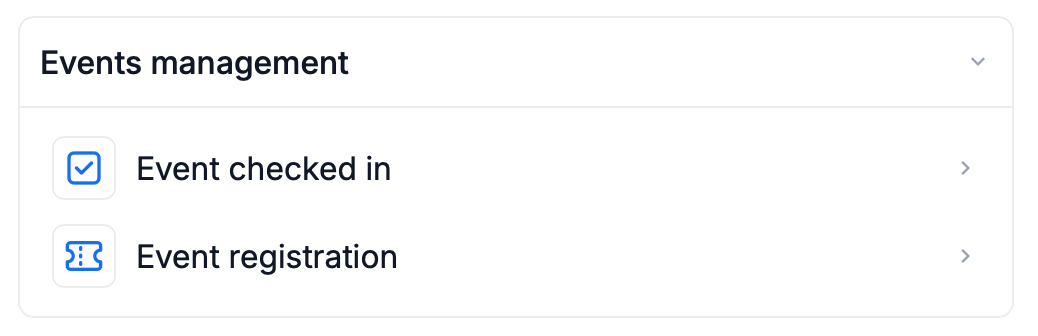
Event-Based Workflow Triggers
HighLevel Workflows can start automatically when specific event activity occurs, allowing you to respond to attendee behavior in real time.
Starts a workflow when a contact registers for an event. Use this trigger to send branded confirmation messages, add tags, or begin pre-event engagement sequences.
Starts a workflow when an attendee checks in at the event. Use this trigger to send welcome messages, unlock exclusive content, or begin post-event follow-up campaigns.
Both triggers support filtering by event context to create targeted workflows:
- Registration status
- Specific event
- Who the registration was booked by
- Ticket type
- Check-in details
Filters allow you to build different workflows for different events, ticket categories, registration states, or attendee behaviors without creating separate event setups.
Using Event Data in Workflow Conditions
Event context is accessible within workflow conditions, allowing you to build dynamic branches based on event details and attendee behavior.
A single workflow can respond differently depending on which event triggered it, what ticket type was purchased, or when the event is scheduled to occur.
Use the following event information when building workflow conditions:
- Event type
- Event name
- Event start and end dates
- Timezone
- Location
- Ticket information
- Check-in information
For example, you can branch a workflow to send VIP attendees exclusive content, route paid ticket holders to a sales pipeline, or deliver different reminder cadences based on event timing.
Wait Relative to the Event Date
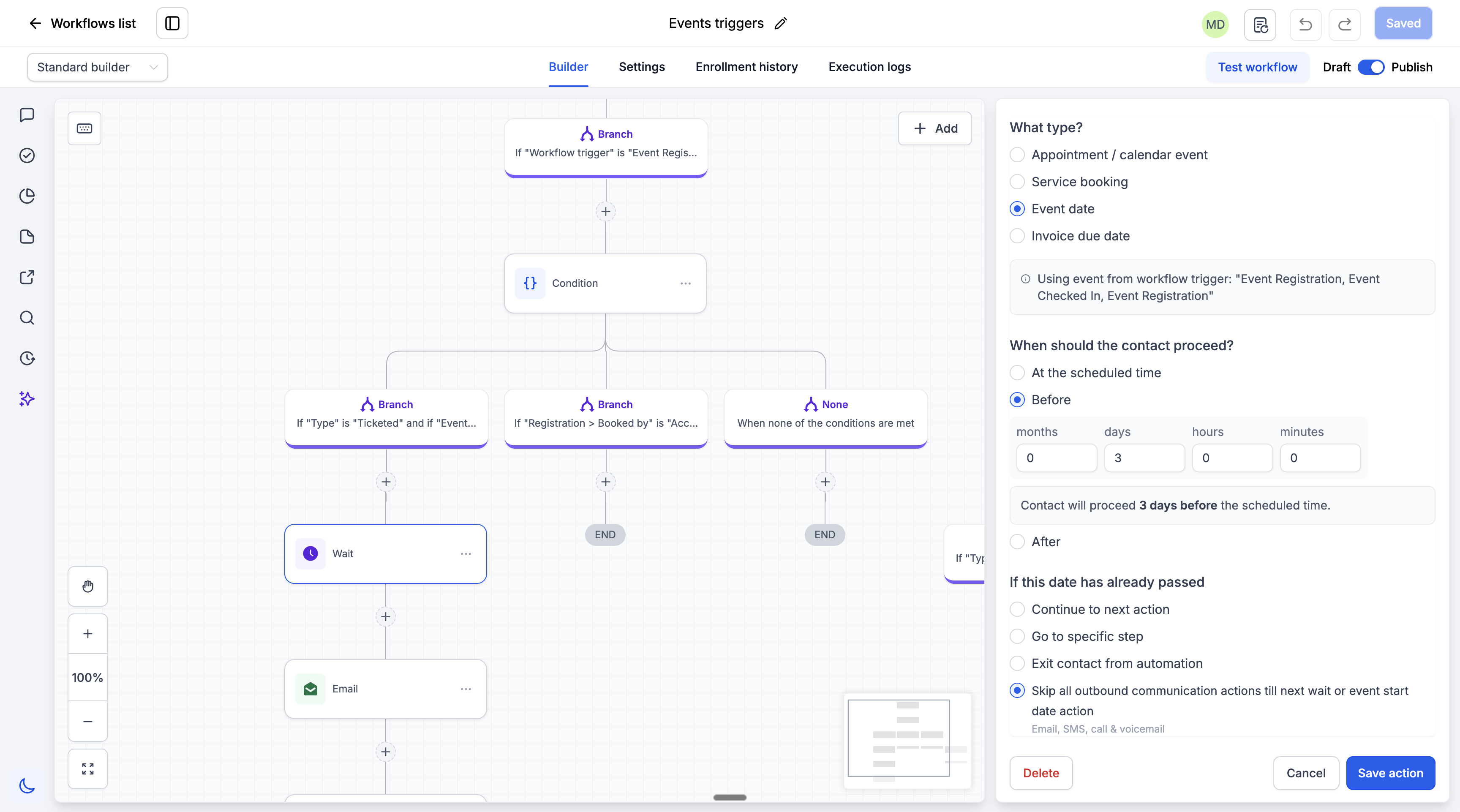
The Wait action in workflows can reference the event date from the workflow trigger, allowing you to time workflow steps relative to when the event occurs.
This capability eliminates the need to manually calculate dates or create separate workflows for different event schedules.
Continue the workflow exactly when the event is scheduled to start. Use this timing to send last-minute instructions or activate day-of communications.
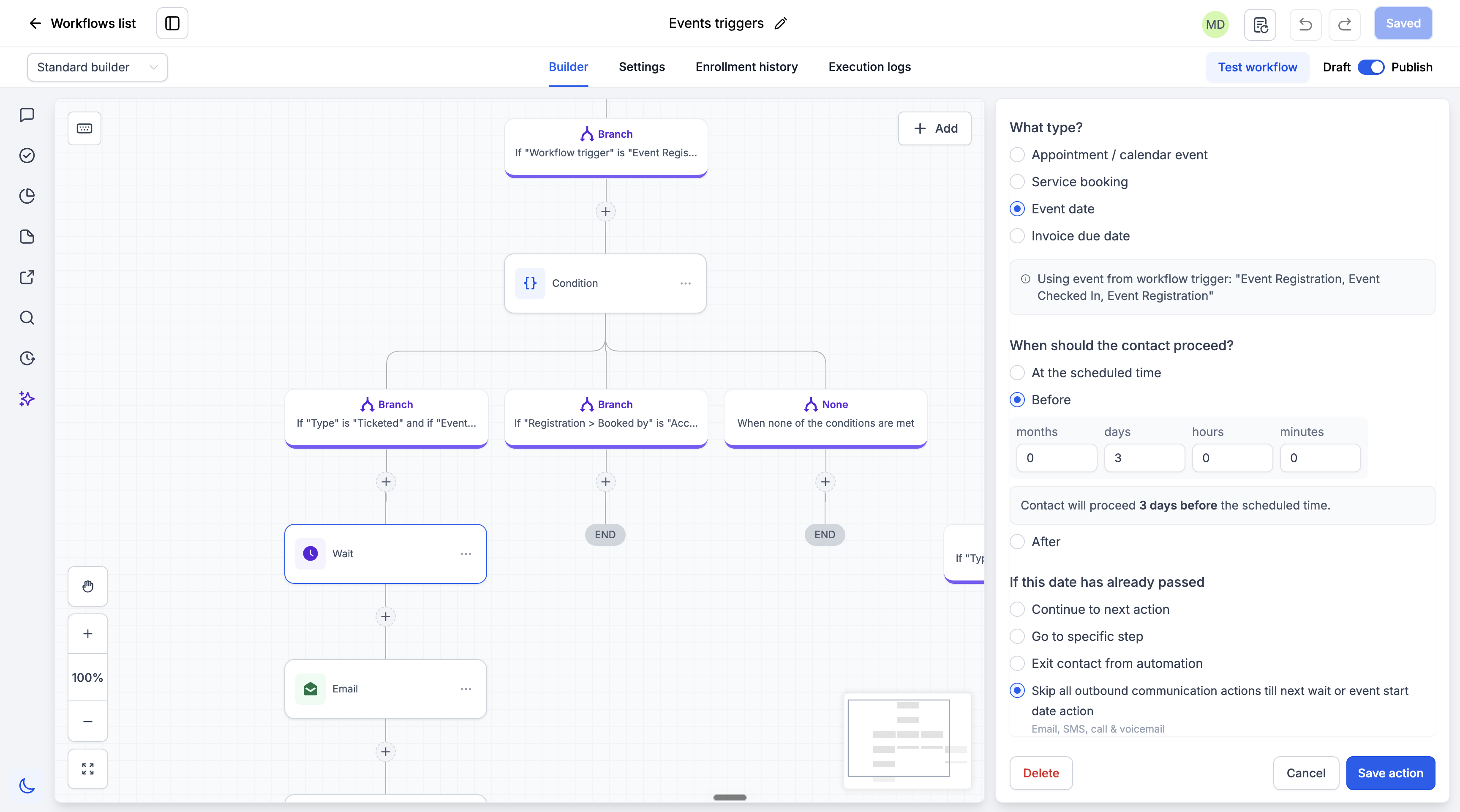
Wait until a specific amount of time before the event. For example, send a reminder 7 days, 3 days, or 2 hours before the event starts.
Wait until a specific amount of time after the event ends. Use this timing to send thank-you messages, surveys, recordings, or begin post-event nurture campaigns.
A contact registers for an event on Monday. The event is scheduled for Friday. Set a Wait action for "3 days before the event" — the workflow automatically pauses until Tuesday (3 days before Friday) and then continues with the reminder sequence.
How to Set Up Event-Based Workflows
Follow these steps to create a workflow that responds to event activity in HighLevel.
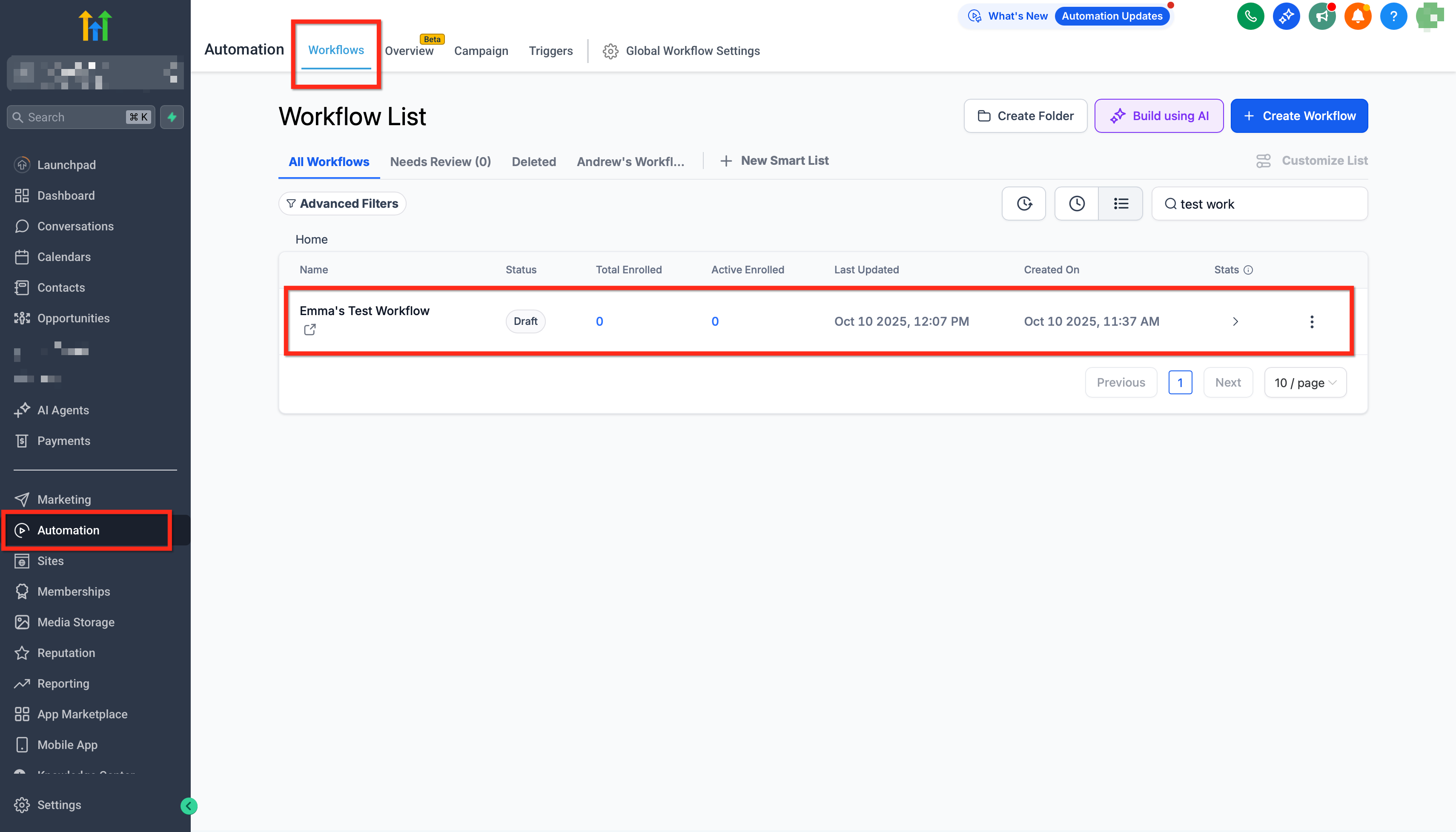
Go to Automation in the main navigation menu, then select Workflows.
Click Create Workflow. Choose a blank workflow or select a template if available.
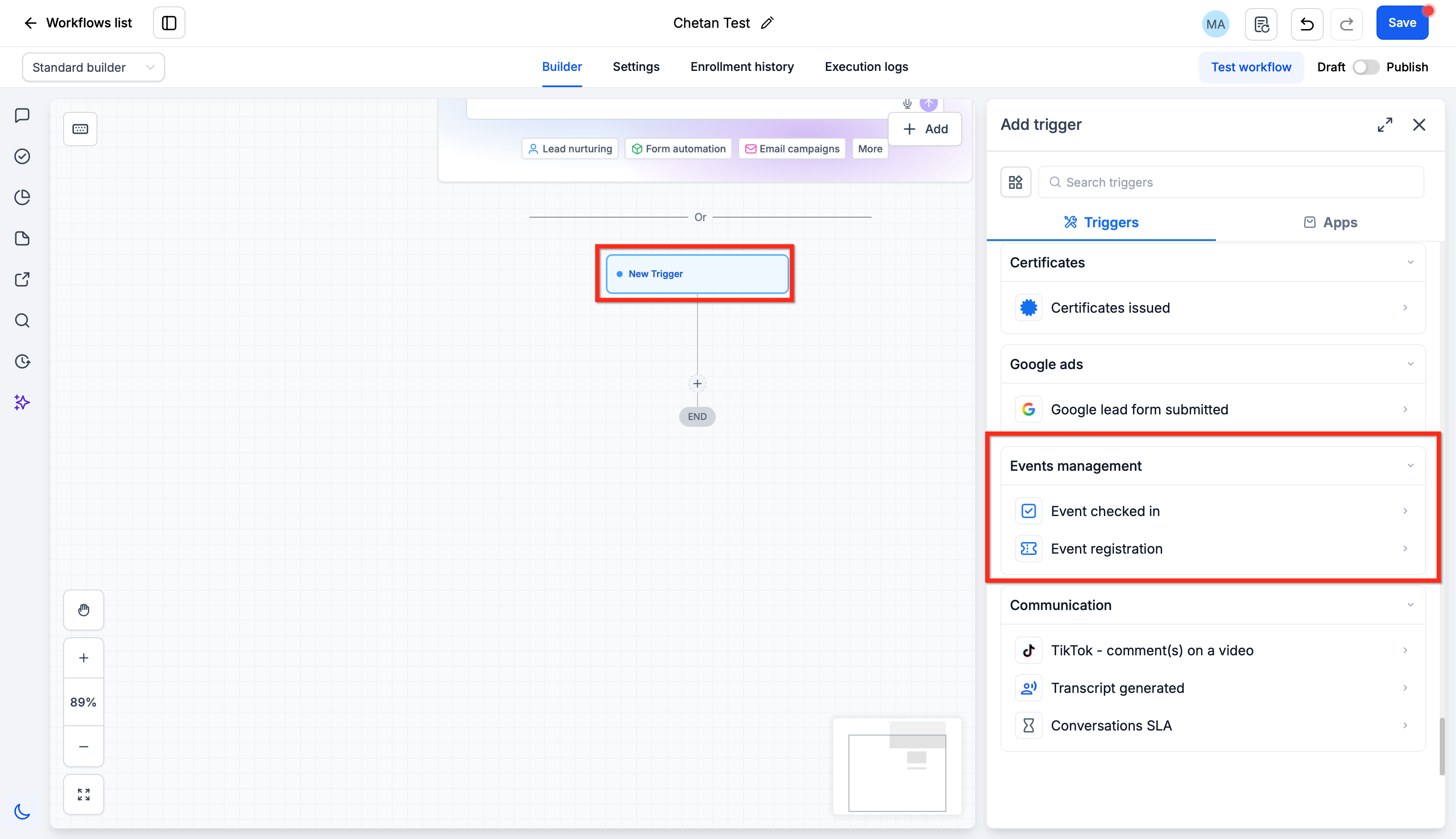
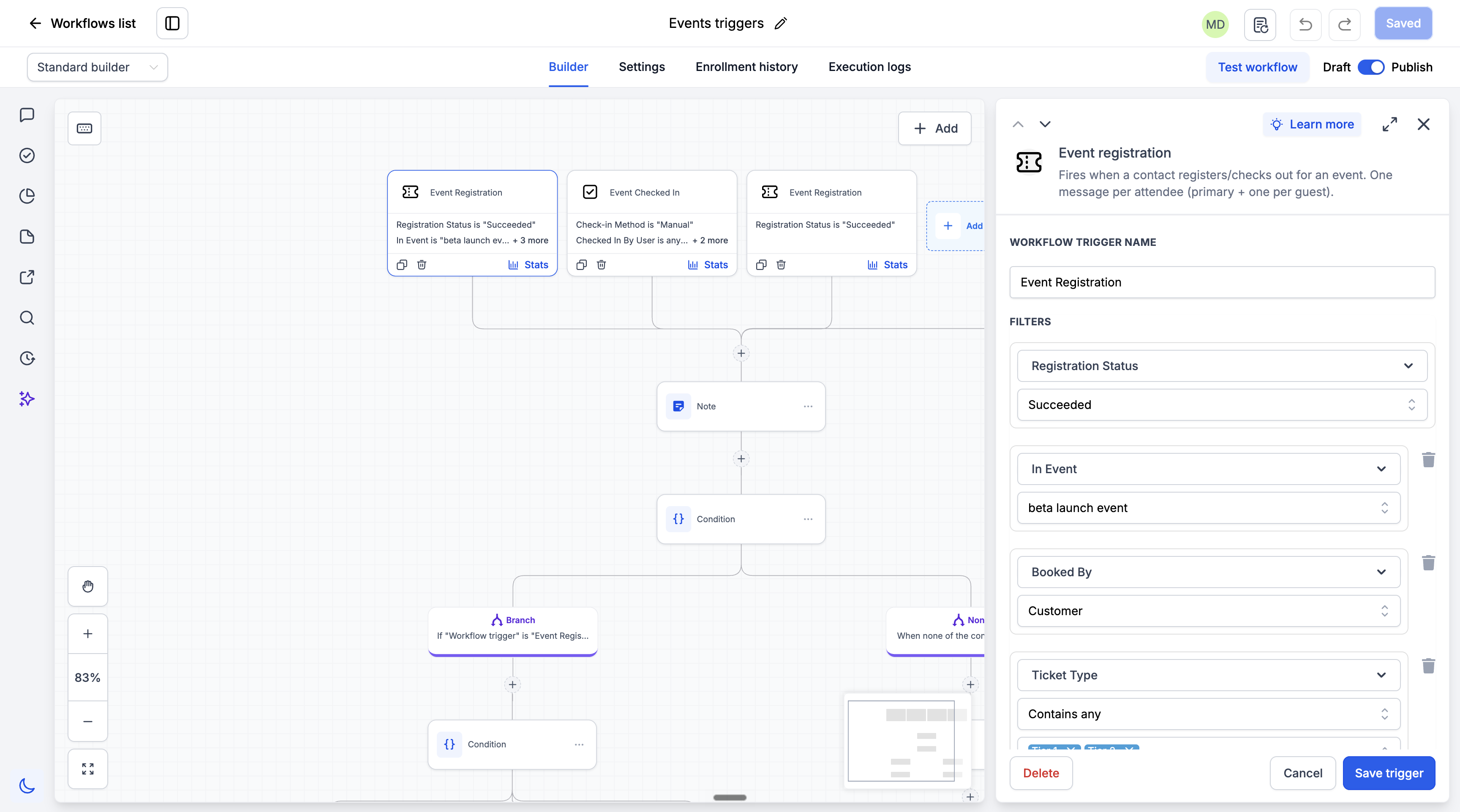
In the workflow builder, choose a trigger type:
- Event Registration — Starts when someone registers for an event.
- Event Checked In — Starts when an attendee checks in at the event.
Add filters to narrow when the workflow triggers:
- Filter by specific event name or type
- Filter by ticket type (e.g., VIP, paid, free)
- Filter by registration status
- Filter by who booked the registration
Build your workflow by adding actions such as sending emails, SMS messages, updating contact fields, adding tags, creating opportunities, or assigning tasks.
Add conditional branches using event data fields (event name, ticket type, location, timing) to create personalized paths within the workflow.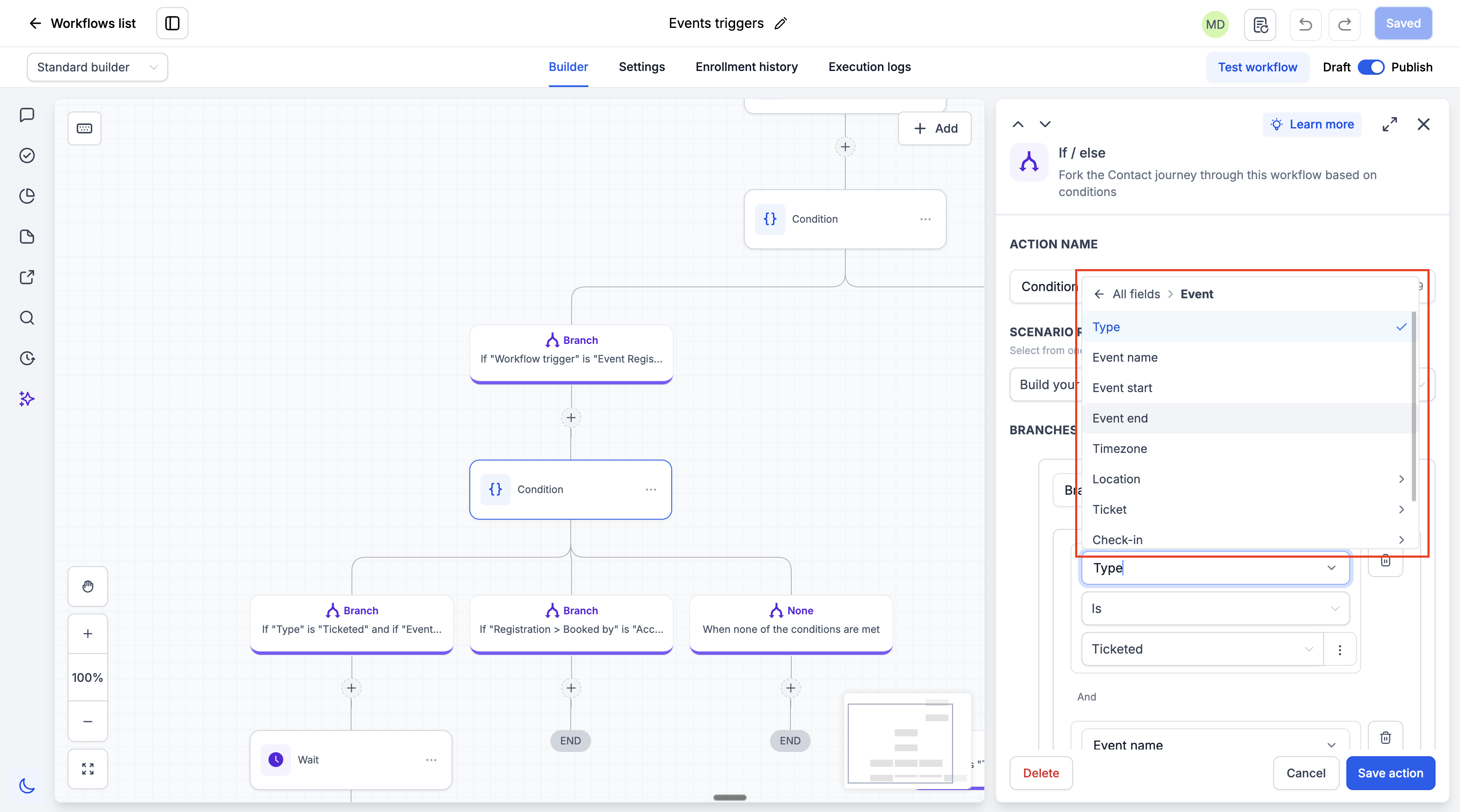
Add a Wait action and select event-relative timing:
- Wait until [X days/hours] before the event
- Wait until the event date/time
- Wait until [X days/hours] after the event
Use the workflow test mode or create a test event registration to verify the workflow triggers correctly and executes actions as expected.
Once testing is complete, click Publish to enable the workflow for all future event registrations or check-ins.
Common Event Automation Use Cases
Events and Workflows Integration unlocks powerful automation scenarios across the entire attendee lifecycle.
Send custom-branded email or SMS templates immediately after someone registers. Include personalized event details, calendar links, or special instructions using your own messaging style.
Build multi-step reminder campaigns that send messages 7 days before the event, 3 days before, and a few hours before. Use event-relative timing to automate the entire sequence regardless of when someone registers.
Deliver different experiences based on ticket type. Send VIP ticket holders exclusive content, route paid attendees into a sales pipeline, or offer free registrants an upgrade opportunity before the event.
Trigger workflows when an attendee checks in at the event. Send welcome messages, unlock gated content, notify internal teams, or begin real-time engagement campaigns.
Automatically send thank-you messages, feedback surveys, event recordings, or follow-up offers after the event ends. Use event-relative timing to start post-event campaigns without manual intervention.
Route event attendees into sales pipelines, assign opportunities, notify team members, add tags, or trigger any other workflow action based on event activity. Connect event engagement directly to CRM processes.
Frequently Asked Questions
Was this article helpful?
That’s Great!
Thank you for your feedback
Sorry! We couldn't be helpful
Thank you for your feedback
Feedback sent
We appreciate your effort and will try to fix the article