WhatsApp Usernames: Contact Capture Without Phone Numbers
WhatsApp is introducing usernames that allow people to message businesses without sharing their phone number. HighLevel supports this feature by automatically creating contacts from username-based messages.
This article explains how username-based contact capture works, what remains unchanged in your existing workflows, and the current limitations of the feature.
What are WhatsApp Usernames?
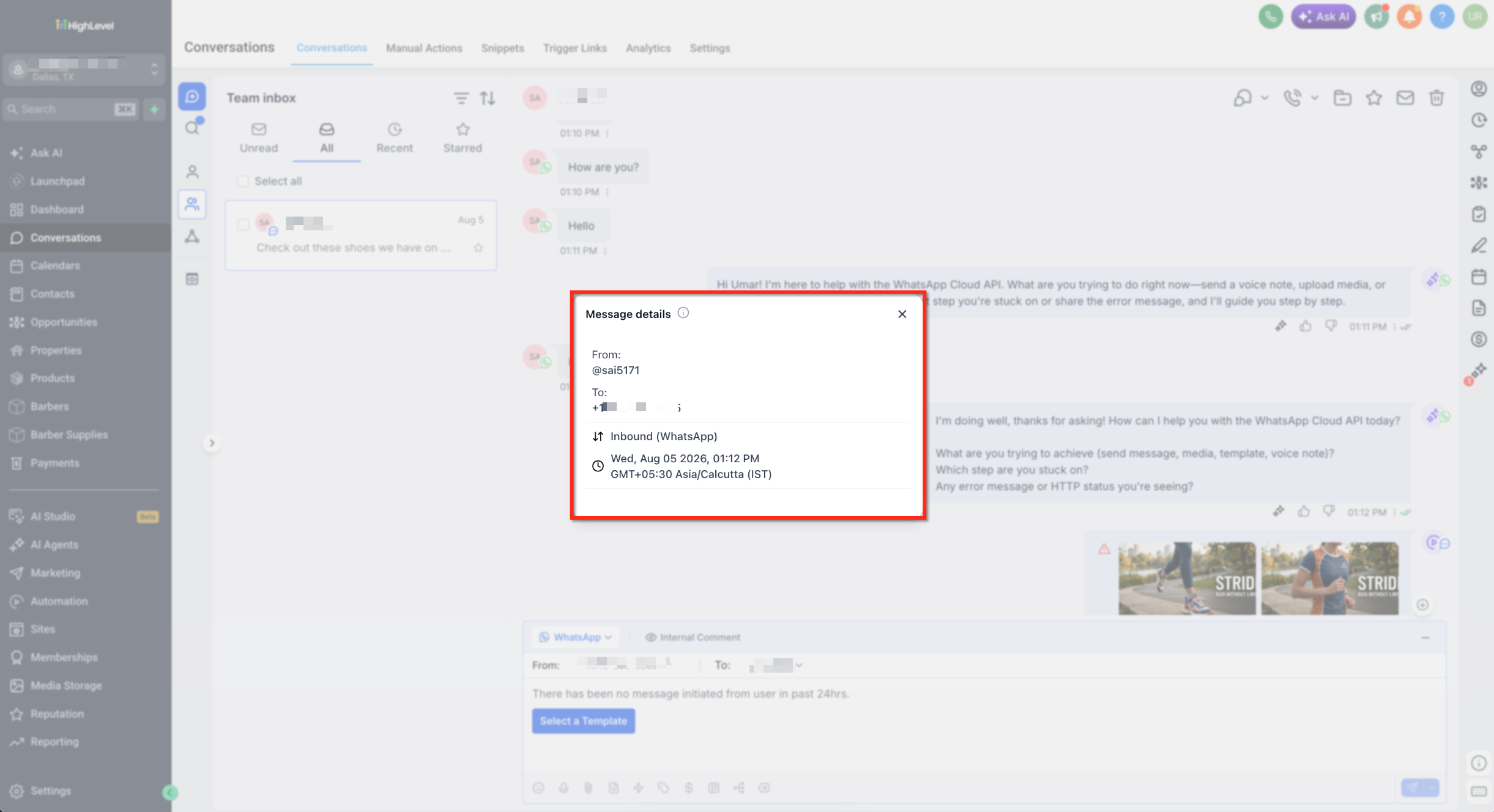
WhatsApp usernames are a new privacy feature that allows users to message businesses without revealing their phone number. When a customer chooses to use a username instead of their phone number, WhatsApp creates a unique business-scoped user identifier (BSUID) for that interaction.
This feature is part of WhatsApp's broader privacy initiative, giving users more control over their personal information while still enabling business communications.
Key Benefits
Username-based contact capture ensures you never lose leads due to customer privacy preferences:
How Username-Based Contact Capture Works
When a customer using a WhatsApp username messages your business for the first time, HighLevel automatically creates a contact record. Here's how the process works:
A new customer messages your business through WhatsApp using their username instead of sharing their phone number.
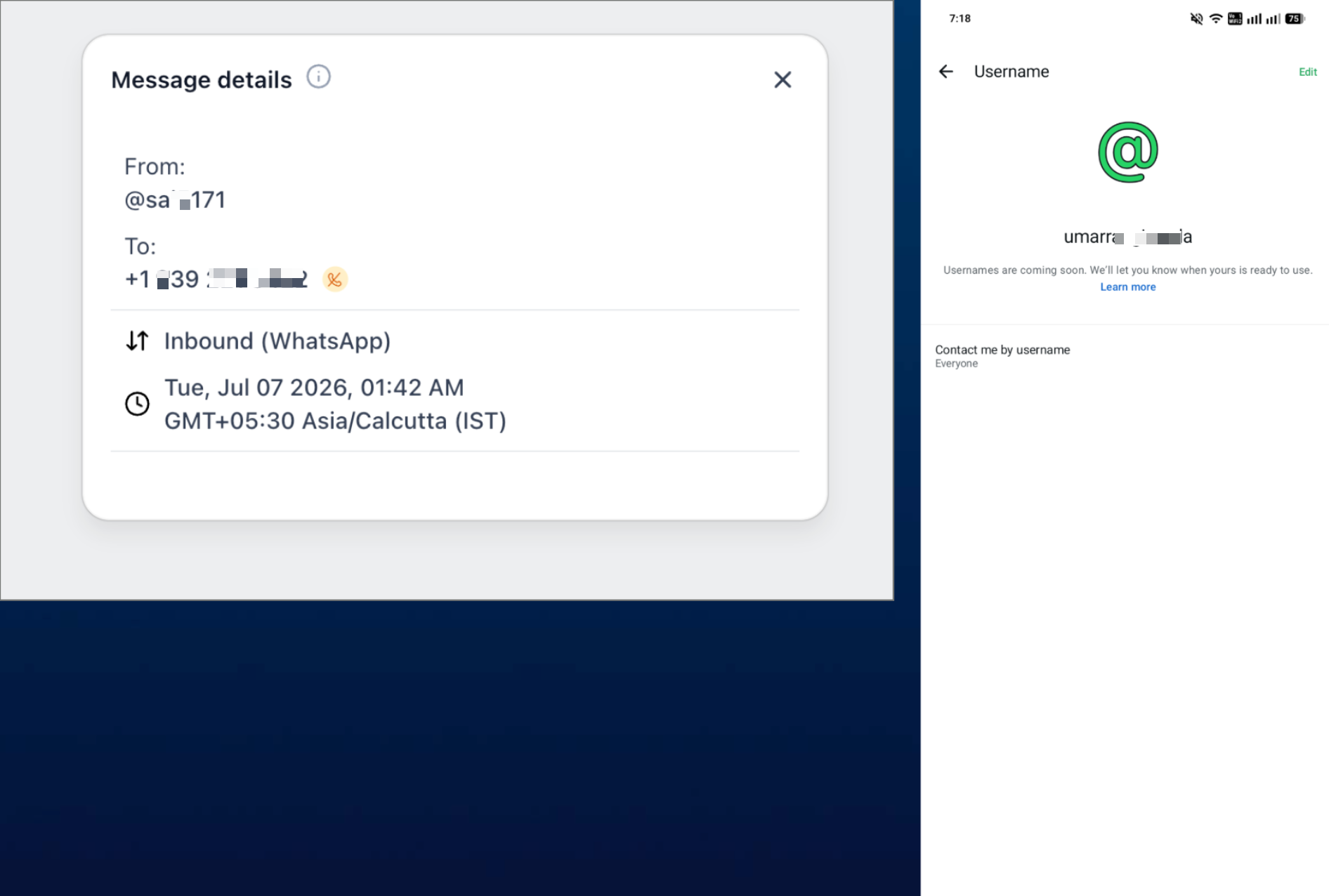
WhatsApp sends the message along with the customer's username and a business-scoped user identifier (BSUID) instead of their phone number.
HighLevel automatically creates a new contact in your CRM using the username and BSUID. The conversation appears in your Conversations inbox just like any other WhatsApp message.
Once the customer messages you first, their BSUID becomes available and you can reply following standard WhatsApp session window and template message rules.
What Remains Unchanged
Username support is an additive capability. Your existing WhatsApp workflows continue to function exactly as before:
All phone-number-based WhatsApp messaging works exactly as it always has. You can send and receive messages using phone numbers with no difference in behavior or functionality.
Importing contacts by phone number continues to work as it does today. No changes to your existing import workflows or processes.
Your existing contact records, conversation history, and running automations are completely unaffected. The only difference is that first-time messages from username adopters create a new contact using the username and BSUID instead of a phone number.
Phone numbers are still shared for existing customers or those who have recently interacted with your business (within a 30-day window or in your Meta contact book). The phone number is only withheld for brand-new contacts using usernames for their first message.
Messaging and Reply Behavior
Understanding how to communicate with username-based contacts is essential for effective engagement:
You cannot start a conversation with a username-only contact. WhatsApp does not provide username lookup functionality and routes messages only by phone number or BSUID. This means there is no way to initiate cold outbound messaging to a username-only lead.
Once a username-based contact messages you first, their BSUID becomes available in your system. You can then reply to their messages following the standard WhatsApp session window rules and template message requirements.
The reply behavior follows all existing WhatsApp Business API rules, including the 24-hour session window for free-form messages and the requirement to use approved templates for messages outside the session window.
Regional Availability
WhatsApp username functionality is currently in beta with Meta and rolling out gradually by region. HighLevel's support for username-based contact capture is available in all regions where Meta has enabled the feature.
No action is required on your part. As Meta enables username support in additional regions, HighLevel's contact capture functionality automatically works in those new markets.
Frequently Asked Questions
Was this article helpful?
That’s Great!
Thank you for your feedback
Sorry! We couldn't be helpful
Thank you for your feedback
Feedback sent
We appreciate your effort and will try to fix the article