Email Verification is a bulk tool that checks whether an email address is legitimate and active before any email is sent. When enabled, it runs automatically in the background — no manual action required.
This article covers how to enable verification at the agency and subaccount levels, how to set up 90-day re-verification, pricing and rebilling, and how to check verification status on individual contacts.
What is Email Verification
Email Verification is a background process that checks whether an email address has the qualities of a legitimate, active account. It runs automatically when enabled — you don't need to trigger it manually.
By filtering out fake or inactive addresses before sending, Email Verification keeps your sending score high and significantly improves email delivery rates. It can also be configured to re-verify addresses every 90 days, since email quality can change over time.
Email Verification is a paid service. It is available exclusively for LC Email and Mailgun email providers.
How to Enable Email Verification (Agency Level)
Agency admins can enable or disable Email Verification for individual subaccounts — or all subaccounts at once — from the Agency Settings panel.
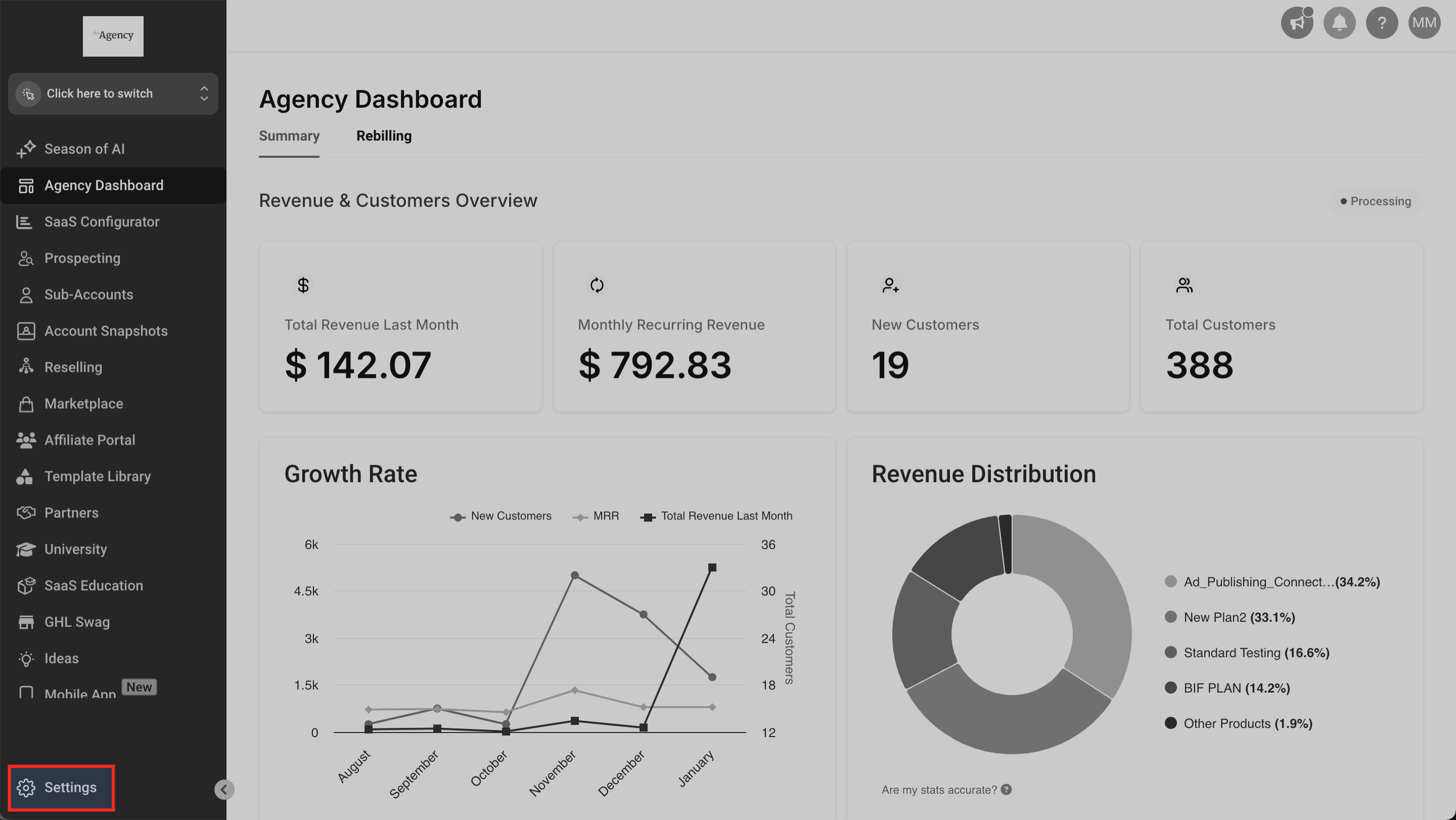
Open your Agency dashboard and go to Settings.
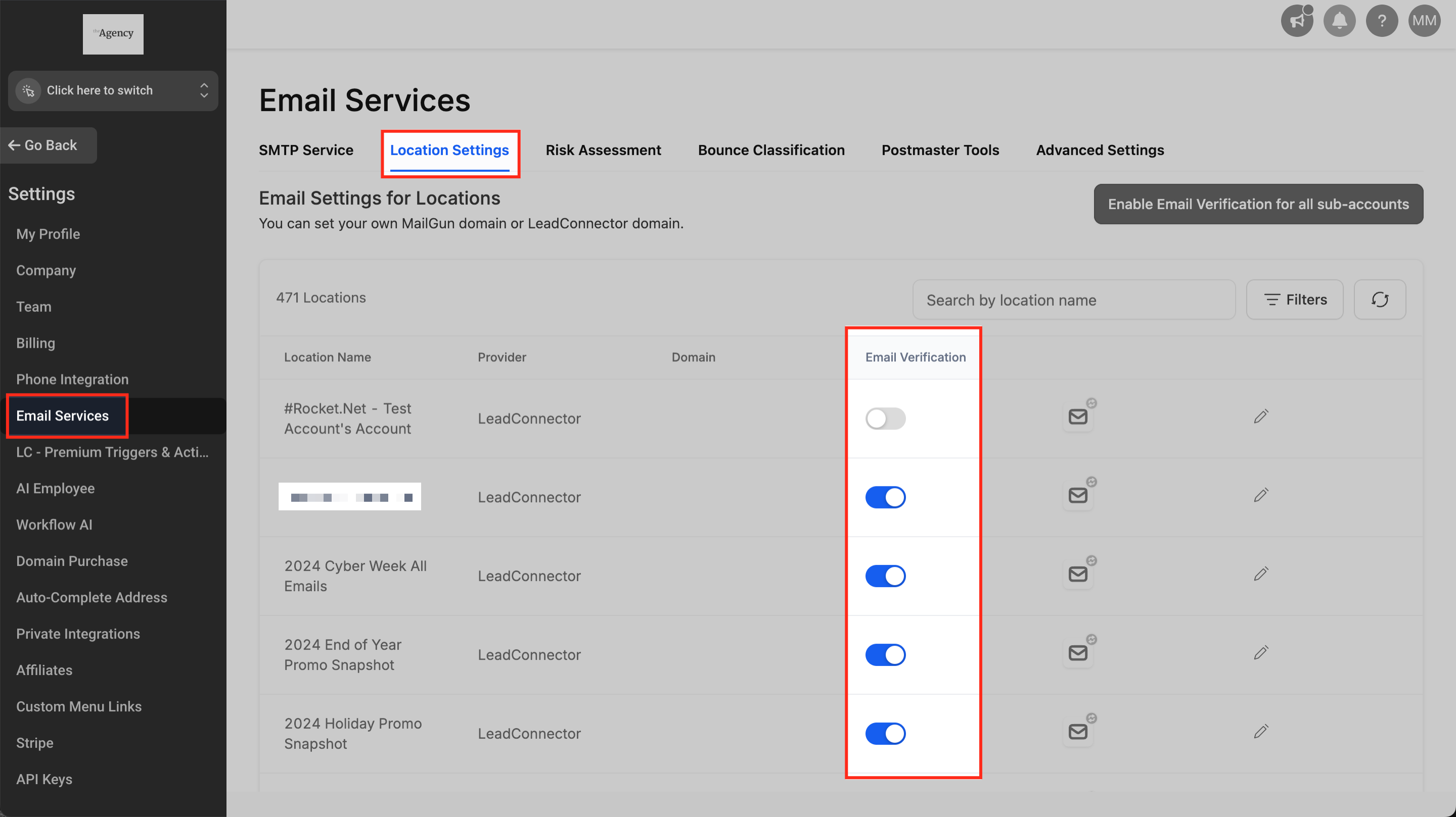
Within Settings, go to Email Services → Location Settings and locate the Email Verification column.
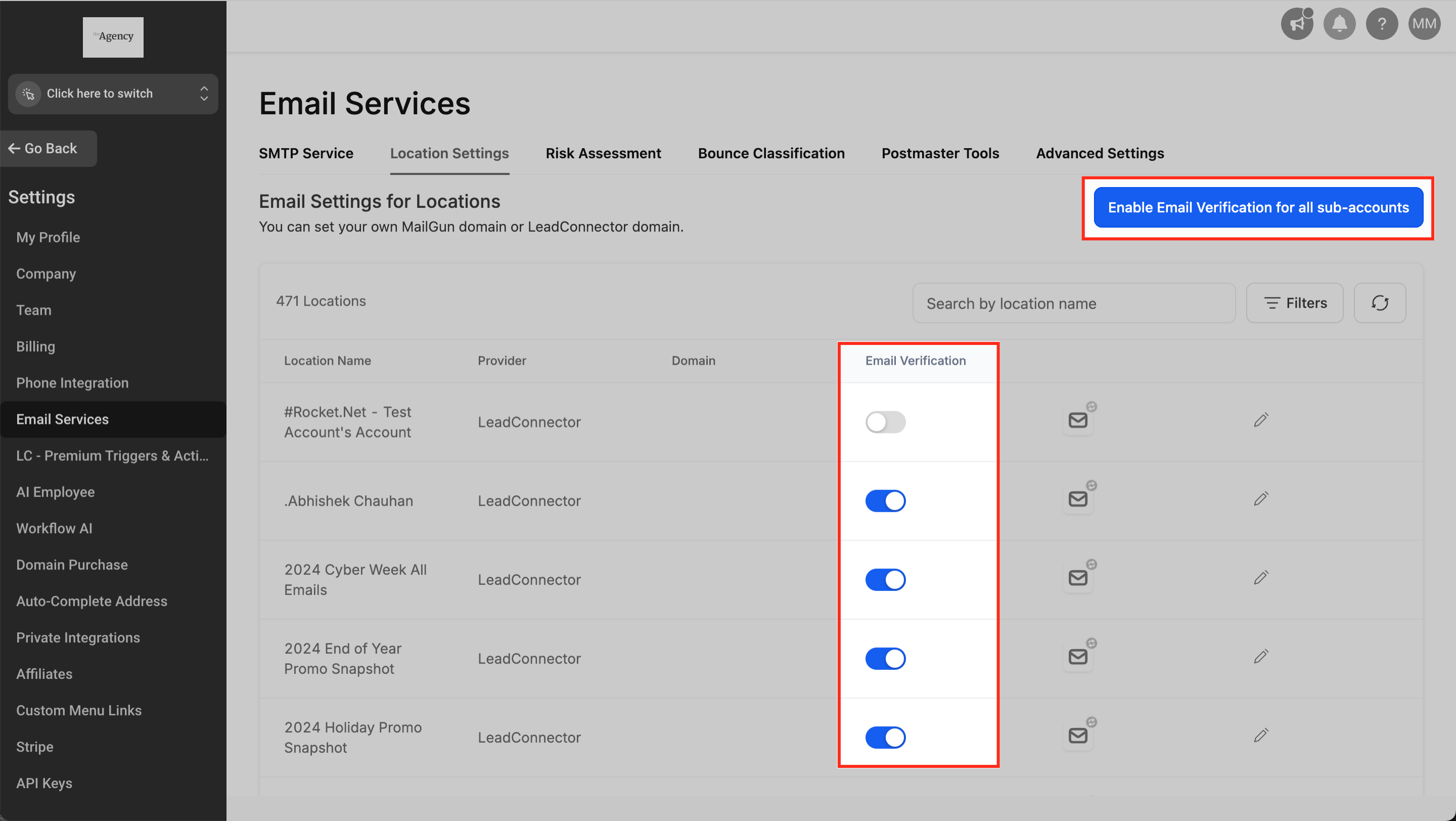
Toggle Email Verification on or off for each individual subaccount, or use the bulk toggle to apply the setting across all subaccounts at once.
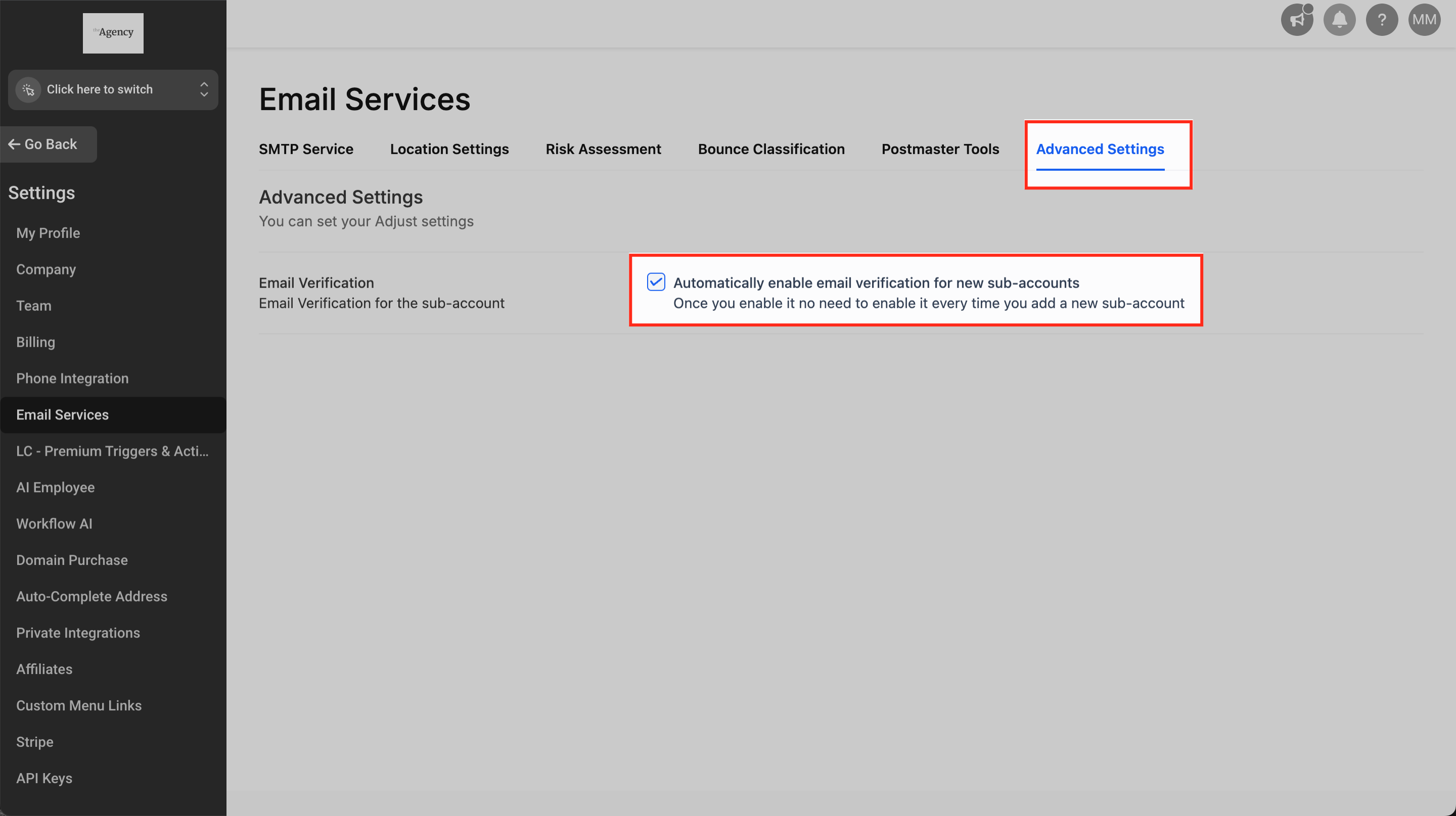
Navigate to Advanced Settings and check or uncheck "Automatically enable email verification for new Subaccounts" to control default behavior for newly created subaccounts.
How to Enable Email Verification (Subaccount Level)
Subaccount users can also enable Email Verification directly from their own account settings.
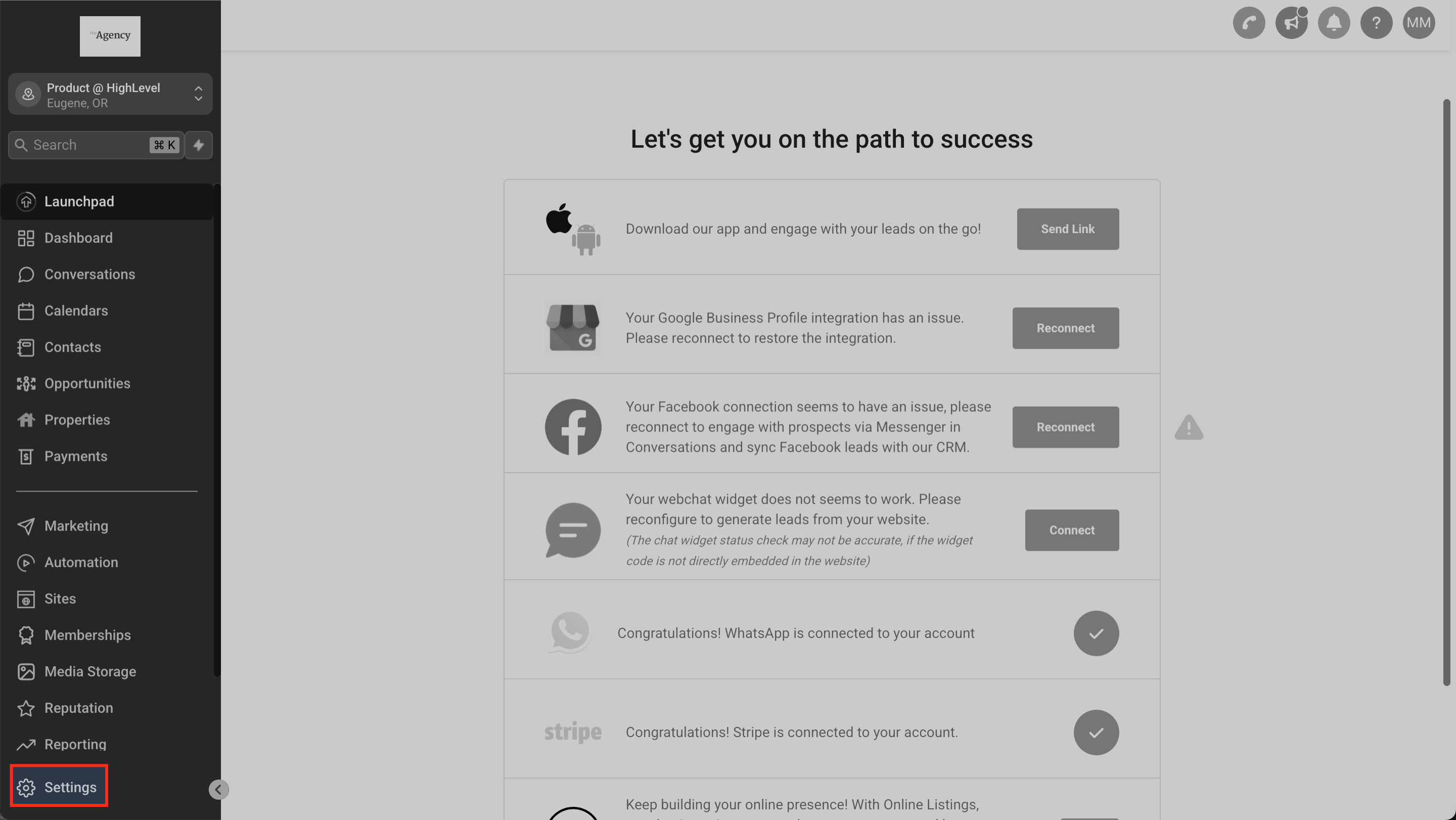
Open the subaccount and go to Settings.
Go to Business Profile → General within Settings.
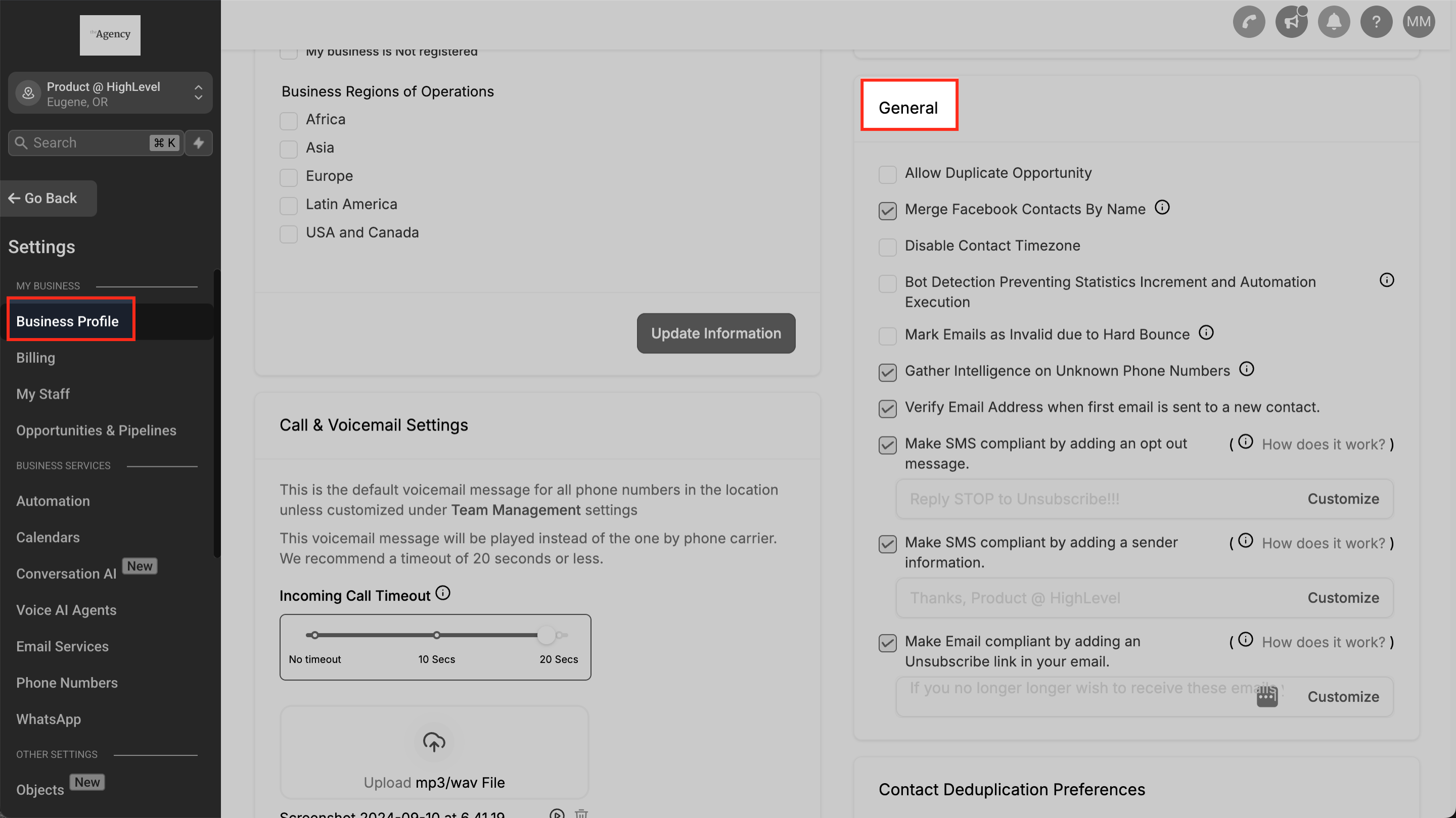
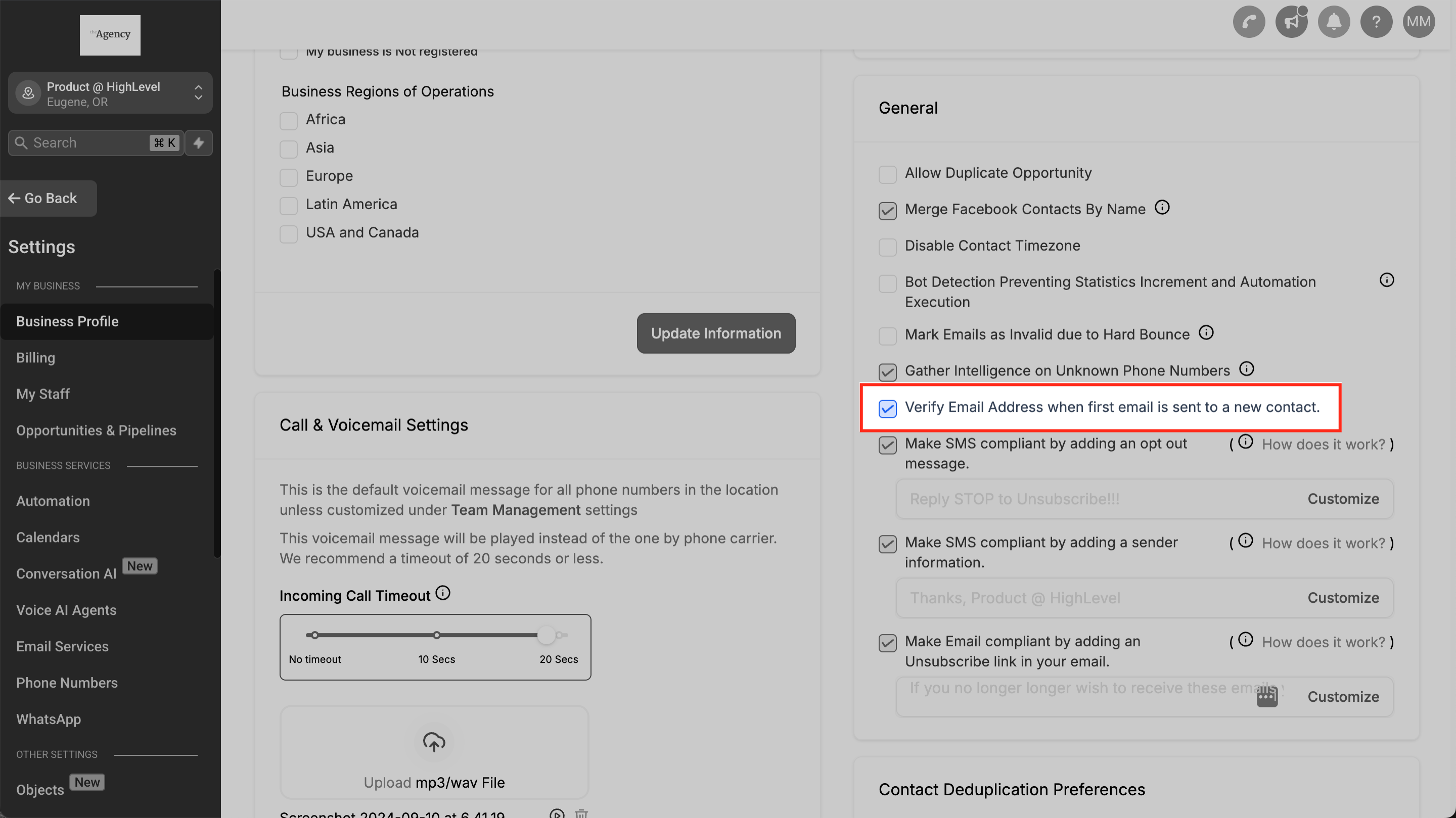
Toggle the Verify Email checkbox to enable or disable email verification for this subaccount.
When a subaccount user enables Email Verification, a notification is automatically sent to all active agency admins and the company's registered email address (LC Email only). Subject line: ATTN: Email Verification Enabled in Sub-Account.

Enable Email Re-verification Every 90 Days
Email address quality can change over time — an address that was valid six months ago may now be inactive or abandoned. Enabling 90-day re-verification ensures you catch these changes before they hurt your sender score, rather than after.
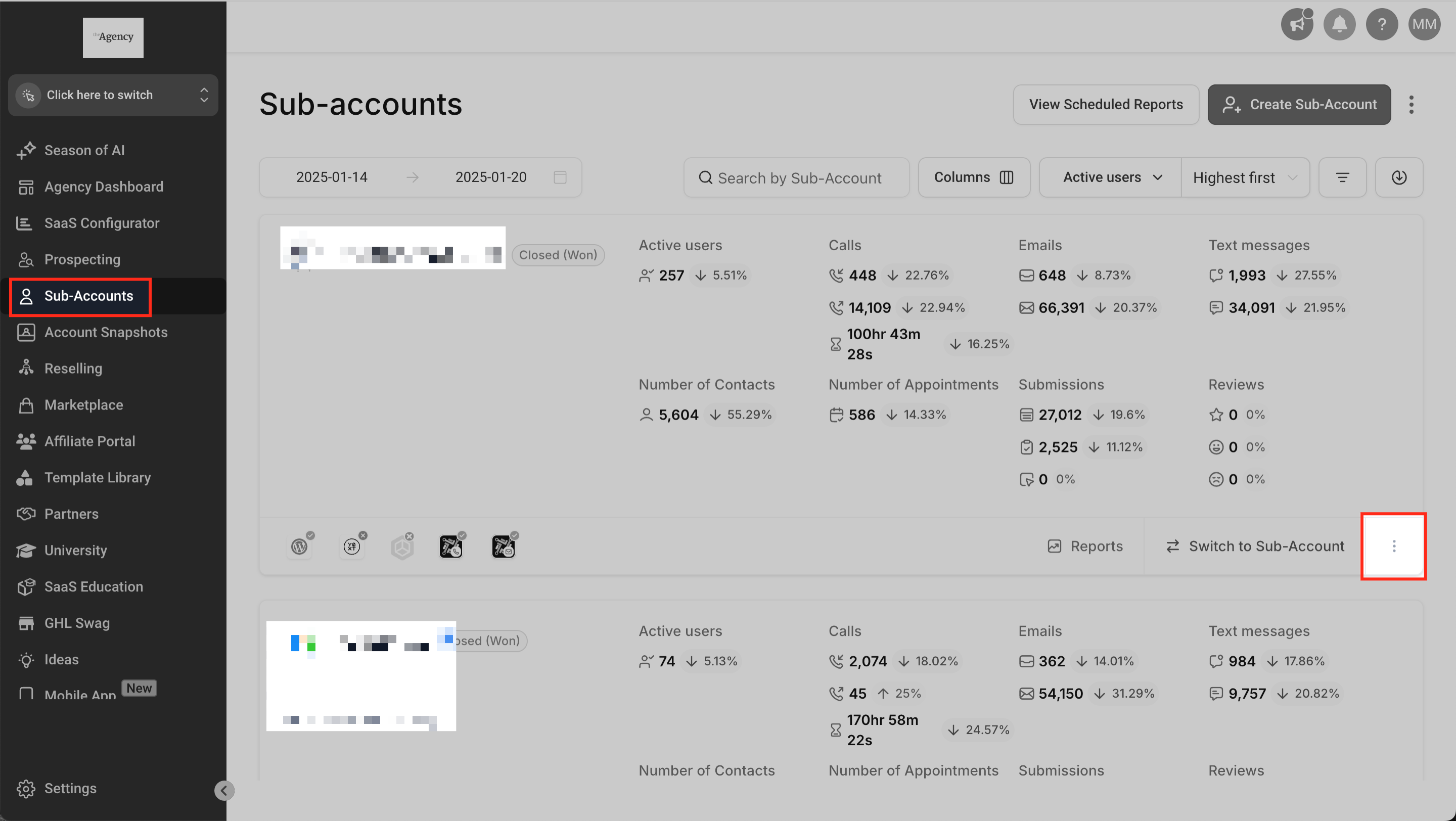
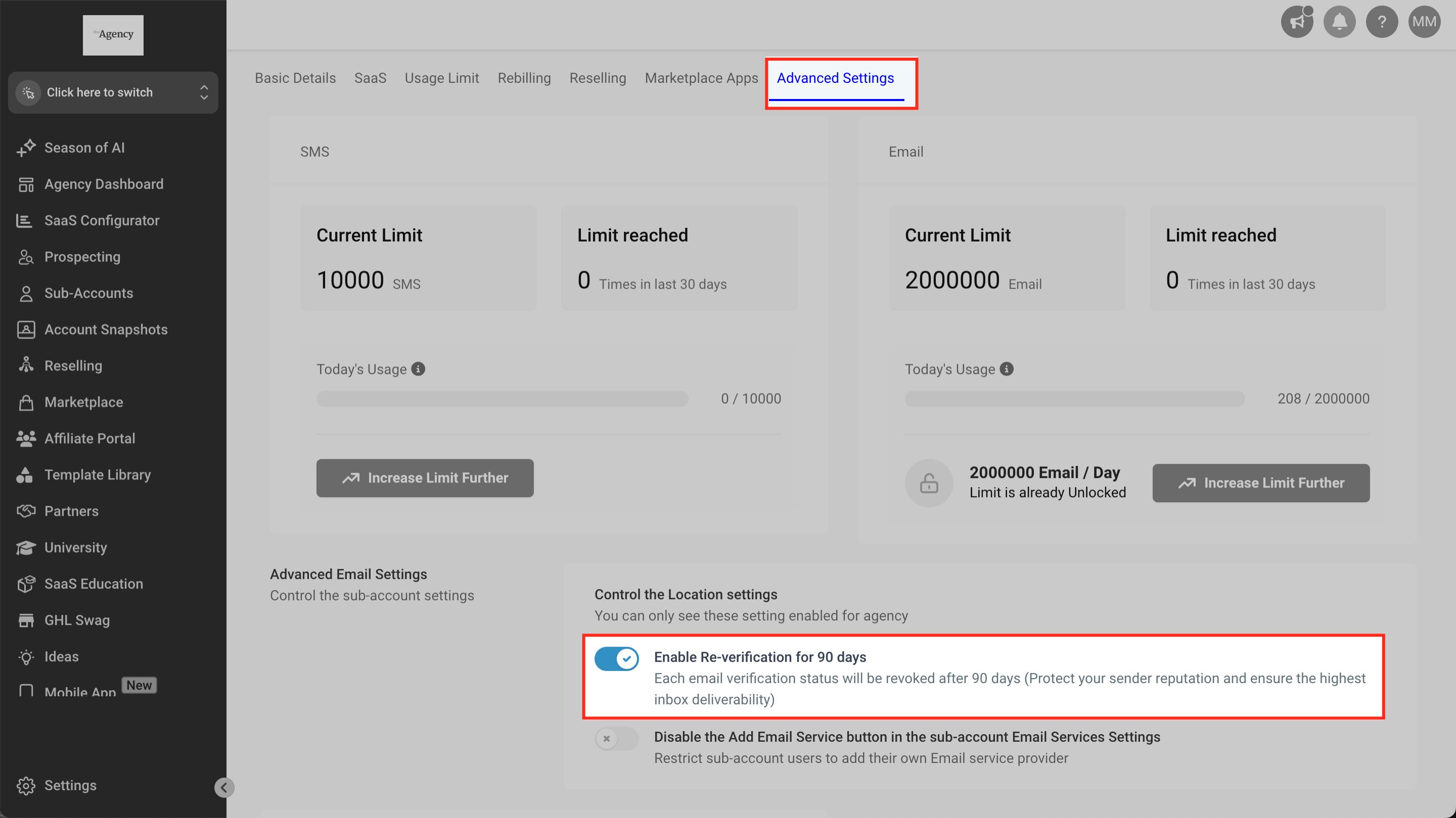
Go to Agency → Subaccounts, click the three-dot menu in the lower right corner of the subaccount card, and select Manage Client.
Navigate to Advanced Settings → Advanced Email Settings and check or uncheck "Enable Re-verification for 90 days".
Email Verification Pricing and Rebilling
$2.50 per 1,000 Email Verifications — available on all plans. This is significantly lower than most providers (e.g., Mailgun charges $12/1,000).
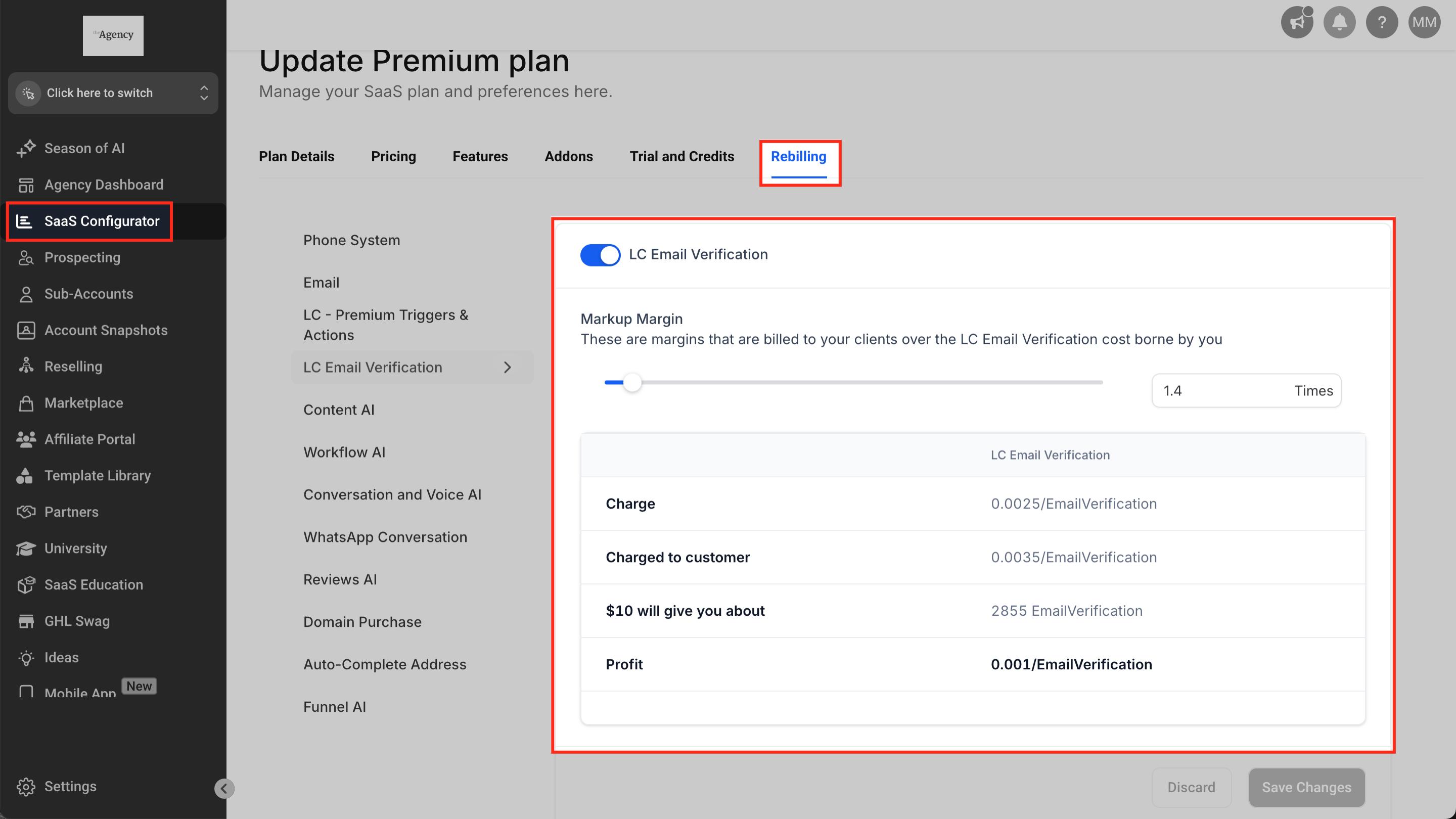
Rebilling settings for LC Email Verification are found in SaaS Configurator → Plan Details → Rebilling. Rebilling capabilities vary by plan:
| Plan | Rebilling Capability |
|---|---|
| Starter | No rebilling |
| Unlimited | Fixed markup only (1.05x) |
| Pro | Variable markup (1.05x – 10x) |
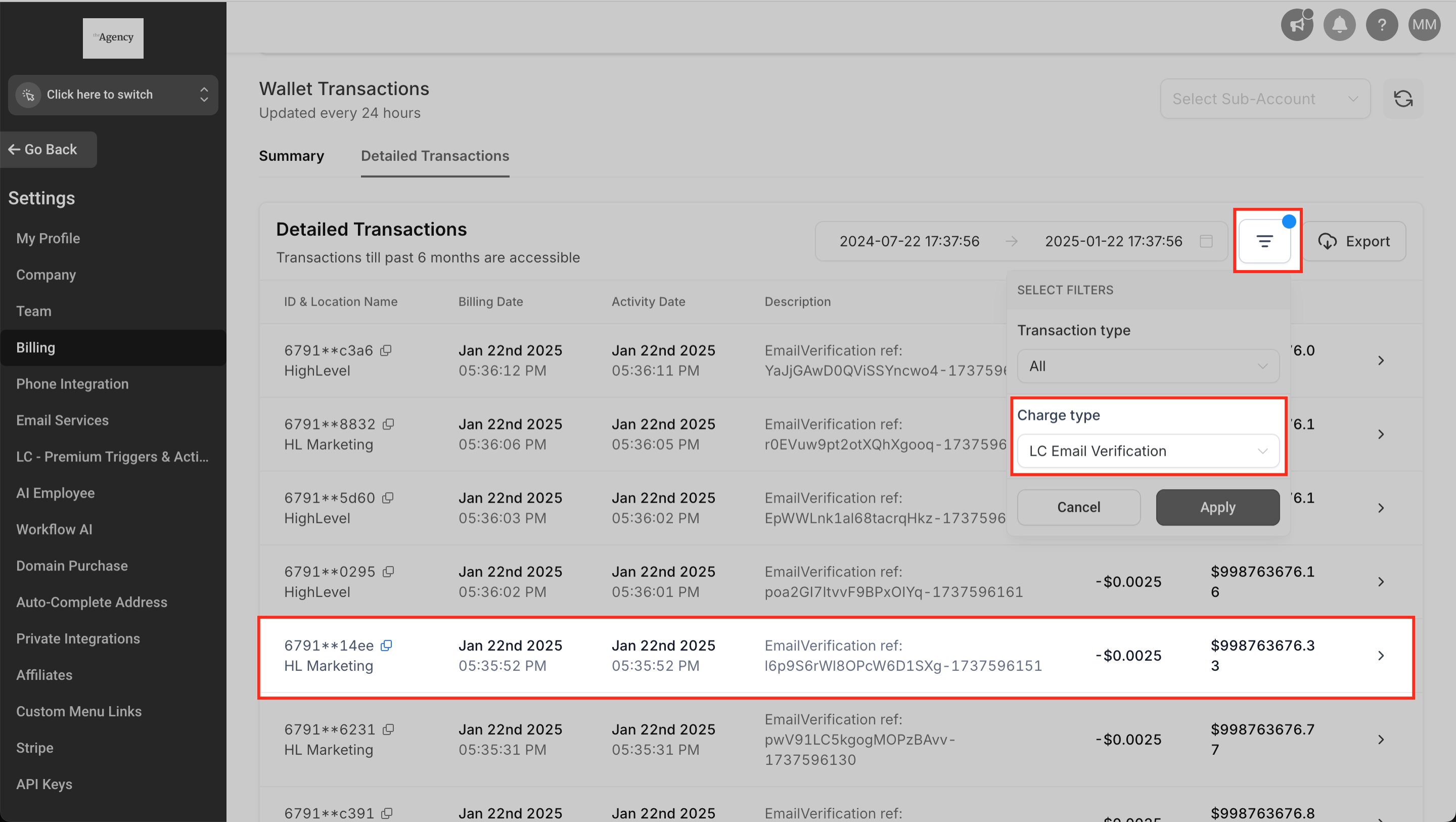
To review individual Email Verification charges, navigate to the Agency Billing Wallet. Every execution is itemized so you can audit usage with full transparency.
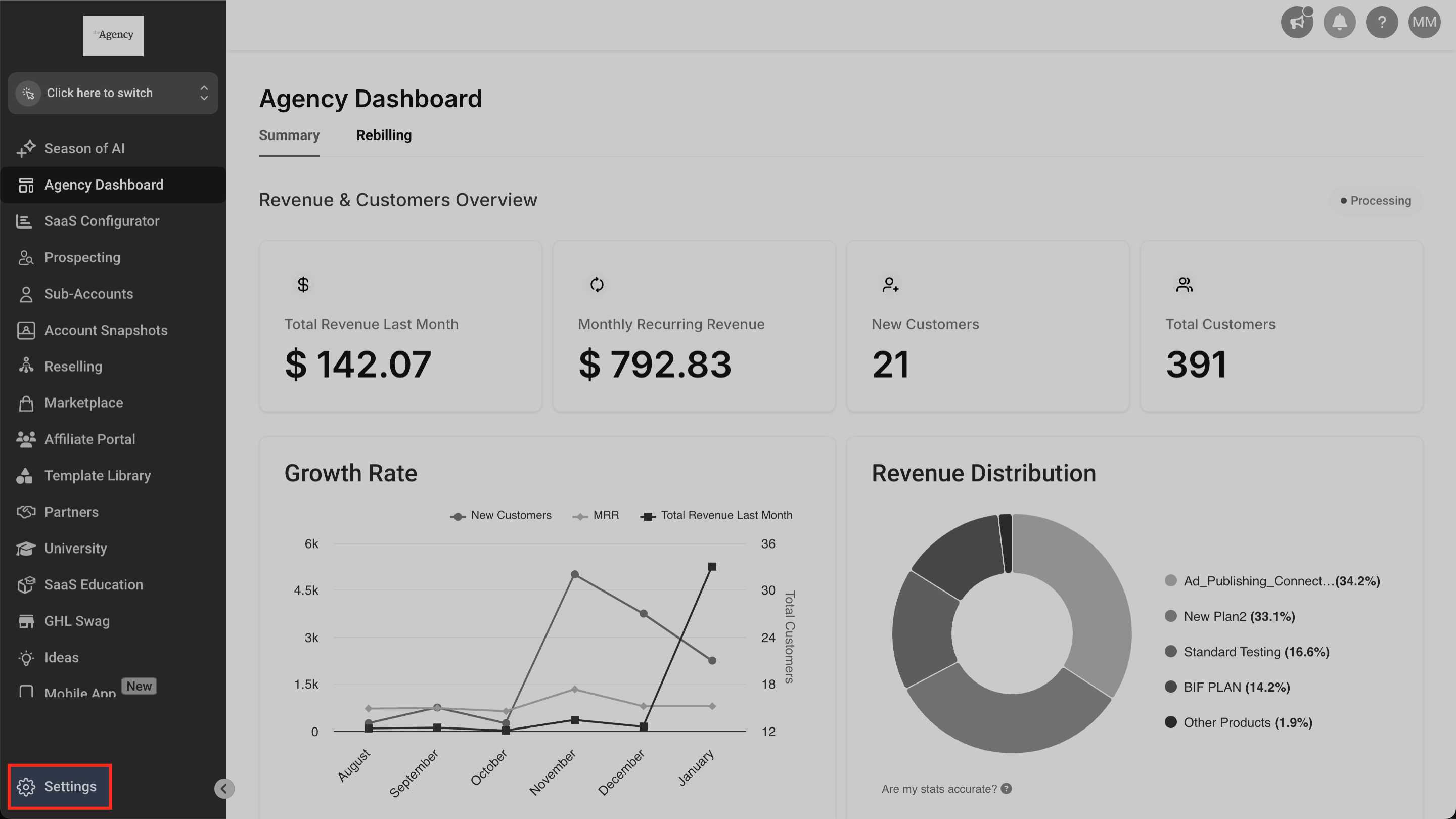
Open your Agency dashboard and go to Settings.
Go to Billing → Wallet & Transactions and open Detailed Transactions.
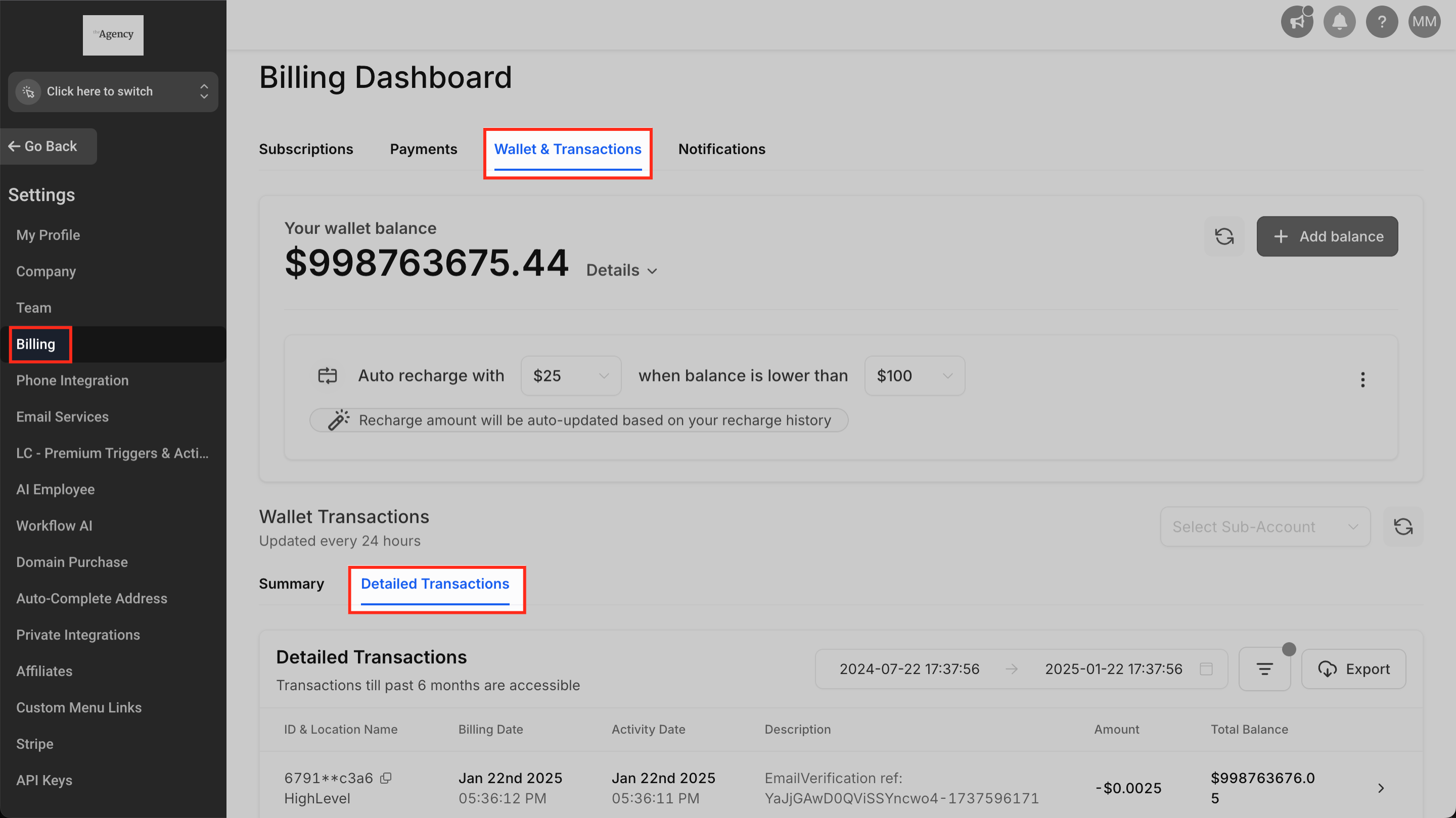
Use the filter to show only Email Verification items, then click into individual transactions for a full breakdown.
How Email Verification Works
When Email Verification is active, all email addresses are verified before the first email is sent — if they haven't been verified already. If 90-day re-verification is also enabled, any verification older than 90 days will expire and the address will be re-checked before the next send.
You can also manually check or trigger verification for any contact from the Contact Details page.
Go to the Contacts section of the subaccount.
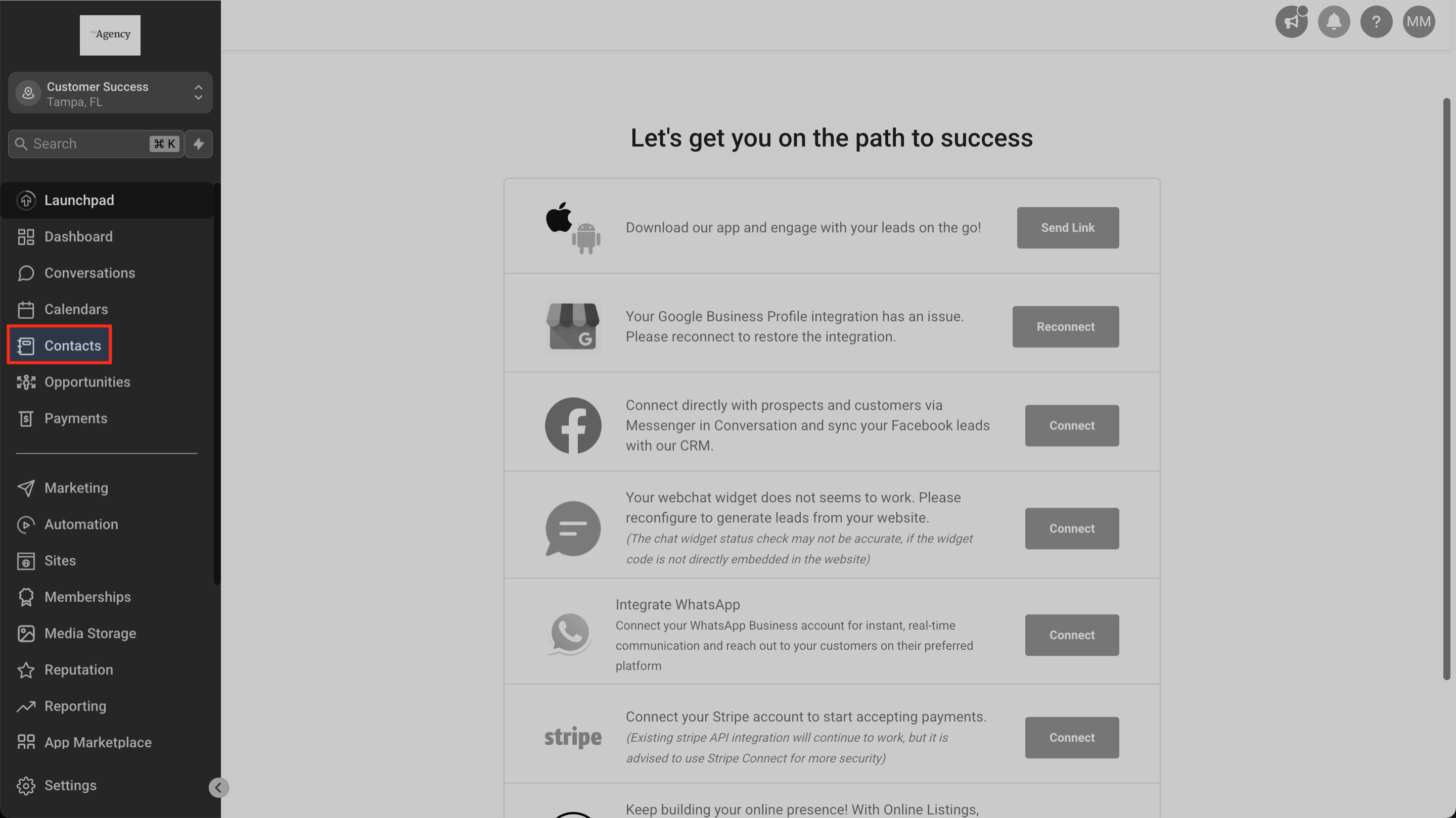
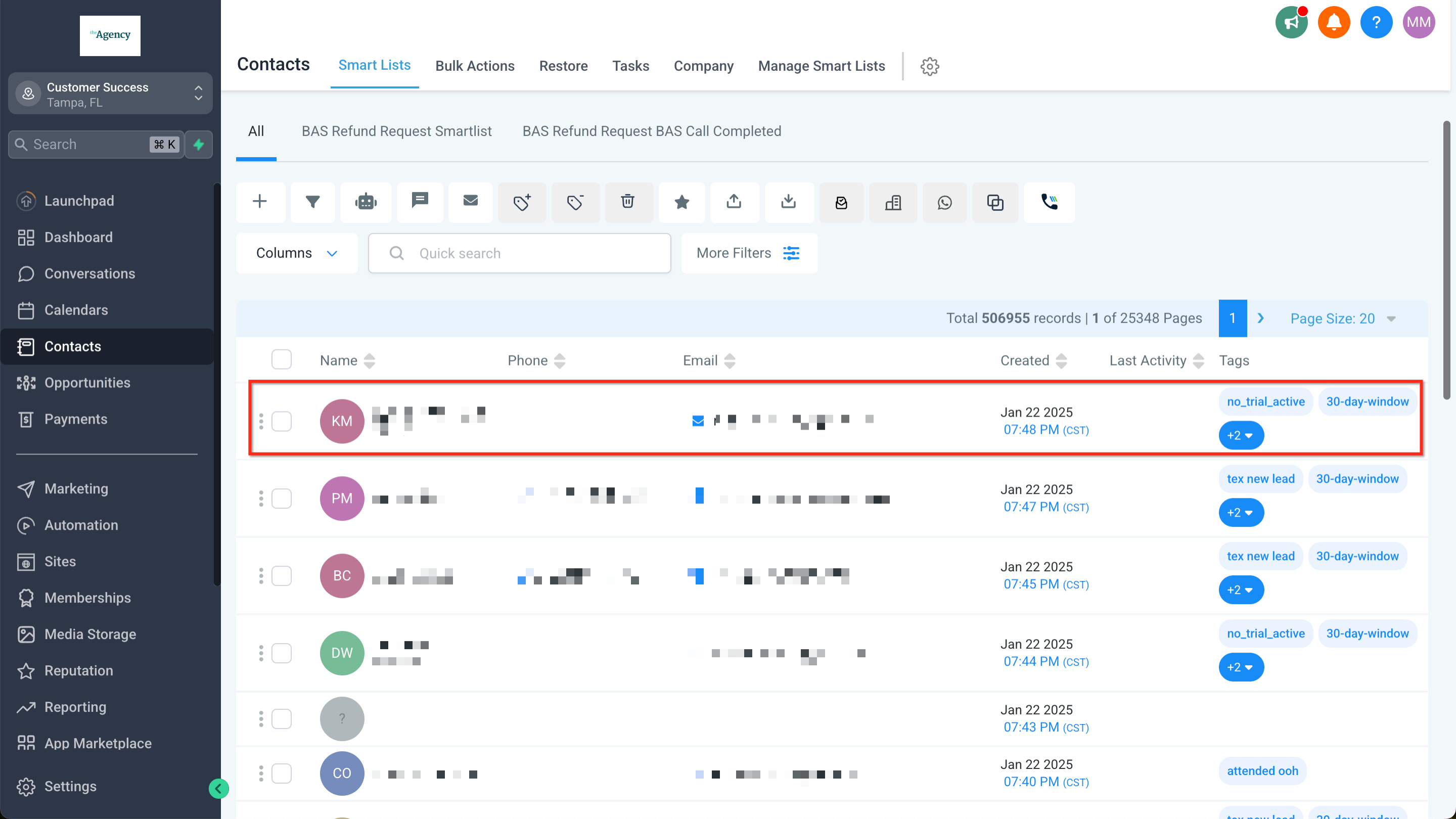
Select a contact from the list to open their detail view.
Click to expand the Contact section within the detail panel.
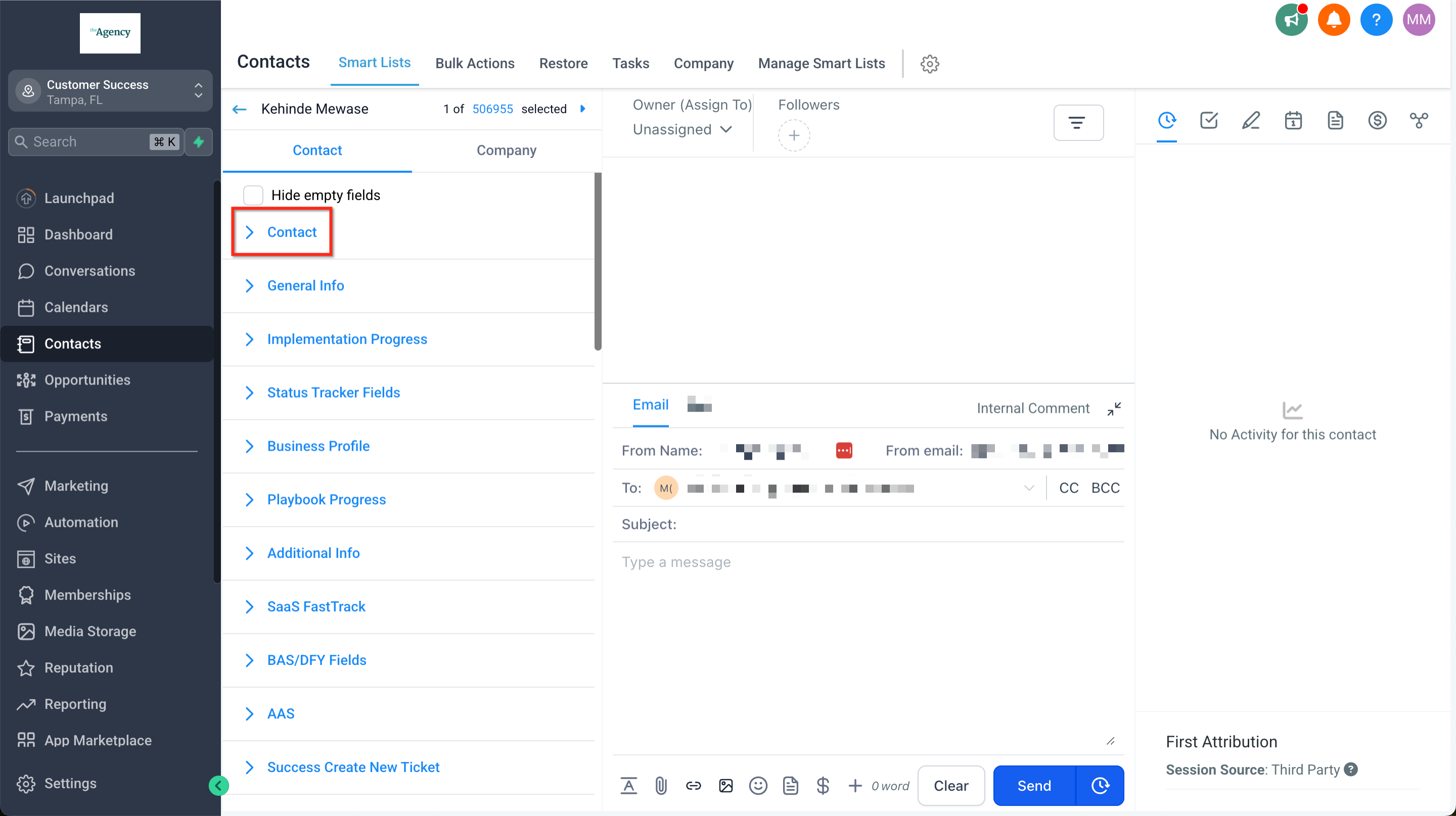
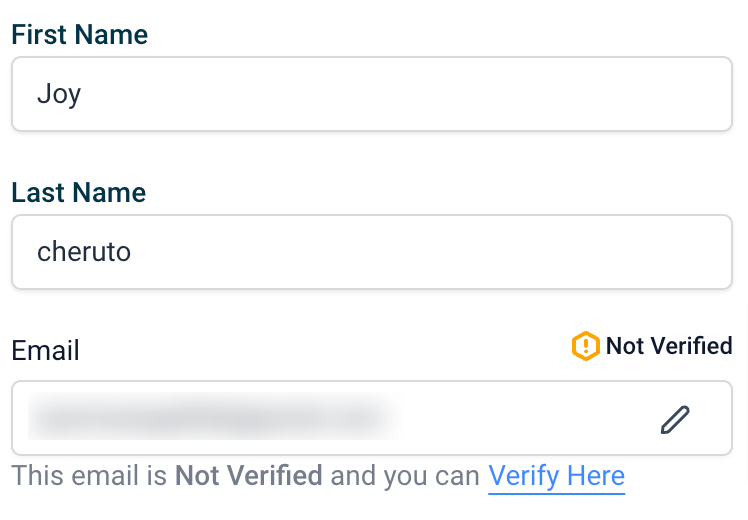
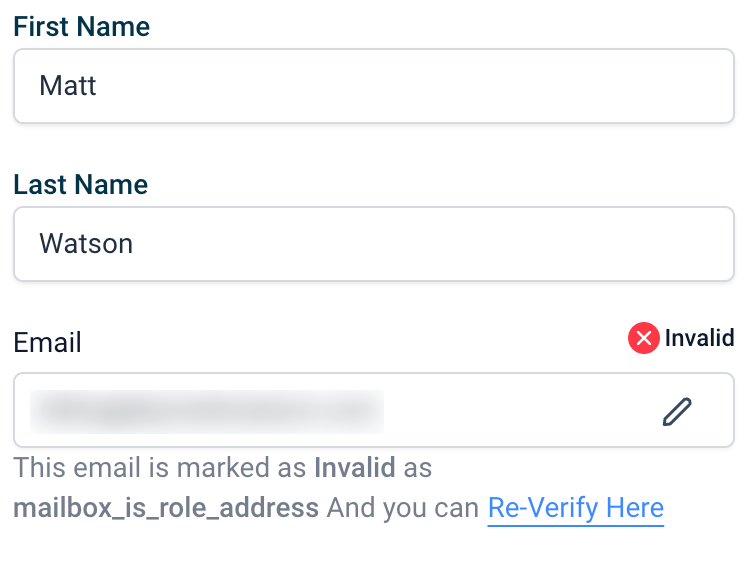
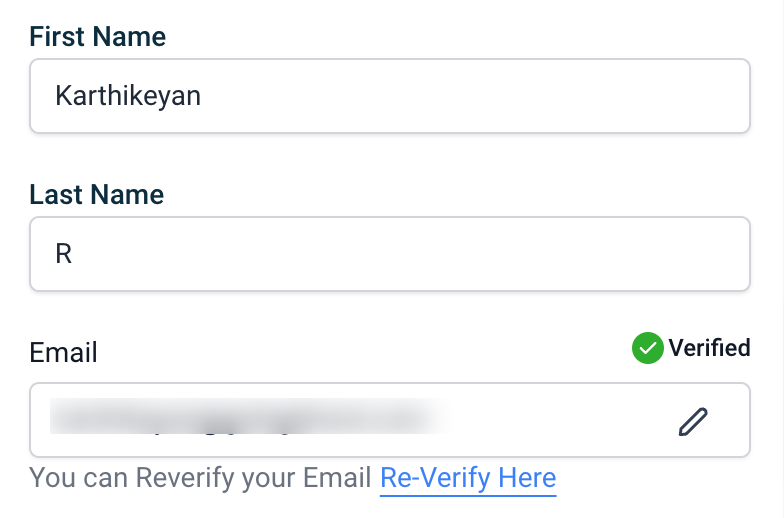
The Email field displays the current verification status for this contact's email address.
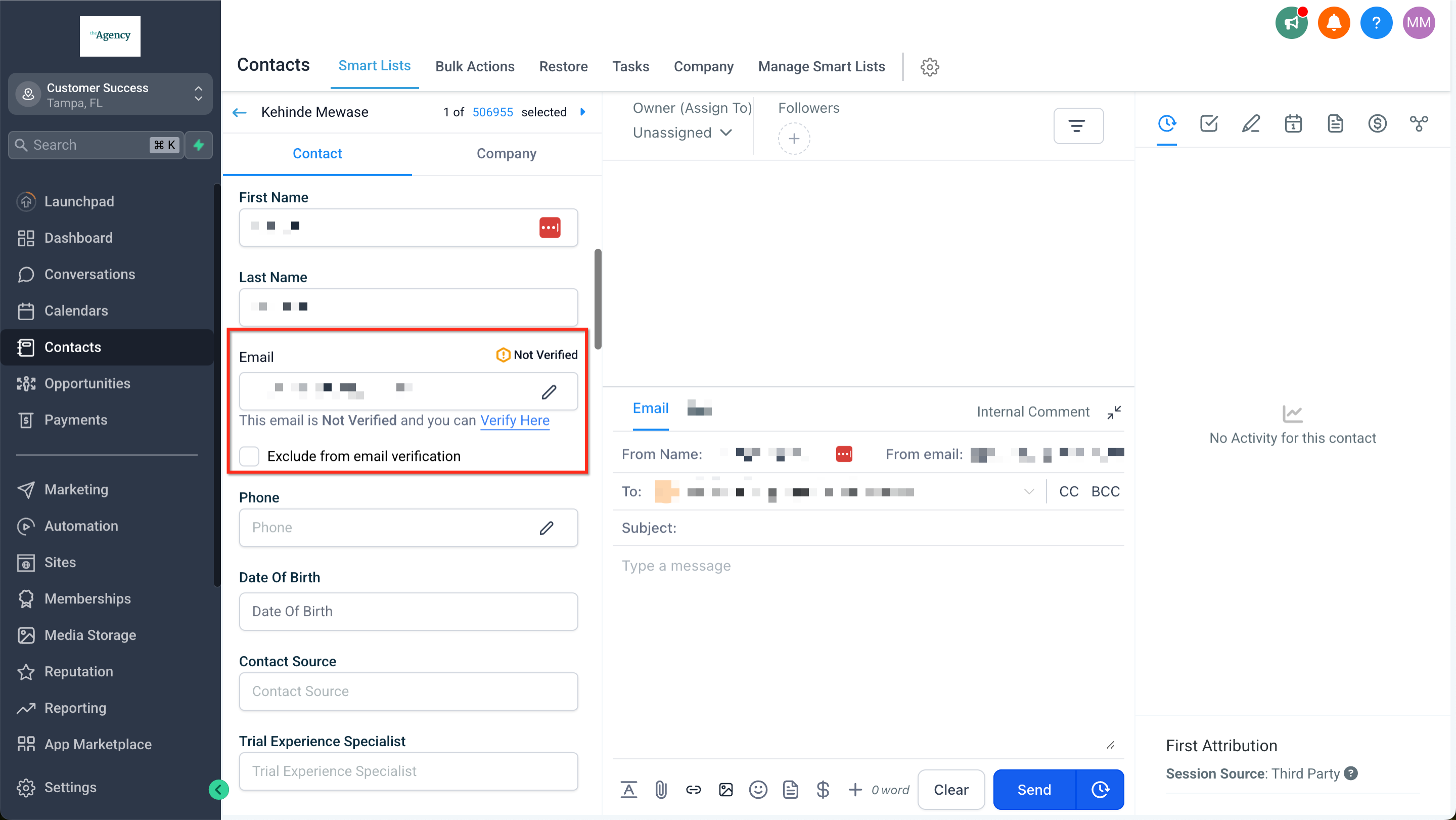
Verification status meanings:
| Status | Meaning |
|---|---|
| Not Verified | The email has not yet been tested by the Email Verification service. |
| Invalid | The email was tested and failed Email Verification. Emails will not be sent to this address. |
| Verified | The email was tested and passed Email Verification. Safe to send. |
What Email Verification Actually Checks
Email verification tools run a series of technical checks to assess whether an address is likely to exist and accept mail. Here is what each check does:
Confirms the address is properly formatted — e.g., name@domain.com. Catches obvious typos like missing @ symbols or invalid characters.
Verifies that the domain (e.g., gmail.com) has active MX records, meaning the domain is configured to receive email at all.
Initiates a connection to the mail server and asks if the specific mailbox exists — without actually sending a message. If the server responds positively, the address is marked "valid."
Passing all three checks means the address appears to exist at the time of verification. It does not mean your email will reach the inbox.
What Email Verification Does NOT Guarantee
Verification is a pre-send check — it cannot control what happens during and after delivery. The following are outside its scope:
- The email will not bounce — a "valid" address can still be rejected post-delivery
- The email will land in the inbox rather than spam or be silently discarded
- The address is still active — mailboxes can be deactivated after verification passes
- Your sending domain or IP is not on a blocklist
- The recipient's inbox is not full or subject to temporary server issues
Think of verification like confirming a mailing address exists on a map — it doesn't guarantee the package will be accepted at the door, or that no one moved out since you last checked.
Common Reasons a Verified Email Still Bounces
Even after passing verification, emails can still fail to deliver. Here are the most common causes and why verification can't catch them:
| Cause | Why Verification Misses It |
|---|---|
| Catch-all domain | Server accepts all addresses during SMTP check, then rejects unknown mailboxes after delivery |
| Mailbox deactivated after verification | Address was valid at check time; account was deleted or suspended since then |
| Sender reputation / IP blocklist | Verification checks the recipient — not whether your sending domain or IP is trusted |
| Spam / content filtering | Recipient's mail server rejects the message based on content or DMARC/SPF/DKIM failure |
| Role-based address filtering | Addresses like info@, admin@, noreply@ may verify as valid but reject marketing email by policy |
| Temporary soft bounce | Server was down, over quota, or greylisting at delivery time — unrelated to address validity |
Catch-all domains are the most common culprit. There is no reliable way for a verification tool to distinguish a real mailbox from a catch-all, because the server intentionally accepts everything during the SMTP handshake.
Frequently Asked Questions
Was this article helpful?
That’s Great!
Thank you for your feedback
Sorry! We couldn't be helpful
Thank you for your feedback
Feedback sent
We appreciate your effort and will try to fix the article