Contacts • Email Addresses • Contact Management
Manage Multiple Email Addresses for Contacts in HighLevel
HighLevel lets you store multiple email addresses on a single contact record, helping keep personal, work, and alternate addresses connected to the same person. Each contact can have one primary email and up to 10 additional email addresses. Additional emails can also be imported through CSV and included in supported workflow matching.
What You'll Learn
Learn how to add additional email addresses, choose the primary address, import and export contact email data, handle emails during contact merges, and search additional emails with the Find Contact workflow action.
Important
A contact can store up to 10 additional email addresses in addition to one primary email, for a maximum of 11 email addresses. Only one address can be designated as primary at a time.
1
What Are Multiple Email Addresses for Contacts?
Multiple email addresses let you keep several addresses on one HighLevel contact instead of creating separate contact records for the same person. This is useful when a contact has personal, business, billing, or other alternate email addresses.
A contact can have:
- 1 primary email address
- Up to 10 additional email addresses
- Up to 11 email addresses total
The primary email remains the contact's standard Email field. Additional addresses stay connected to the contact and can be used in supported import, merge, export, and workflow-matching experiences.
2
Key Benefits of Multiple Email Addresses
Keeping alternate addresses on one contact helps consolidate customer data and reduces the need to maintain duplicate records for the same person.
- Keep One Contact Profile: Store personal, business, billing, and alternate addresses on the same contact.
- Choose a Primary Email: Identify which email HighLevel should treat as the contact's standard Email field.
- Import Additional Emails: Add alternate addresses in bulk through CSV imports.
- Export Contact Data: Include the email-related fields you need by configuring visible columns before exporting.
- Preserve Email Data During Merges: Review email values and choose the appropriate primary email when combining duplicate contacts.
- Improve Workflow Matching: Configure Find Contact to search additional email addresses when needed.
- Centralize Contact Data: Keep multiple identifiers connected to the same customer record instead of spreading information across duplicates.
3
Prerequisites and Limitations
Understanding how HighLevel treats primary and additional emails helps prevent unexpected results when sending messages, importing contacts, merging records, or configuring workflows.
- Each contact can store up to 10 additional email addresses plus one primary email.
- Only one email can be designated as the primary email at a time.
- The primary email is the contact's standard Email field.
- The primary email is used by features that rely on the contact's standard Email field.
- Additional emails can be imported through CSV using the Additional Email field.
- The Find Contact workflow action searches the primary Email field by default. Additional email matching must be enabled separately.
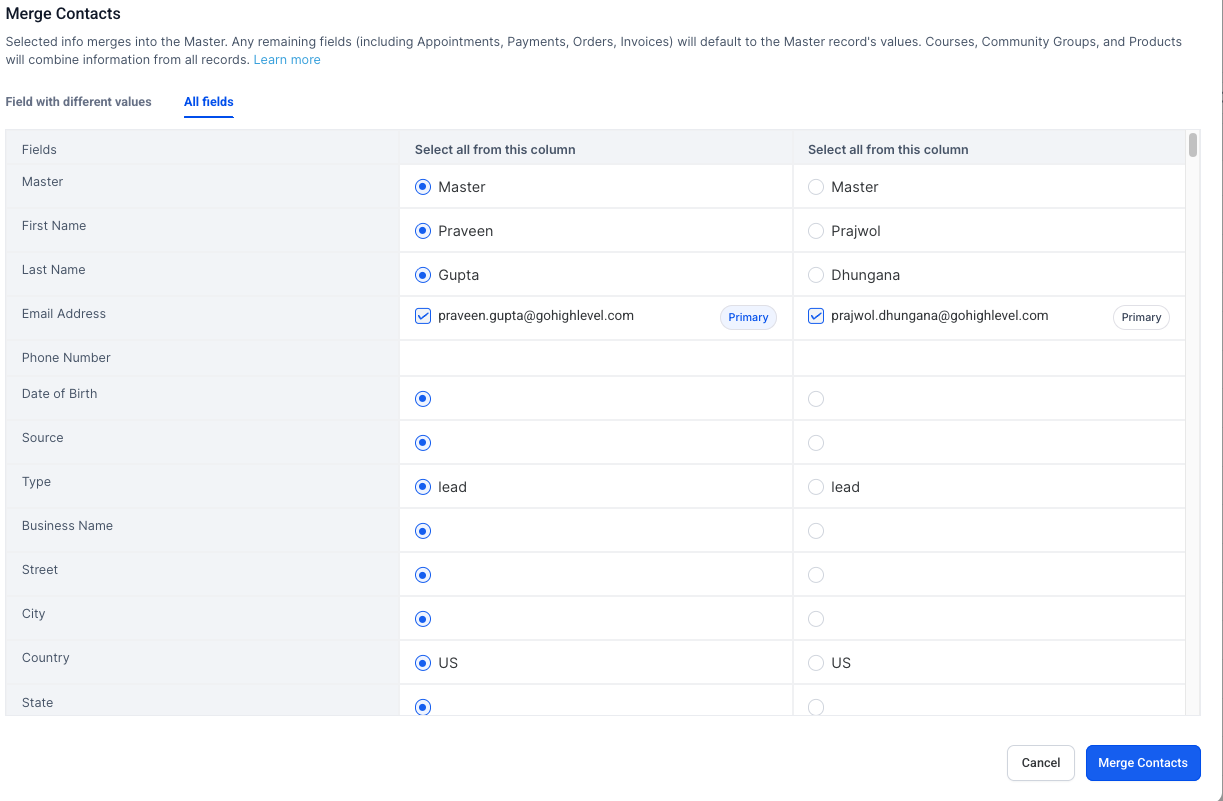
- Contact merges cannot be undone, so review the Master record and email values carefully before confirming.
4
How To Add Additional Email Addresses
Add alternate addresses directly from the contact record when the same person uses multiple email addresses. Keeping them on one profile helps preserve a single source of truth for that contact.
- Open the applicable Sub-Account View.
- Go to Contacts.
- Search for and open the contact.
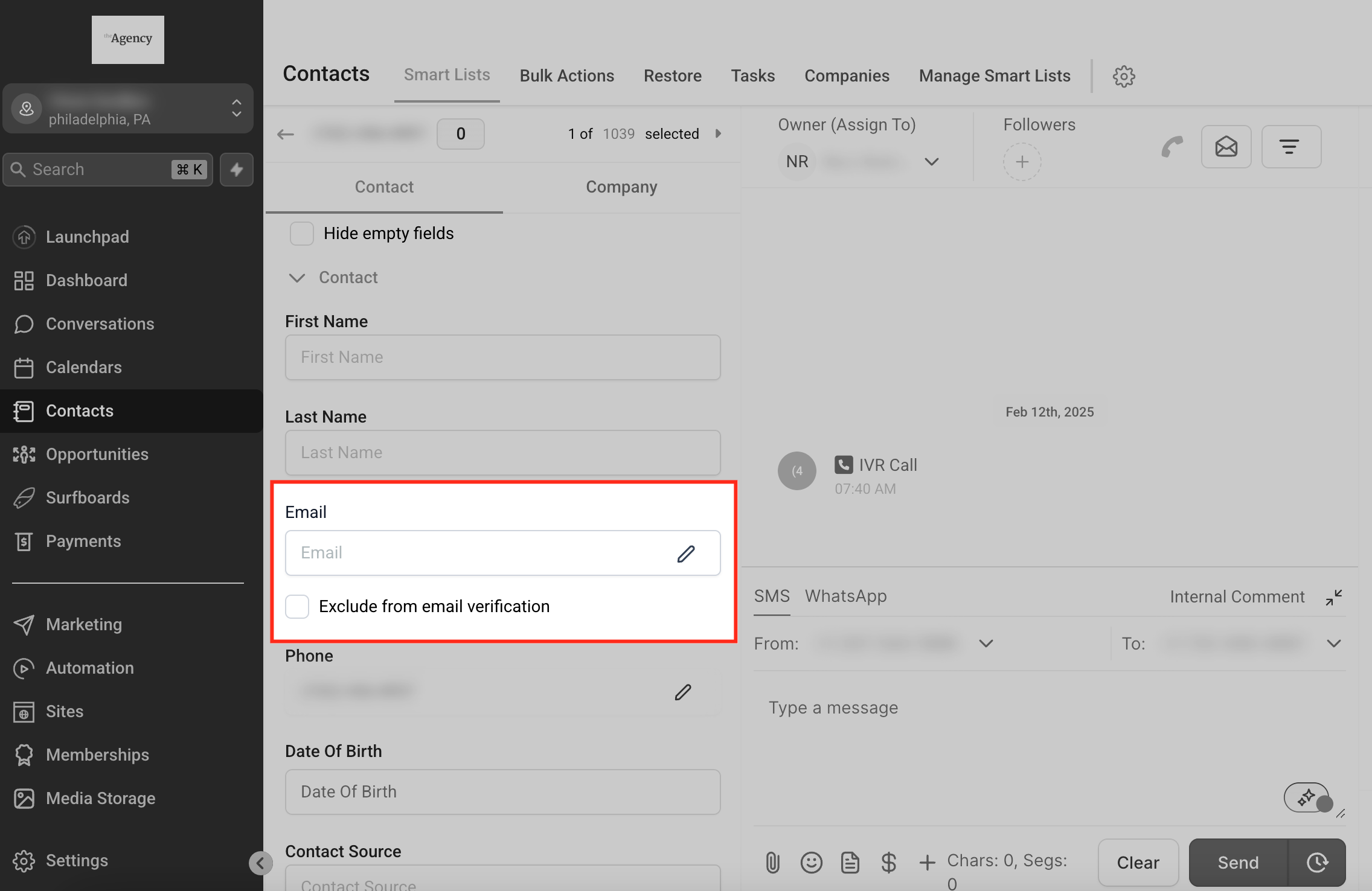
- Open the contact details and locate the Email Address area.
- Click Add Another Email.
- Enter the additional email address.
- Repeat as needed for other alternate addresses.
- Click Save Changes.
Limit: You can add up to 10 additional email addresses. After the supported limit is reached, the option to add another email is no longer available.
5
How To Set the Primary Email Address
The primary email is the address stored in the contact's standard Email field. Choosing the correct primary address is important because HighLevel features that rely on the standard contact Email field use this value.
- Open the applicable contact record.
- Locate the Email Address area.
- Find the email address you want to make primary.
- Click the star icon next to that address.
Important: Only one email address can be primary at a time. Review the selected address before using the contact in campaigns, automations, or other features that rely on the standard Email field.
6
How To Import Additional Email Addresses
CSV imports are useful when you need to add alternate email addresses across many contacts at once. Correct formatting and field mapping help HighLevel store the additional addresses without replacing the primary email.
Step 1: Prepare the CSV
Preparing the file correctly before uploading reduces field-mapping errors and helps keep multiple email addresses attached to the intended contact.
- Create a separate column for Additional Email.
- Enter alternate email addresses in that column.
- If a contact has multiple additional emails, separate the addresses with commas.
Example
billing@example.com, personal@example.com, assistant@example.com Step 2: Start the Contact Import
Start a CSV import from Contacts so HighLevel can read the contact fields and map the alternate-email column.
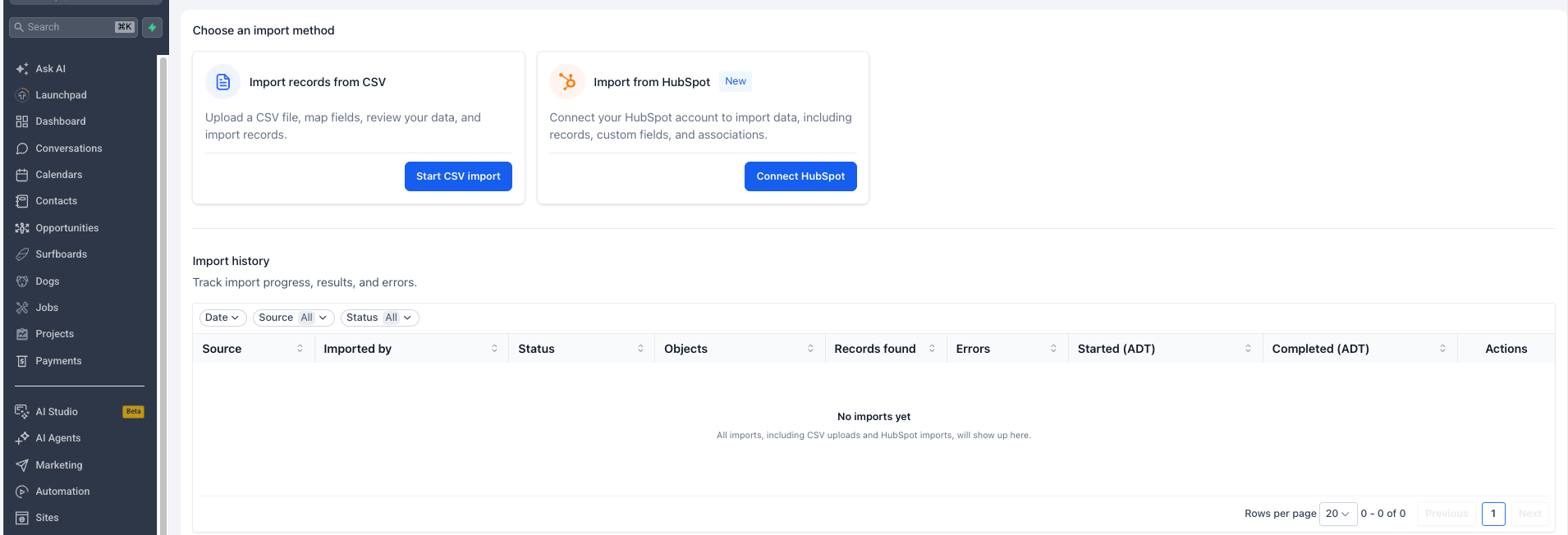
- Go to Contacts.
- Click Import.
- Under Import records from CSV, click Start CSV import.
Step 3: Upload and Map Additional Emails
Field mapping tells HighLevel which CSV column contains the alternate addresses that should be stored as additional emails.
- Upload the CSV file.
- Continue to field mapping.
- Map the alternate-email column to Additional Email.
- Review the remaining mappings.
- Complete the import.
7
How To Export Contact Email Data
Contact exports use the fields currently visible in the Contacts table. Configure the table fields before exporting so the CSV includes the email information you need.
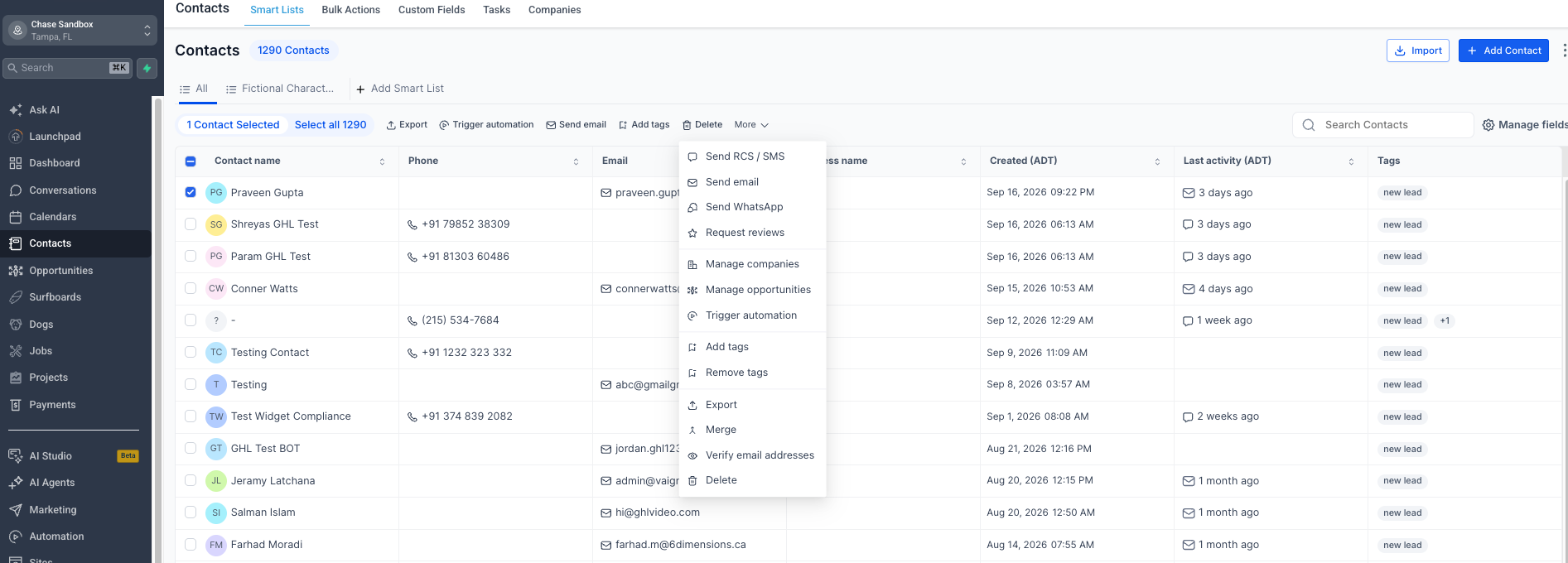
- Go to Contacts → Smart Lists.
- Filter or select the contacts you want to export.
- Open Manage Fields.
- Make the email-related columns you need visible in the Contacts table.
- Select the contacts.
- Click Export or use the applicable export option from the contact actions.
- Confirm the export.
HighLevel processes contact exports in the background. Completed bulk actions can be reviewed from the Bulk Actions area.
10
Frequently Asked Questions
Q: How many email addresses can one contact have?
A contact can have one primary email and up to 10 additional email addresses, for a maximum of 11.
Q: Can I change which email is primary?
Yes. Open the contact's Email Address area and click the star icon next to the address you want to make primary.
Q: Which email does HighLevel use when a feature relies on the standard Email field?
The primary email is stored in the contact's standard Email field. Features that rely on that field use the primary address.
Q: Can I import multiple email addresses for one contact?
Yes. Put alternate addresses in an Additional Email column and separate multiple values with commas, then map that column to Additional Email during import.
Q: Can I export contact email information?
Yes. Contact exports use the fields included in the Contacts table. Review the visible fields before exporting to make sure the email information you need is included.
Q: Can Find Contact search additional email addresses?
Yes. By default, Find Contact checks the primary Email field. When Email is selected as a match field, enable the option to include additional emails in the search.
Q: What happens to email addresses when duplicate contacts are merged?
The Merge Contacts screen lets you review differing values before combining the records. Choose the Master contact, review the available email addresses, and confirm which email should remain primary.
Q: Can I undo a contact merge if I select the wrong email?
No. Contact merges cannot be undone, so review the Master contact and email values carefully before confirming.