The updated Send Email action in HighLevel Workflows brings email creation, templates, and tracking options into one interface. You can compose a quick message, design an email from scratch, or use an existing template. Additional settings help you track engagement and control whether template edits stay synchronized. This article explains how to configure, test, and save a workflow email.
TABLE OF CONTENTS
- What Is the Updated Email Action Interface?
- Key Benefits of the Updated Email Action
- Email Creation Options
- Advanced Email Settings
- Syncing Workflow Emails with Templates
- How to Create an Email Action in Workflows
- Frequently Asked Questions
- Related Articles
What Is the Updated Email Action Interface?
The redesigned Send Email action gives you one interface for composing messages, selecting templates, configuring email settings, tracking engagement, and testing messages directly inside a workflow.
The same email-building experience is designed to stay consistent across workflow emails and other supported email areas, making it easier to create and manage messages without switching between different editing experiences.
Key Benefits of the Updated Email Action
The updated interface brings the most common email creation and configuration tools into one workflow step, reducing the number of places you need to visit when preparing an automated email.
- Faster Email Setup: Create and configure emails directly from a workflow action.
- Flexible Editing: Choose quick composition, visual design, HTML code, or plain text.
- Reusable Templates: Start with existing templates or browse the Template Library.
- Engagement Options: Configure click tracking, UTM parameters, and contact tags.
- Template Control: Keep workflow emails independent or enable continuous synchronization.
Email Creation Options
When you add or edit a Send Email action, you can choose how you want to create the message. Each option supports a different email-building workflow.
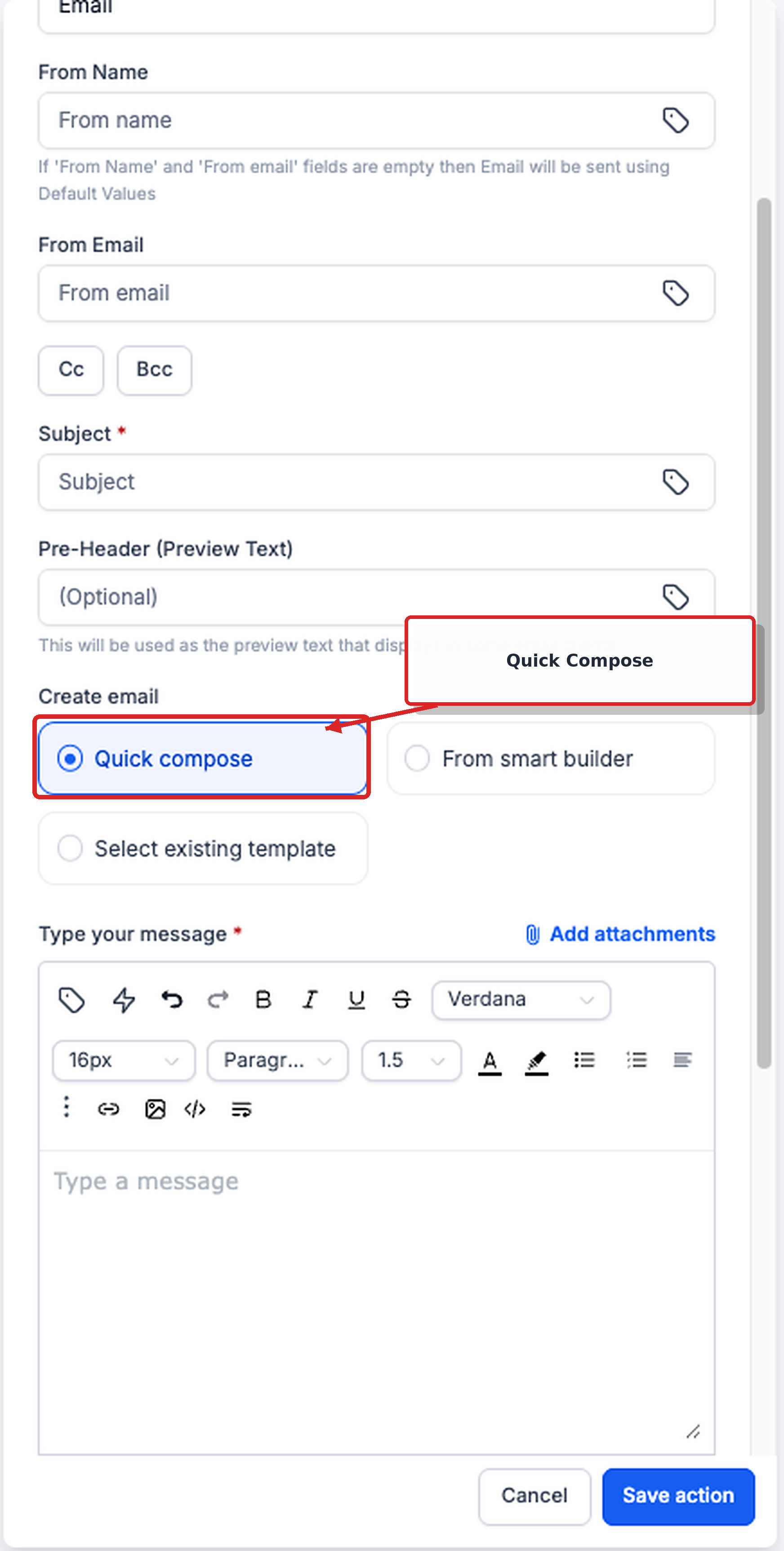
Quick Compose
Quick Compose is a lightweight editor for simple emails and fast follow-ups. It is separate from the Plain Text Editor available through Smart Builder.
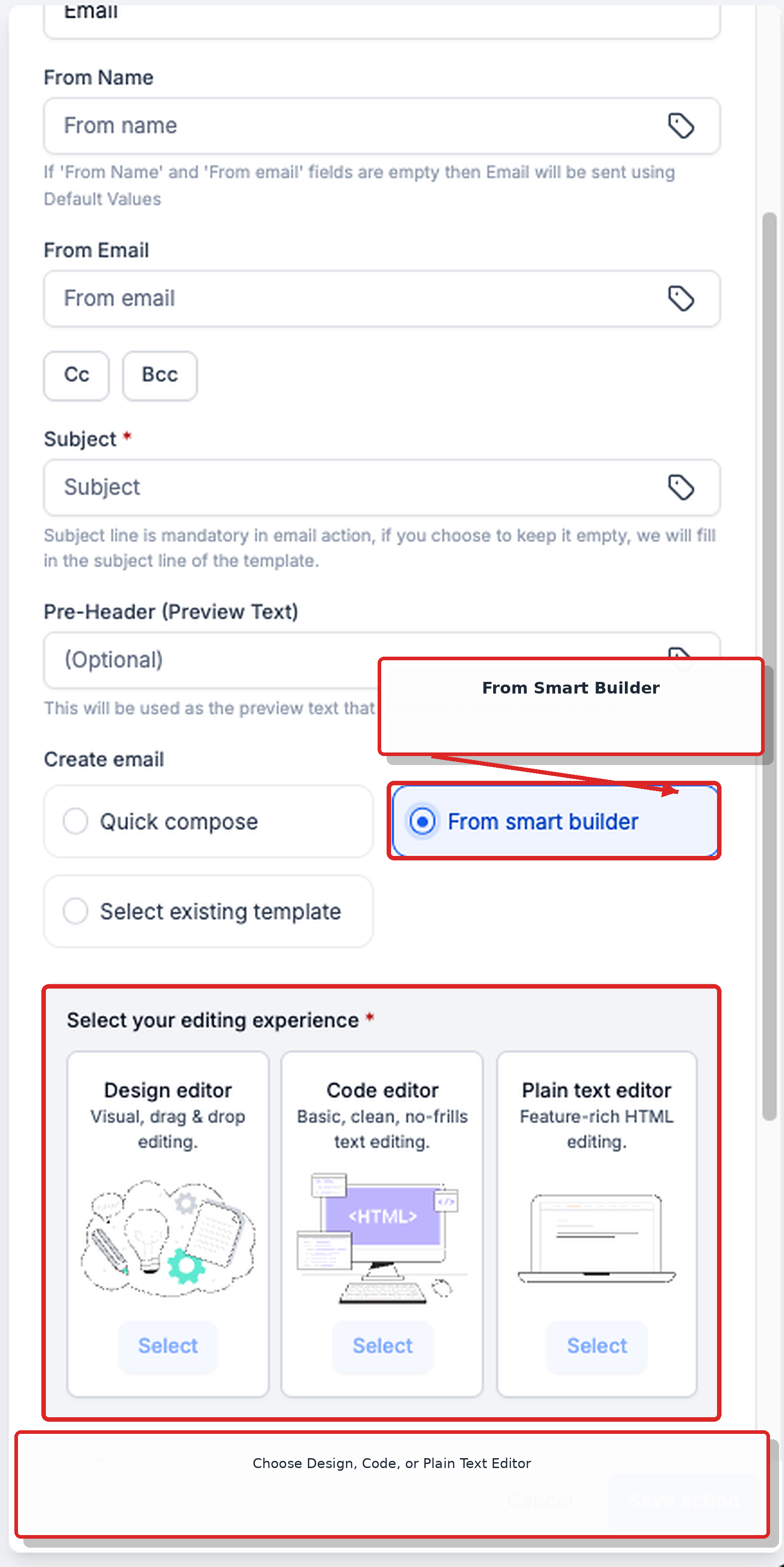
From Smart Builder
From Smart Builder gives you access to the full email-building experience. Depending on the selected editing mode, you can create the email using the Design Editor, Code Editor, or Plain Text Editor.
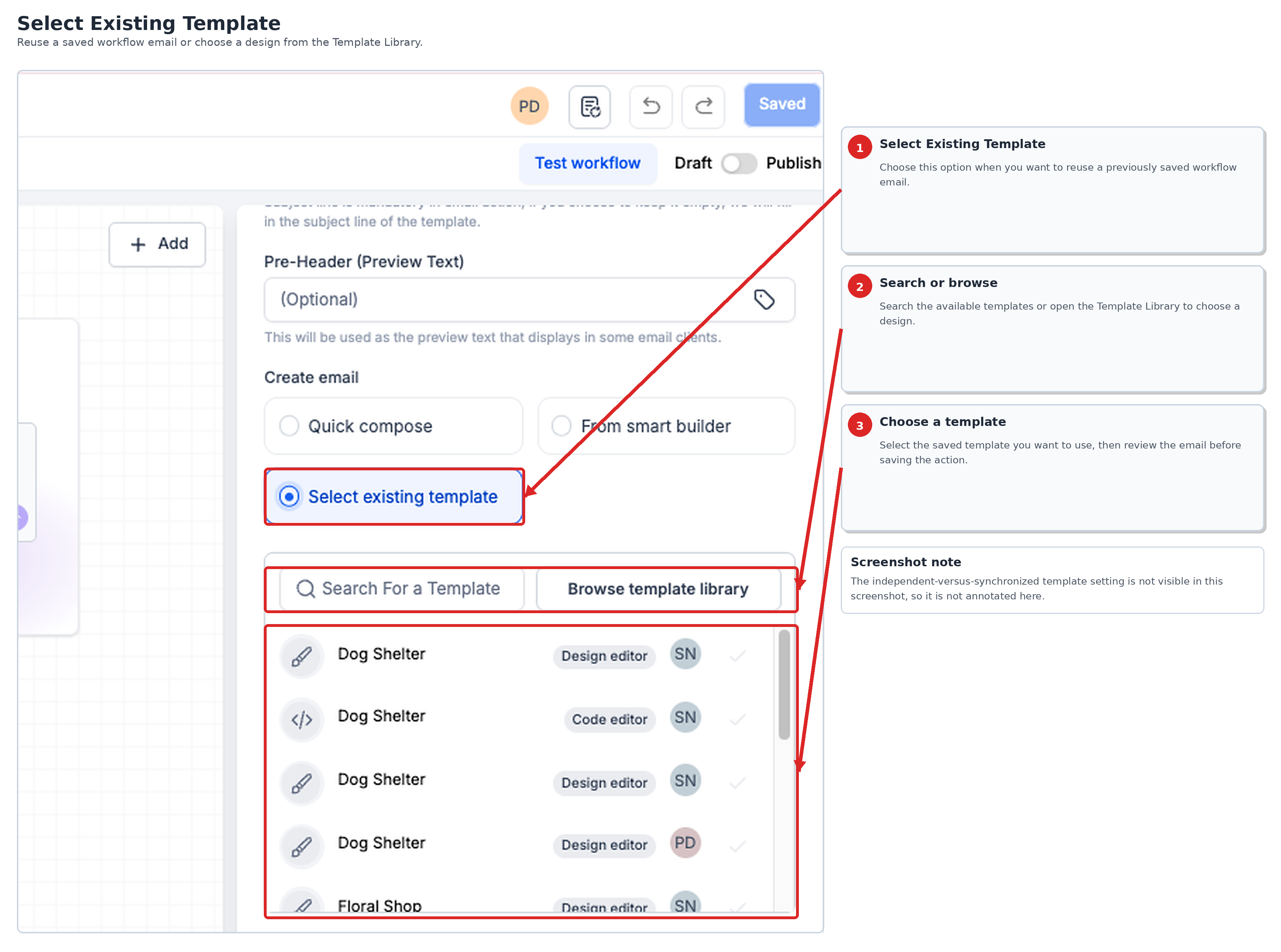
Select Existing Template
Select Existing Template lets you start from an email you have already saved or choose a design from the Template Library.
After selecting a template, review whether the workflow email should remain independent or stay synchronized with the source template.
Advanced Email Settings
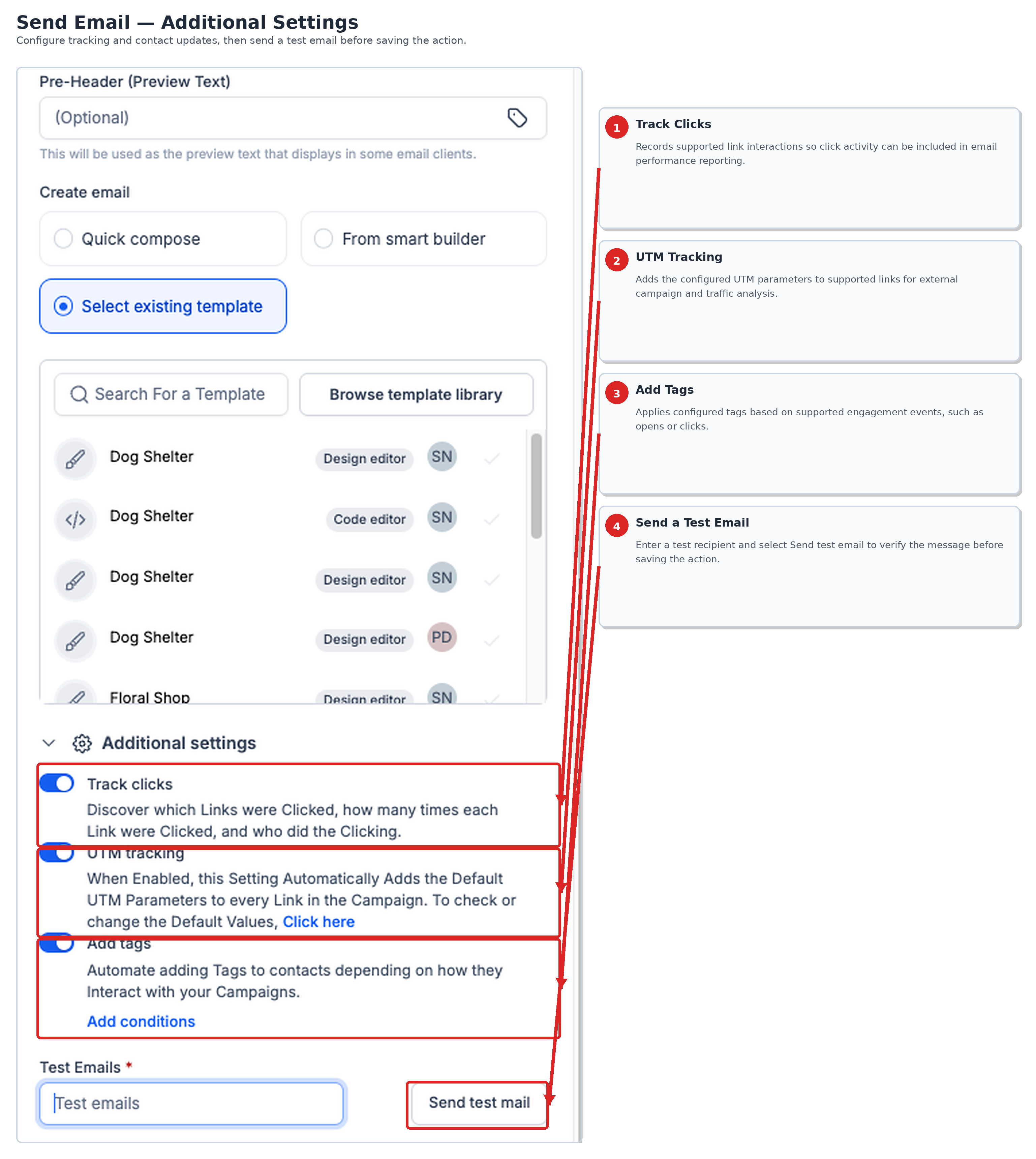
The Send Email action includes additional settings for tracking engagement and applying contact updates. Configure only the options that are useful for your workflow.
- Track Clicks: Records supported link interactions so click activity can be included in email performance reporting.
- UTM Tracking: Adds configured UTM parameters to supported email links for external campaign and traffic analysis.
- Add Tags: Applies configured tags based on supported engagement events, such as opens or clicks.
Review Email Statistics
After emails have been sent, reopen the applicable Send Email action to review available Statistics. You can also use Workflow Campaigns reporting to analyze email performance across workflow messages.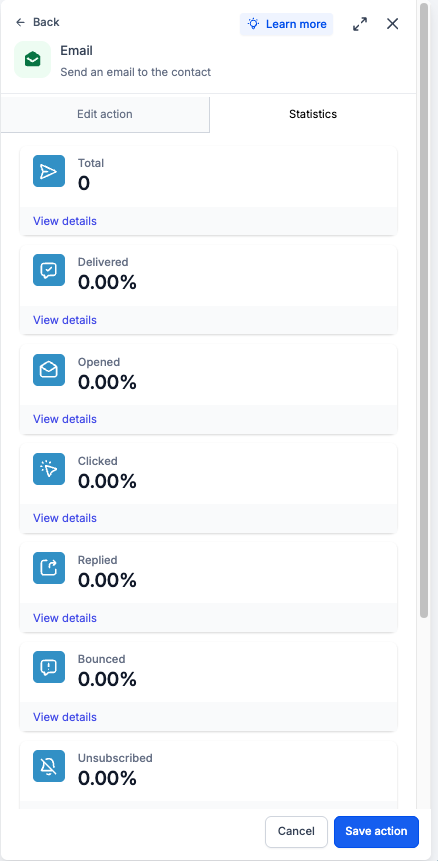
Syncing Workflow Emails with Templates
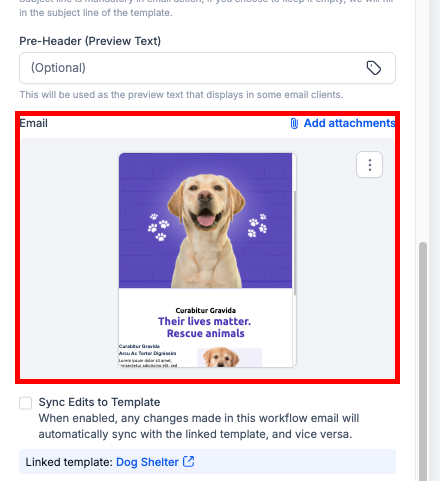
When you create a workflow email from an existing template, the Sync Edits to Template setting controls whether the workflow email and source template continue to update each other.
When Sync Is Enabled
- Changes made to the workflow email can update the original template.
- Changes made to the original template can update the workflow email.
- Synchronization remains continuous and bidirectional while the setting is enabled.
When Sync Is Disabled
- The workflow email and the original template remain independent.
- Changes made to one do not automatically update the other.
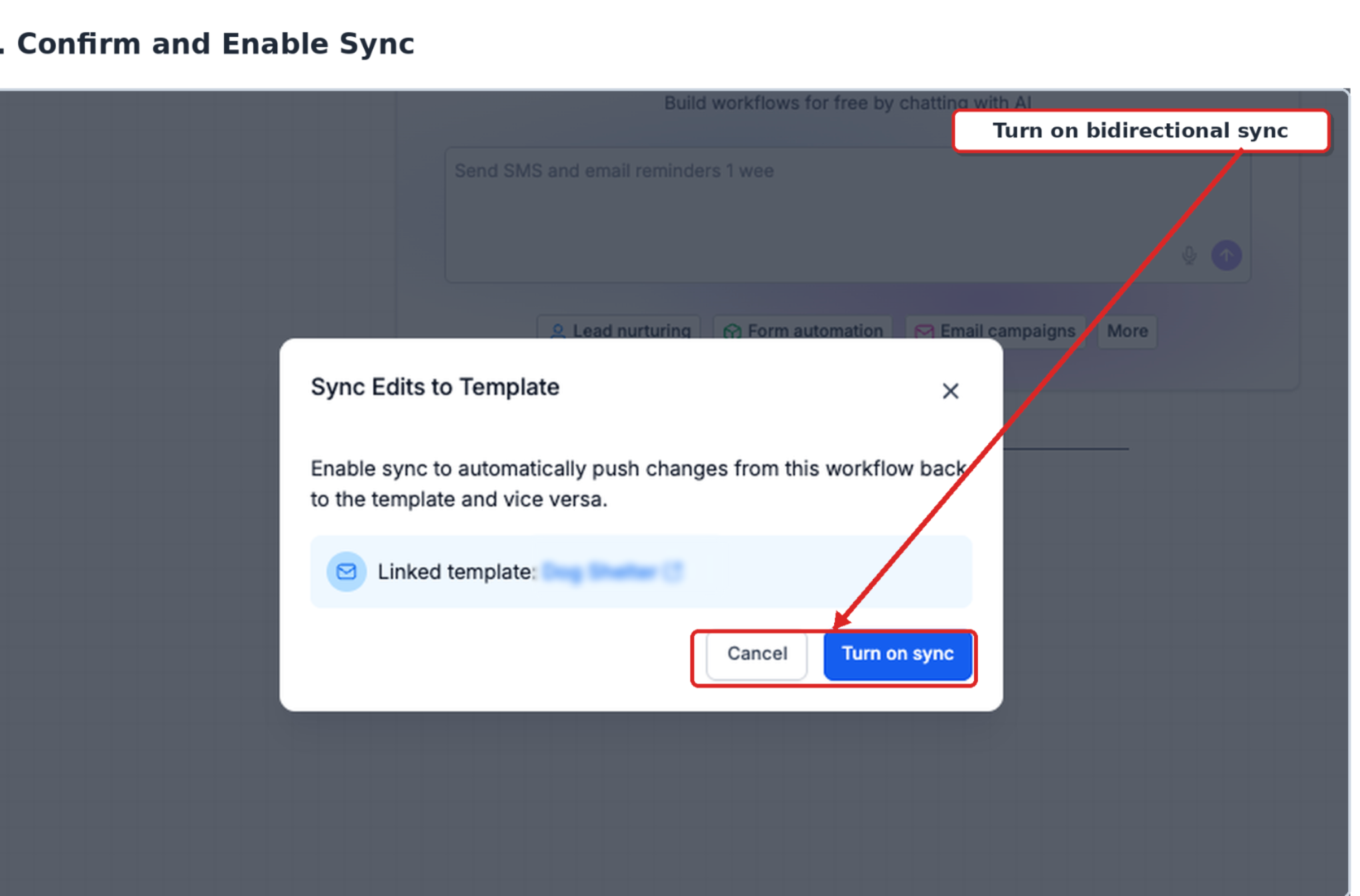
Default Behavior
For new Send Email actions created from an existing template, synchronization is OFF by default. Existing email actions may have different synchronization settings, and you can change the setting later as needed.
Important: Enabling Sync Edits to Template can also update the original email template when you edit the workflow email. Review this setting before modifying templates that are shared across multiple workflows.
How to Create an Email Action in Workflows
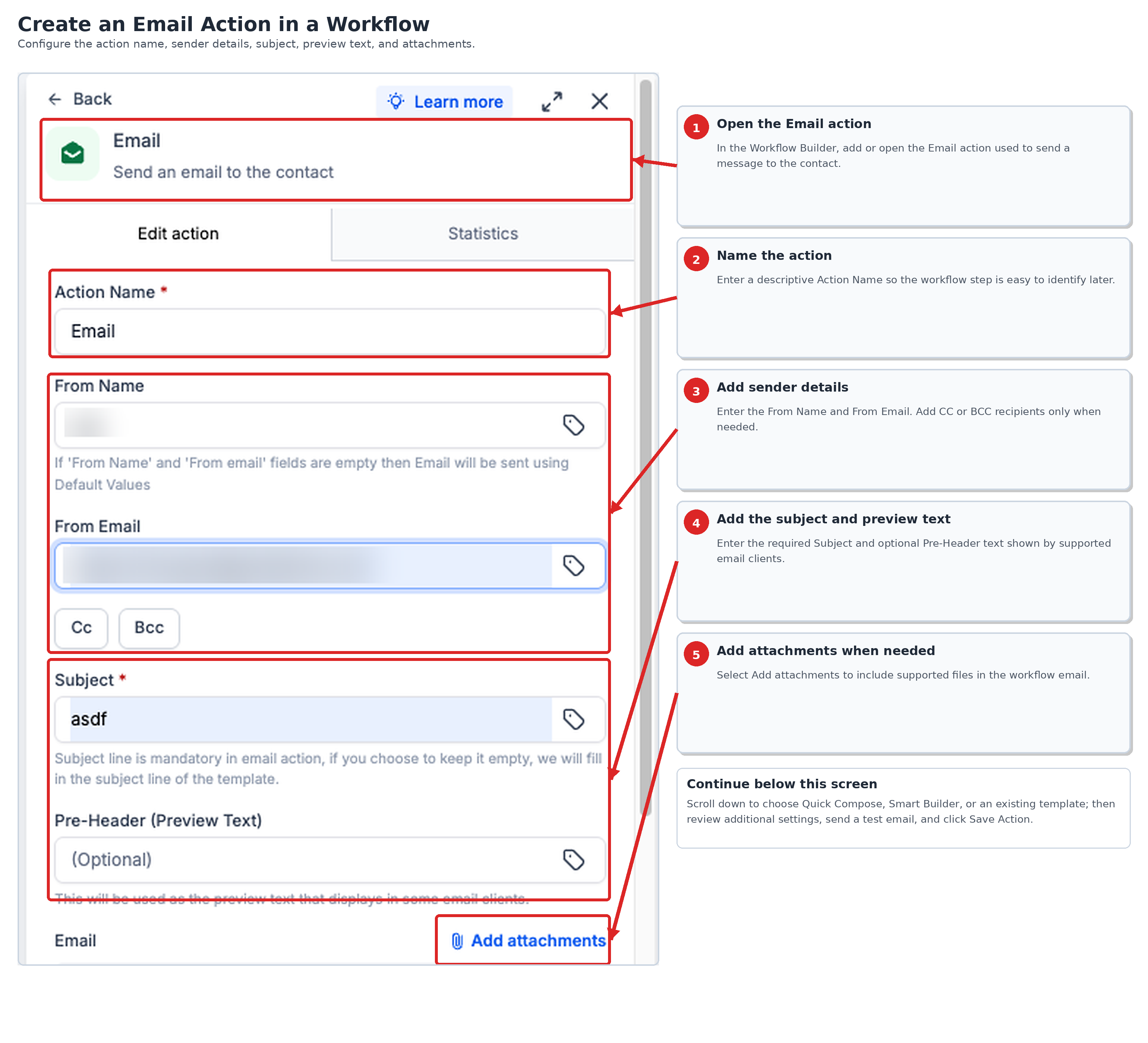
Configure the email directly from the Workflow Builder, then test the message and save the action before publishing the workflow.
- Open the workflow. Go to Automation → Workflows, then create a workflow or open an existing one.
- Add the email action. Add the Send Email action and give the action a descriptive name.
- Configure the email details. Enter the applicable From Name, From Email, and Subject. Configure optional settings such as CC, BCC, or preview text where available.
Choose how to create the email. Select Quick Compose, From Smart Builder, or Select Existing Template.- Configure additional settings. Review Sync Edits to Template, tracking, UTM settings, tags, and other available options as needed.
- Send a test email. Use Test Emails and Send Test Mail to review the content, formatting, links, and sender information before using the action in a live workflow.
- Save and publish. Click Save Action, save the workflow, and publish it when the automation is ready to run.
Important: Save Action saves the email action configuration. It does not automatically publish a draft workflow. The workflow must be published before it can run when triggered.
Frequently Asked Questions
Q: Is Quick Compose the same as the Plain Text Editor?
No. Quick Compose is a lightweight email editor, while the Plain Text Editor is a separate editing option available through Smart Builder.
Q: Why did editing my workflow email change the original template?
Sync Edits to Template may be enabled. When synchronization is active, edits can flow between the workflow email and its source template.
Q: Can I use a shared template without changing the original?
Yes. Keep Sync Edits to Template turned off if the workflow email should remain independent from the original template.
Q: Why don't I see click results?
Confirm that click tracking is enabled where required and that recipients have generated supported click activity. Then review the available email Statistics or Workflow Campaigns reporting.
Q: Can I send a test email without publishing the workflow?
Yes. Use Test Emails and Send Test Mail while configuring the email action. Publishing the workflow is not required to send a test message.
Q: Does Save Action activate the workflow?
No. Save Action saves the email action configuration. The workflow must still be saved and published before it can run when triggered.
Related Articles
- Workflow Action – Send Email
- Managing Email Templates in Workflow Steps
- Sync Edits for Email Actions in Workflows
- How to Analyze Workflow Campaigns
- How to Use the Plain Text Editor
- Workflow Builder Walkthrough
Was this article helpful?
That’s Great!
Thank you for your feedback
Sorry! We couldn't be helpful
Thank you for your feedback
Feedback sent
We appreciate your effort and will try to fix the article