Troubleshooting Tool for Calendar lets users quickly identify and resolve calendar-related issues in HighLevel, such as booking conflicts or missing availability. It provides visibility into common setup problems, helping users take immediate action to restore proper calendar functionality.
TABLE OF CONTENTS
- What is the Troubleshooting Tool for Calendar?
- Key Benefits of the Troubleshooting Tool for Calendar
- How To Set Up and Use the Troubleshooting Tool for Calendar
- Accessing the Troubleshooting Tool
- Using the Tool to Diagnose Issues
- Additional Troubleshooting Tool Subtopics
- Checking Calendar Integration Status
- Troubleshooting User Availability Settings
- Common Booking Issues and What They Mean
- Diagnosing Double Booking Issues
- Understanding Permission-Related Errors
- Sync Behavior Tips
- Frequently Asked Questions
- Related Articles
- Important Notes
What is the Troubleshooting Tool for Calendar?
The Troubleshooting Tool for Calendar is a diagnostic feature within HighLevel that helps users detect configuration issues that may prevent calendar appointments from being booked successfully. Misconfigured calendars can cause missed bookings, client frustration, and lost revenue. The Troubleshooting Tool for Calendar pinpoints exactly what’s wrong—like missing availability, user sync errors, or incorrect team settings—so users can fix the problem fast without needing to escalate support requests.
Key Benefits of the Troubleshooting Tool for Calendar
This feature provides instant clarity into calendar configuration issues, reducing guesswork and support delays. It empowers users to take control of their scheduling experience by identifying and resolving common booking blockers.
Instant Visibility: Detects common calendar setup issues in real-time, including availability gaps, unassigned users, or Google/Outlook sync failures.
Self-Service Diagnostics: Enables users to identify problems without needing to contact support.
Faster Booking Recovery: Quickly uncover the root cause of booking failures so calendars can resume normal function.
Multi-Calendar Support: Works with team and round-robin calendars, ensuring broad diagnostic coverage.
User Sync Insights: Highlights sync-related issues tied to individual users or their connected accounts.
How To Set Up and Use the Troubleshooting Tool for Calendar
This built-in tool doesn’t require setup, but knowing where to access it in the latest interface is essential to diagnose booking issues quickly and accurately.
Accessing the Troubleshooting Tool
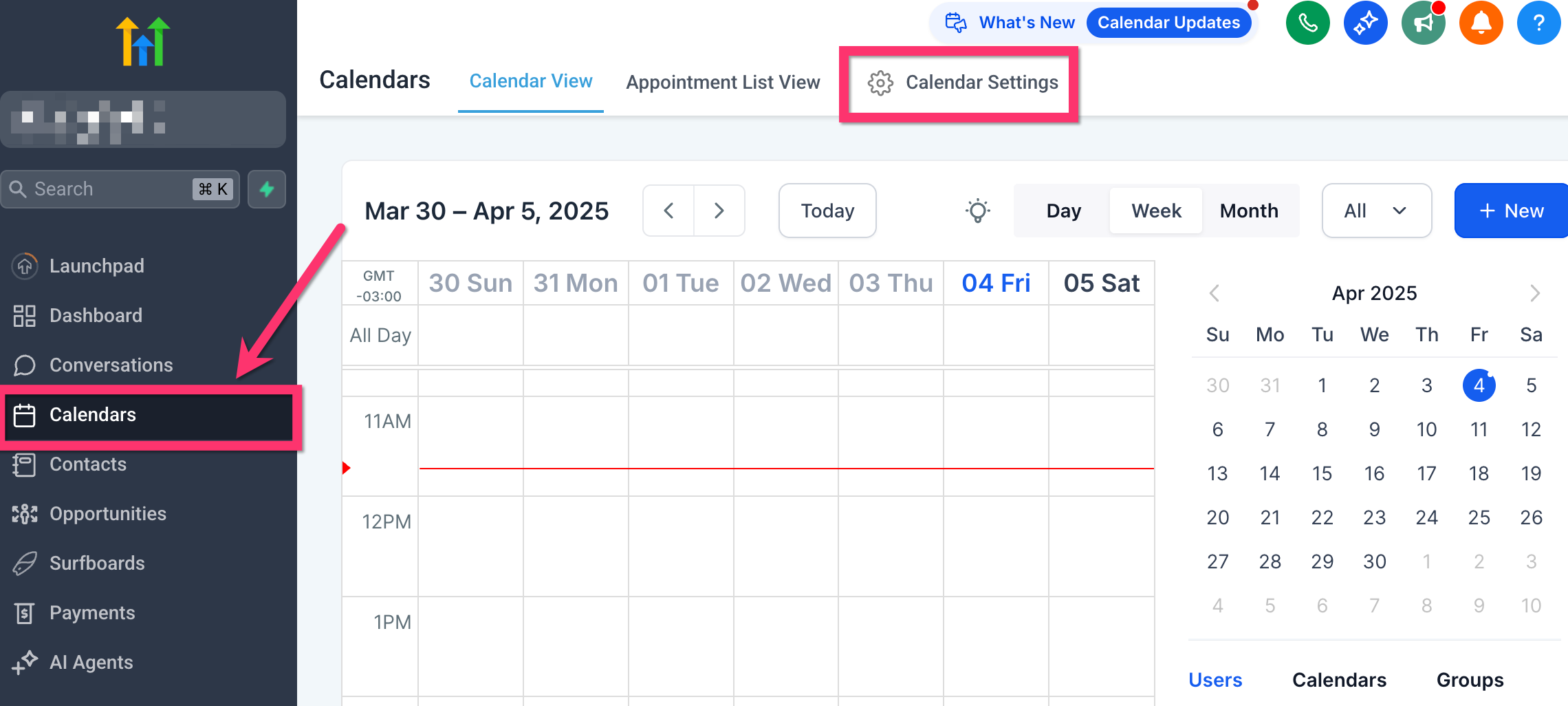
Step 1: Navigate to Settings → Calendars in HighLevel. At the top of the page, click Calendar Settings.
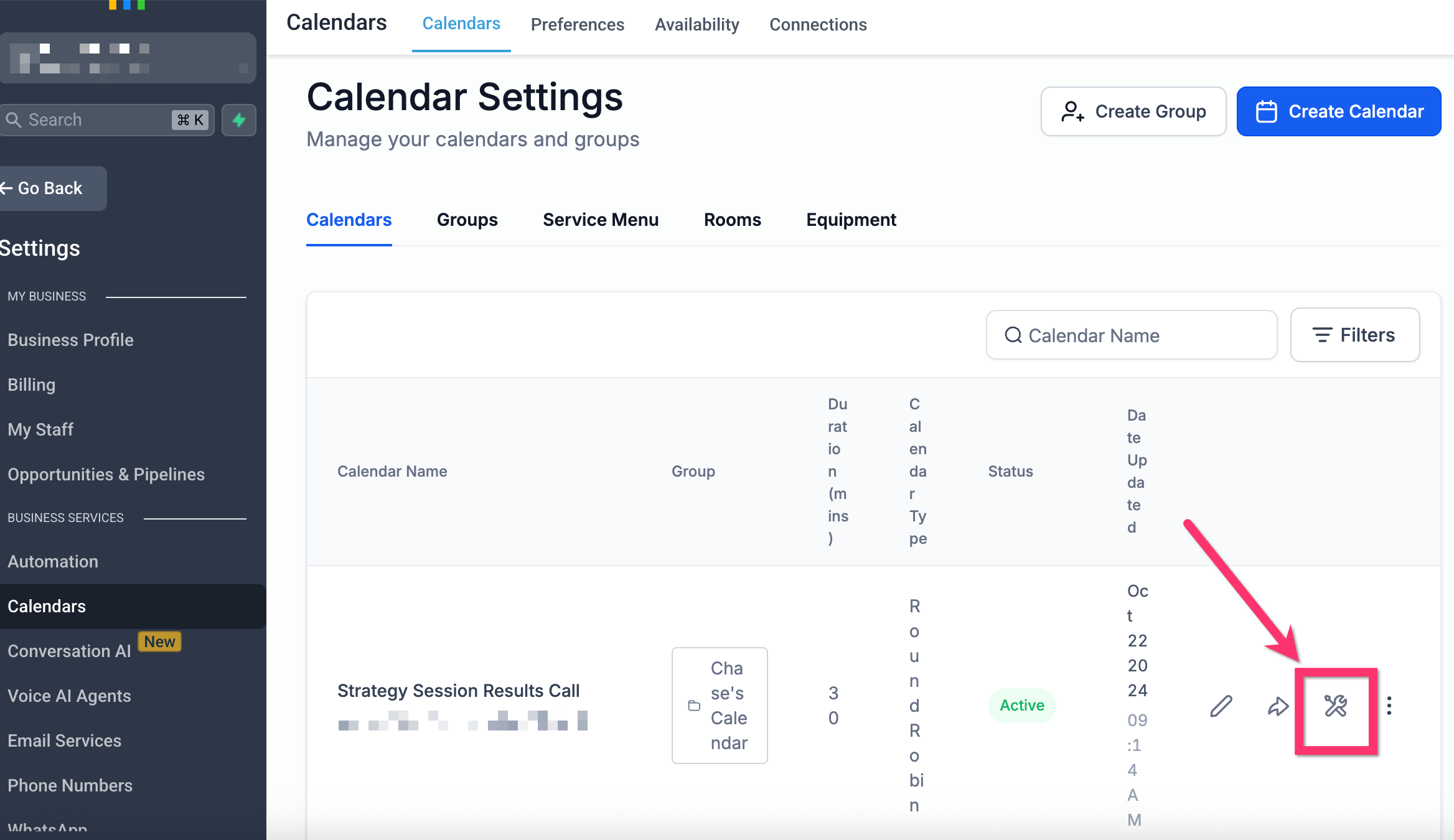
Step 2: Locate the calendar you want to troubleshoot. Click the Wrench Icon next to that calendar to open the tool.
Quick Access from Calendar Header
Launching diagnostics from the calendar you’re editing reduces clicks and speeds up fixes.
Step 1
Open Settings → Calendars → [Your Calendar], then click Troubleshoot Calendar in the top-right header.
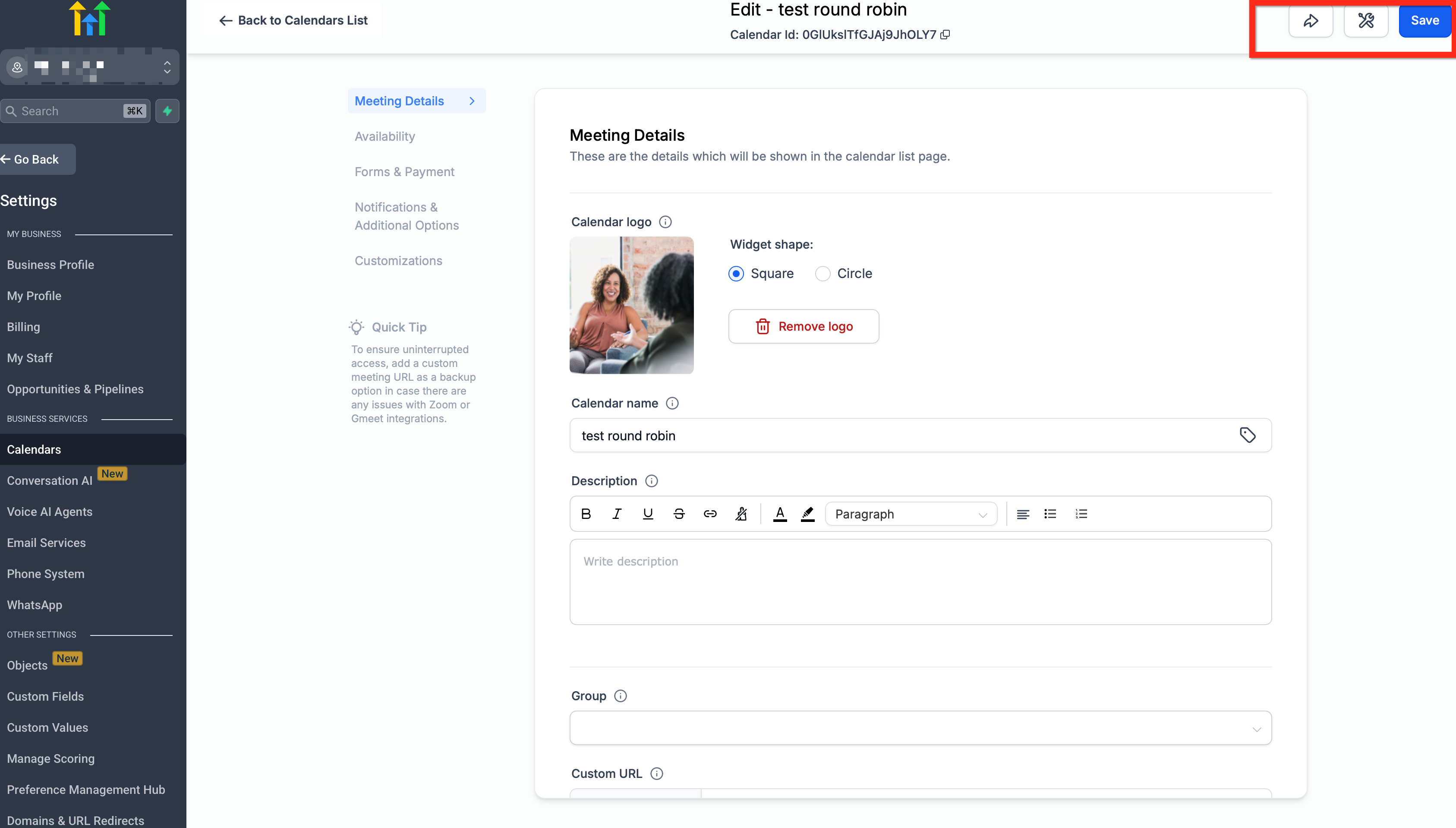
Click Troubleshoot Calendar to open diagnostics without leaving the editor.
Using the Tool to Diagnose Issues
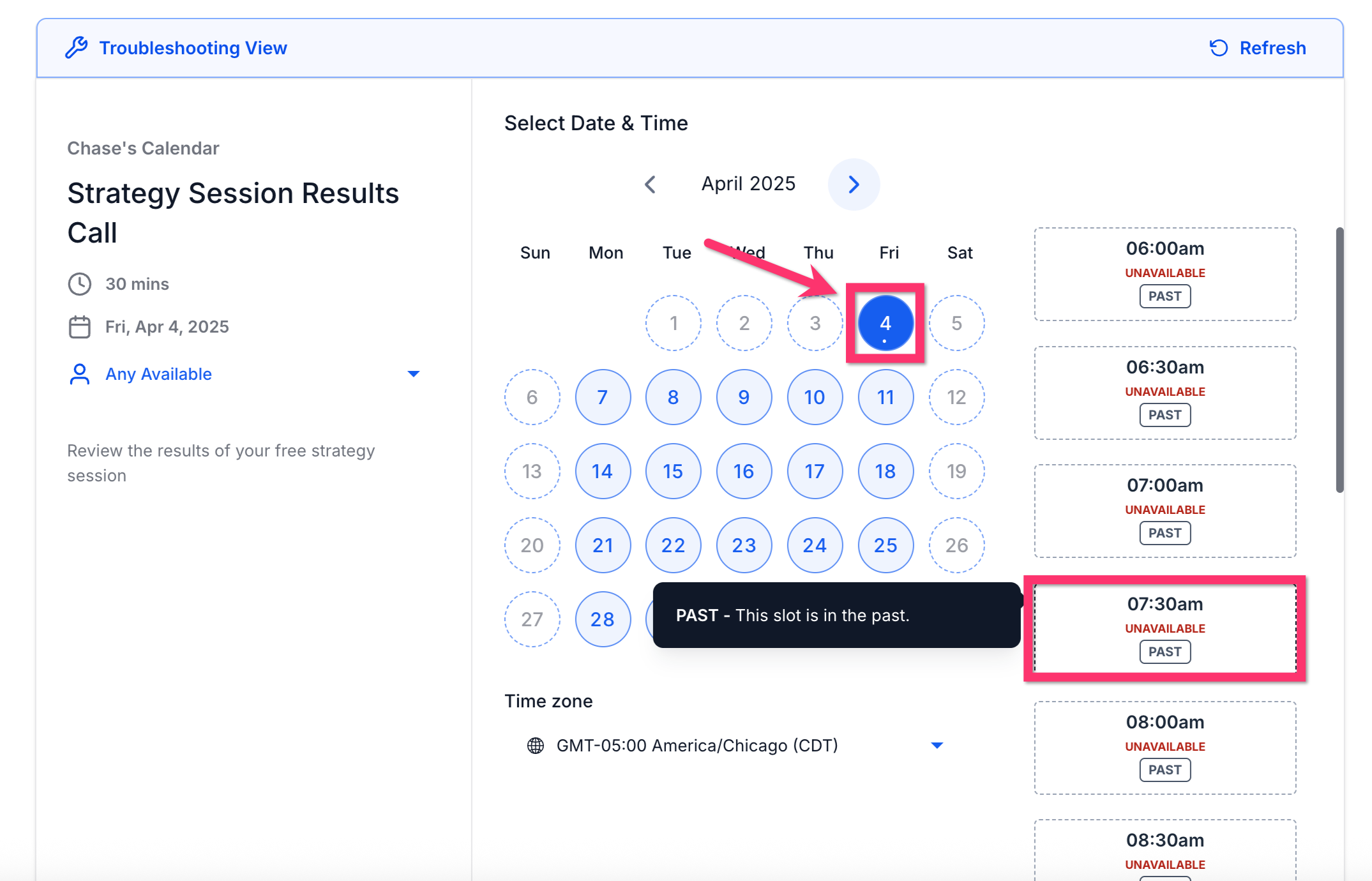
Step 1: Select a date on the calendar grid.
Step 2: Hover over an unavailable time slot to view the reason in a tooltip.
Additional Troubleshooting Tool Subtopics
Beyond the basic tool overview, these additional subtopics dive into specific use cases and edge cases that frequently cause booking issues. Understanding how each of these scenarios works ensures you can proactively avoid disruptions and improve your scheduling reliability.
Checking Calendar Integration Status
Proper calendar integration is the foundation for accurate syncing and availability. If your calendar isn’t connected correctly, appointments may fail to appear or sync incorrectly.
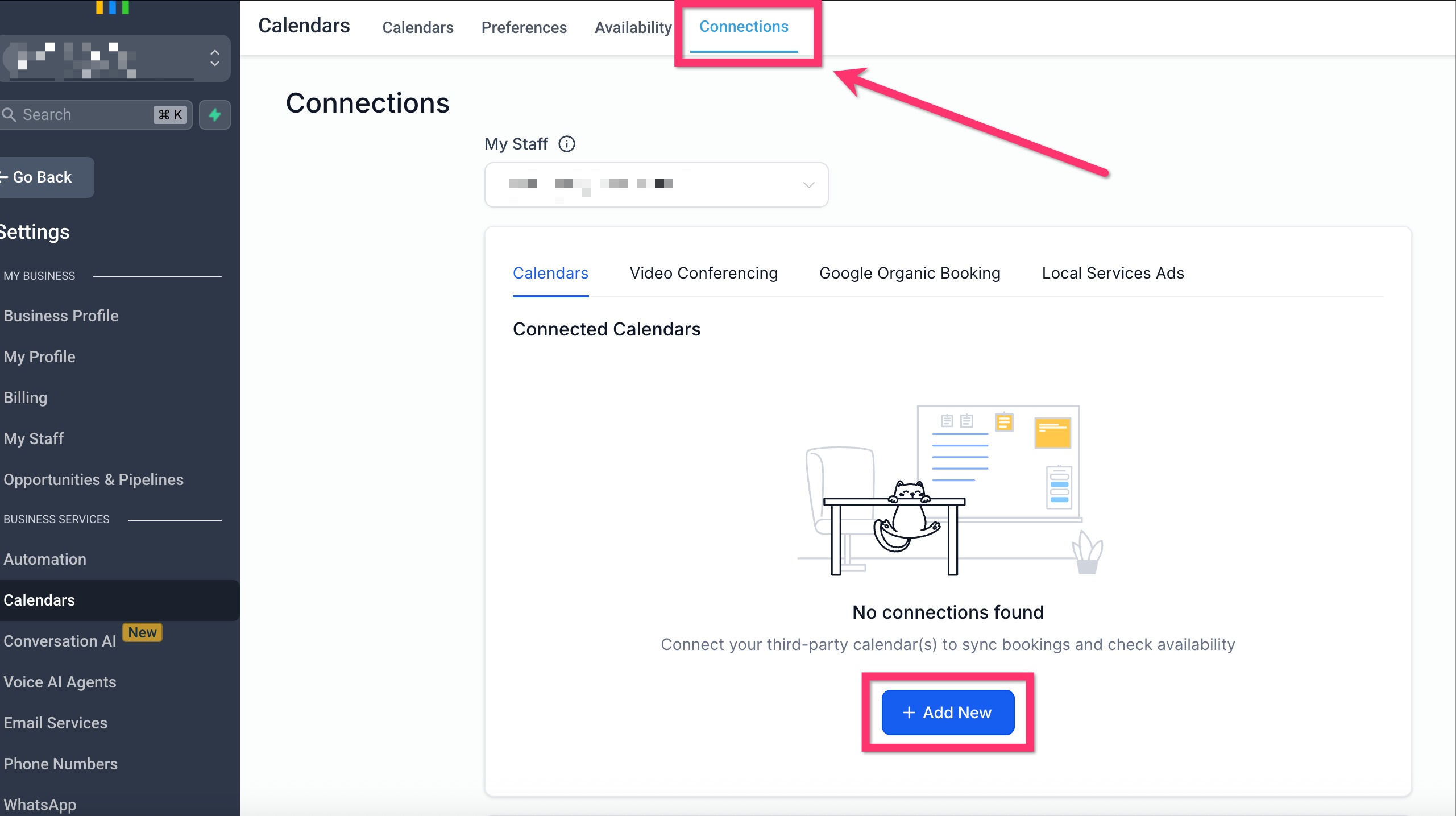
Go to Calendar Settings > Connections.
Confirm Google or Outlook is marked "Connected".
Reconnect if needed and select the correct calendar.
Resolve “Deleted Calendar” Connection Errors
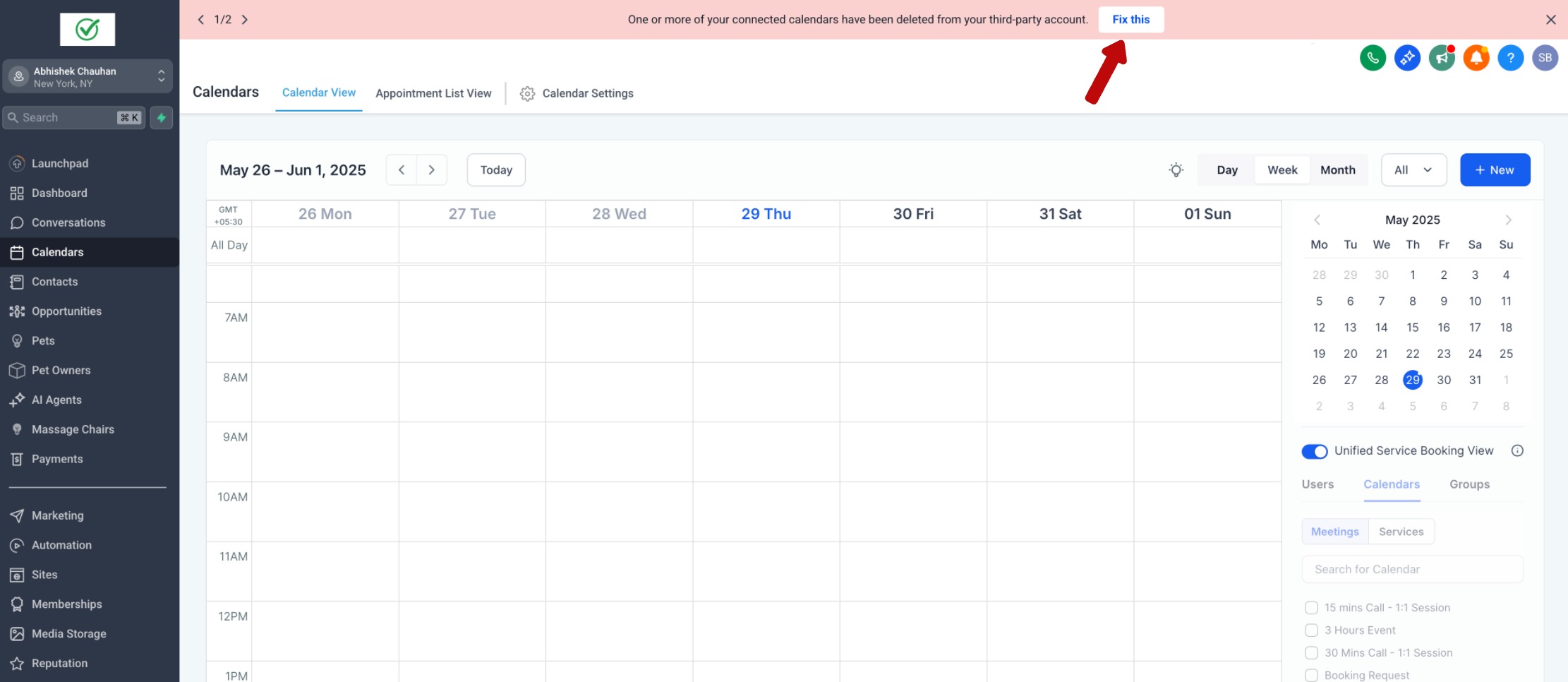
If a connected Google/Outlook calendar was deleted at the provider, HighLevel may show an error banner. You can now clean this up without contacting Support.
In Settings of your account, navigate to the Calendars section and click on Connections tab.
Click Fix This.
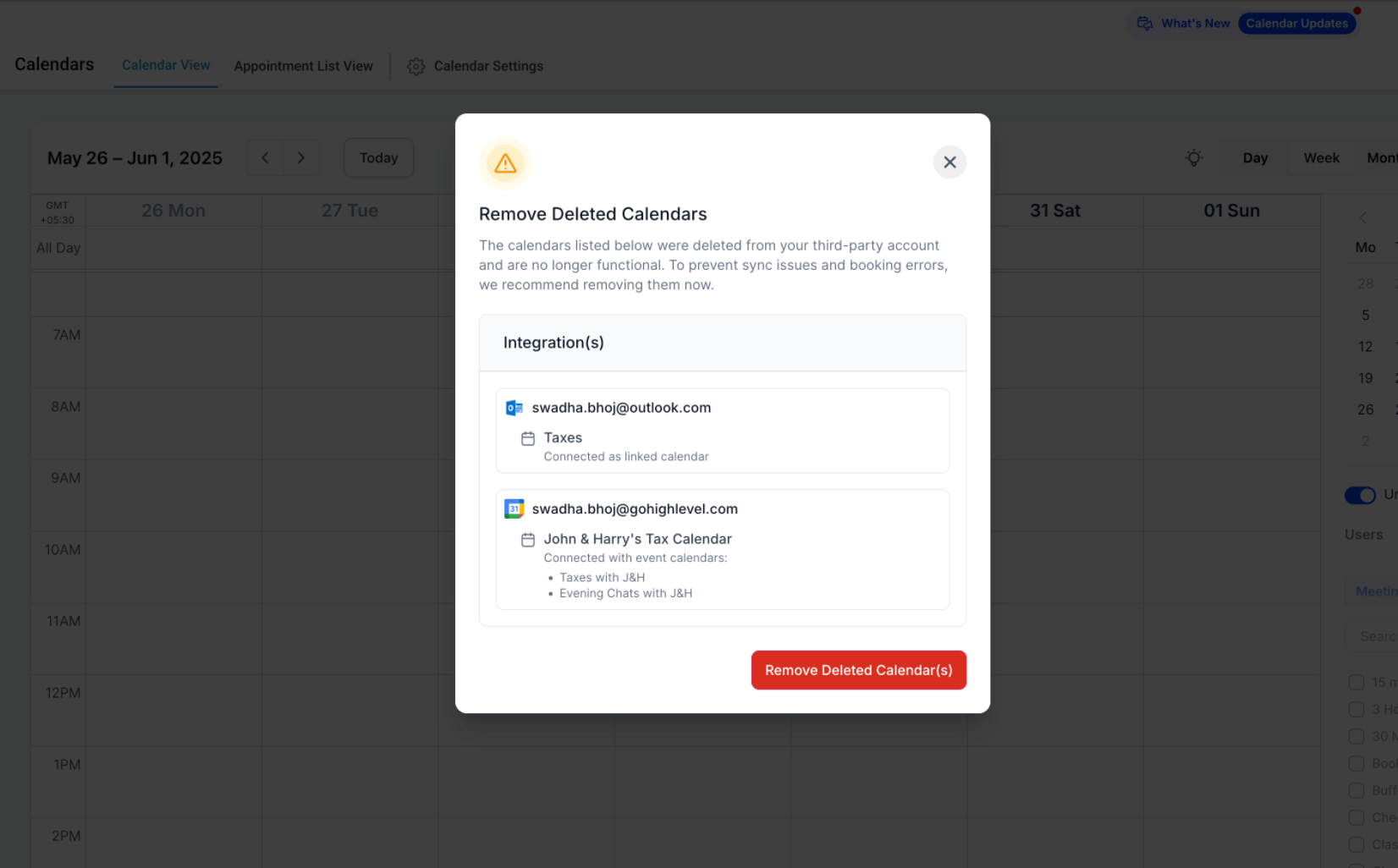
Review the modal list of deleted calendars:
Each item shows the deleted calendar and where it’s connected in HighLevel.
Click Remove Deleted Calendars to remove the broken calendar connections in one action.
Reconnect or reselect a valid calendar if needed.
Learn More: Google Calendar Integration SetupTroubleshooting User Availability Settings
Even if the calendar is integrated, missing or incorrect availability blocks bookings. The Troubleshooting Tool will flag users without defined working hours. To review and adjust availability:
Go to Calendars > Calendar Settings.
Find the calendar assigned to the user and click Edit.
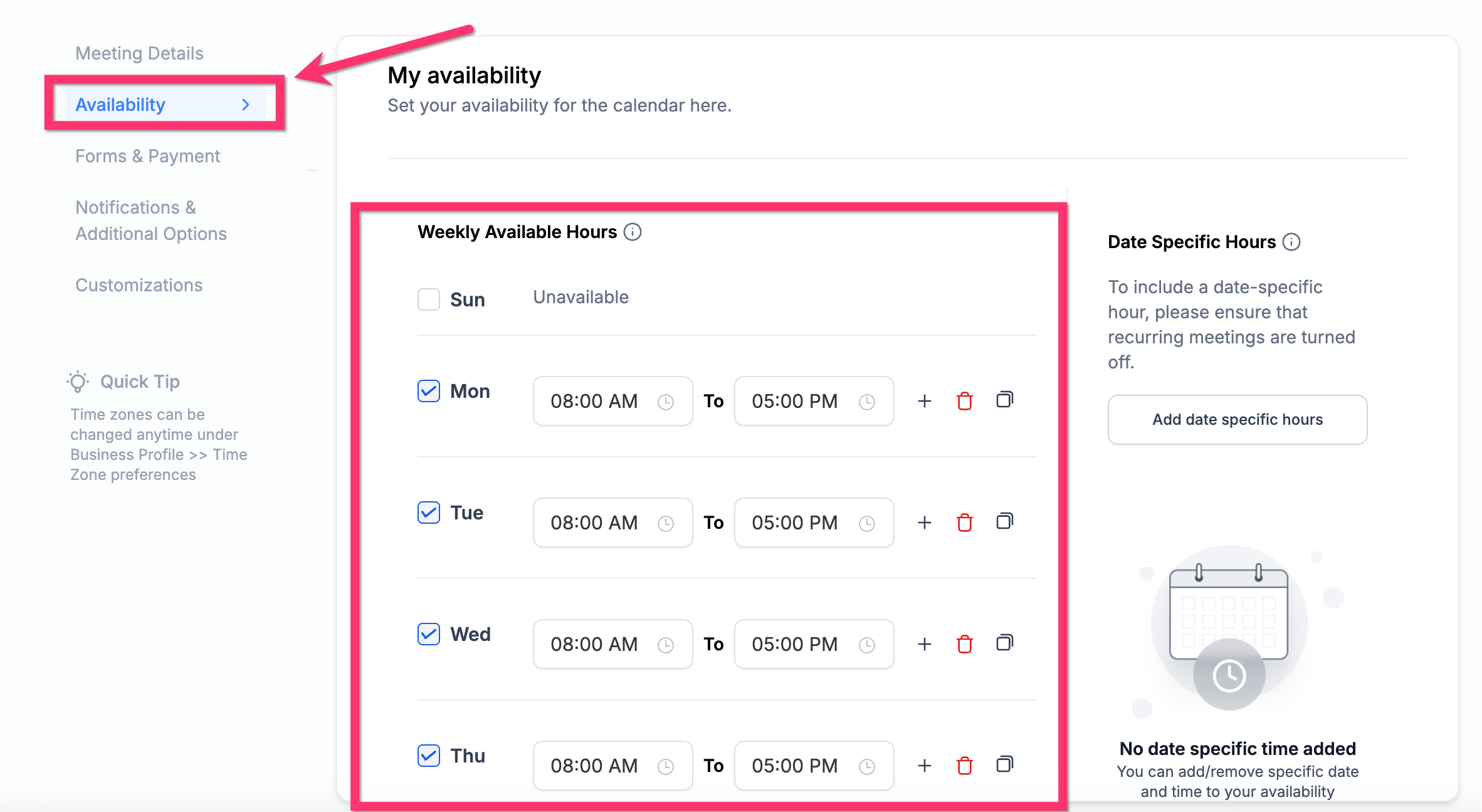
Click the Availability tab inside that calendar.
Add or edit the available time blocks for relevant days.
Learn More: How to Set Up Availability for Calendar UsersCommon Booking Issues and What They Mean
Each status code shown in the Troubleshooting Tool tooltip reveals the reason a time slot is not bookable.
USER: No available users at this time
COLLECTIVE: One or more users are unavailable
CONFLICT: Third-party calendar conflict
BOOKED: Already booked via the system
BLOCKED: Manually blocked time
NOTICE: Violates minimum scheduling notice
TOOFAR: Beyond allowed date range
DAYLIMIT: Day's appointment limit reached
SLOTMAX: Max bookings for the slot reached
BUFFER: Buffer time blocks this slot
DURATION: Appointment too long for gap
PAST: Time is in the past
LOOKBUSY: Hidden via Look Busy setting
NO SEATS: Max seats reached
RESOURCE: Required resource is unavailable
Diagnosing Double Booking Issues
Double bookings can happen when multiple users are synced to the same calendar or if availability overlaps.
Use the Troubleshooting Tool to identify which users are in conflict.
Adjust user calendars or isolate calendars per user to avoid overlaps.
Learn More: Troubleshoot Double BookingsUnderstanding Permission-Related Errors
Sometimes booking issues occur due to revoked permissions or missing access scopes in Google/Outlook.
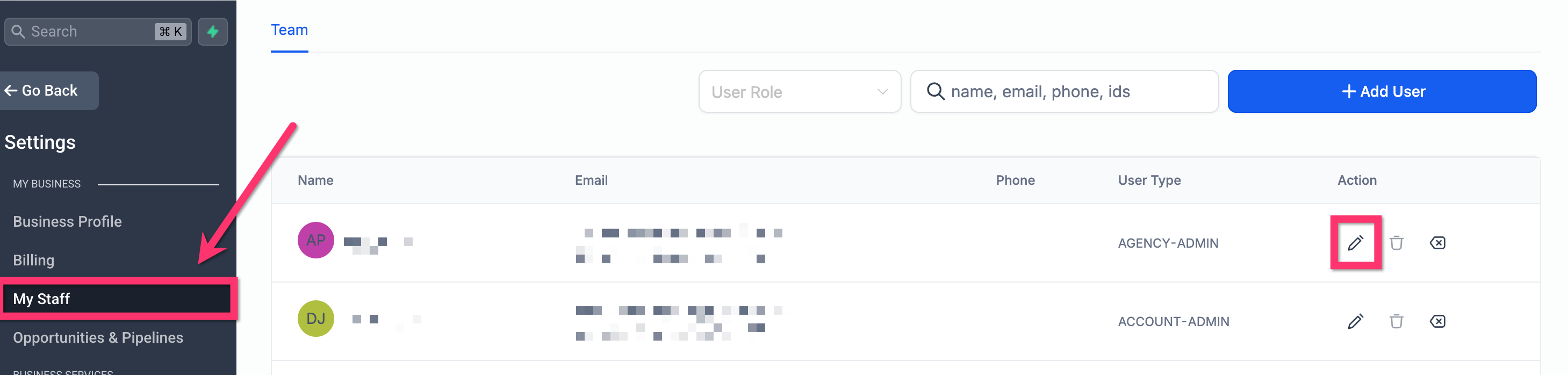
Go to Settings > My Staff
Find Staff Member then select Edit > Calendar Configuration.
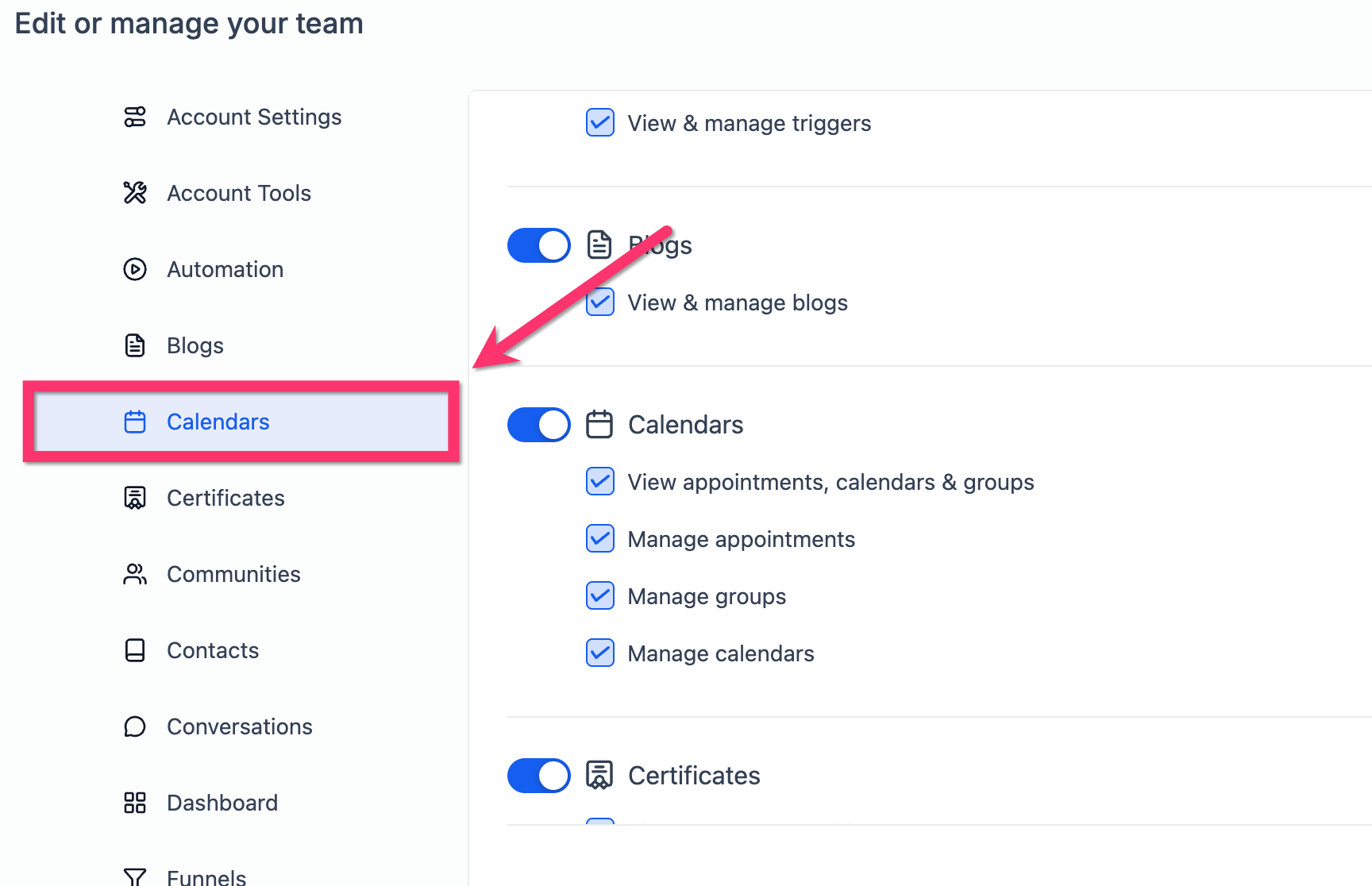
Click Calendar on left ribbon then confirm all required permission scopes are granted.
Learn More: User Permissions in CalendarsFrequently Asked Questions
Q: Do I need to enable the Troubleshooting Tool separately?
No. The Troubleshooting Tool is built into the platform and automatically available under Calendar Settings.
Q: Why is a time slot showing as “UNAVAILABLE”?
This means the user is outside their availability or the time is blocked by a conflict such as another event, sync issue, or booking restriction.
Q: Why does my calendar show no available times at all?
This usually occurs when no user is assigned, no availability is set, or calendar sync is disconnected,
Q: Can I use this tool to debug group or round-robin calendars?
Yes. It supports group calendars and shows which users are causing booking failures.
Q: Does the Troubleshooting Tool show automation or workflow errors?
No. It only surfaces calendar-specific setup issues—not automation logic.
Q: Can I view availability from the contact’s timezone in this tool?
No. The view is based on the logged-in user's timezone.
Related Articles
- Adjusting Availability Settings for Individual Calendars
- Double Bookings Issue Troubleshoot
- User Permissions in Calendars
Important Notes
- The tool first checks your calendar’s availability and meeting intervals to generate all potential slots. It then shows which of these slots are available and which are not.
- For example, if your calendar availability is set from 10 AM to 12 PM and 6 PM to 8 PM with 60-minute meeting intervals, only the 10 AM, 11 AM, 6 PM, and 7 PM slots will be displayed, and their availability or unavailability will be shown accordingly for these four slots. If the calendar is unavailable on Saturdays, no slots will appear for that day.
Was this article helpful?
That’s Great!
Thank you for your feedback
Sorry! We couldn't be helpful
Thank you for your feedback
Feedback sent
We appreciate your effort and will try to fix the article