The Class Booking Calendar in HighLevel allows businesses to schedule events, workshops, or group sessions where one host meets with multiple participants. Whether you’re running fitness classes, webinars, or workshops, this feature helps streamline scheduling, automate payments, and manage attendees seamlessly.
TABLE OF CONTENTS
- What is the Class Booking Calendar?
- Key Benefits of the Class Booking Calendar
- How to Create a Class Booking Calendar
- Frequently Asked Questions
What is the Class Booking Calendar?
The Class Booking Calendar is a HighLevel calendar type designed for situations where a single host meets multiple attendees in the same session. It’s ideal for yoga studios, online courses, or training sessions where participants can book seats for specific dates and times.
This calendar type simplifies managing recurring classes by allowing you to define seat limits, recurring schedules, and integrated payments — all within HighLevel. It reduces manual booking efforts and automates participant management.
Key Benefits of the Class Booking Calendar
The Class Booking Calendar is built to help businesses efficiently organize group events, manage attendance, and automate the booking and payment process. It’s ideal for any business model where one host handles multiple participants at once.
- Flexible Scheduling: Define class days, time slots, and available seats easily.
- Built-in Payments: Accept payments directly via Stripe integration.
- Automated Notifications: Keep attendees informed about bookings, reschedules, or cancellations.
- Attendee Management: Track and manage each participant’s booking from your HighLevel dashboard.
- Custom Branding: Customize colors, logos, and booking widgets to match your brand identity.
How to Create a Class Booking Calendar
Access Settings
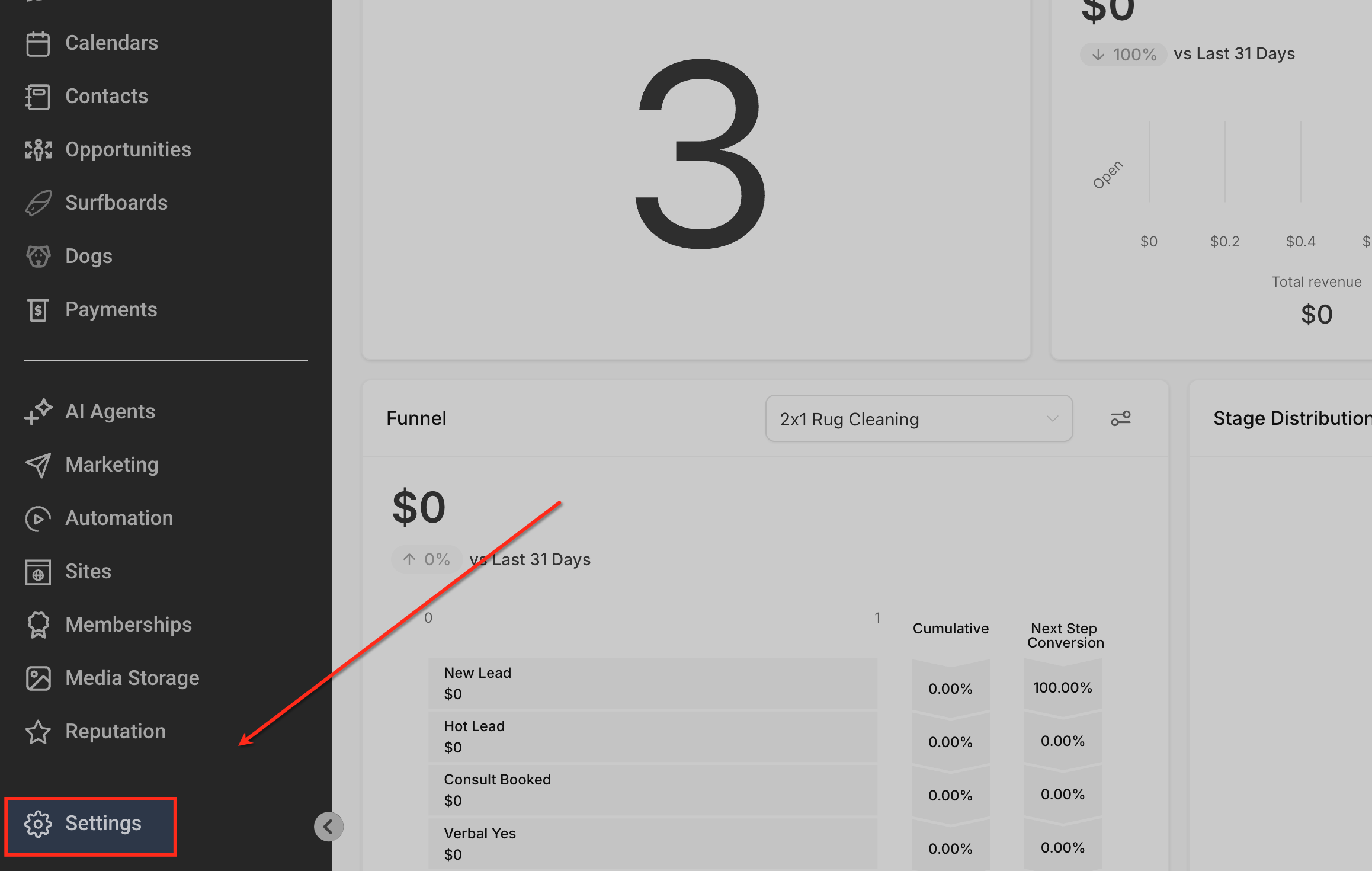
From your HighLevel dashboard, click Settings in the left sidebar as highlighted in the red box. This opens the settings panel where you can manage calendars, teams, integrations, and other account configurations necessary before creating a new Class Booking Calendar.
Open the Calendar Setup
In the Settings menu, click Calendars on the left sidebar, then open the Meetings tab at the top of the screen. Click + New Calendar to start creating a new calendar.
This step initiates the setup process for your Class Booking Calendar, ensuring it’s created under the correct calendar type and sub-account.

Select Class Booking
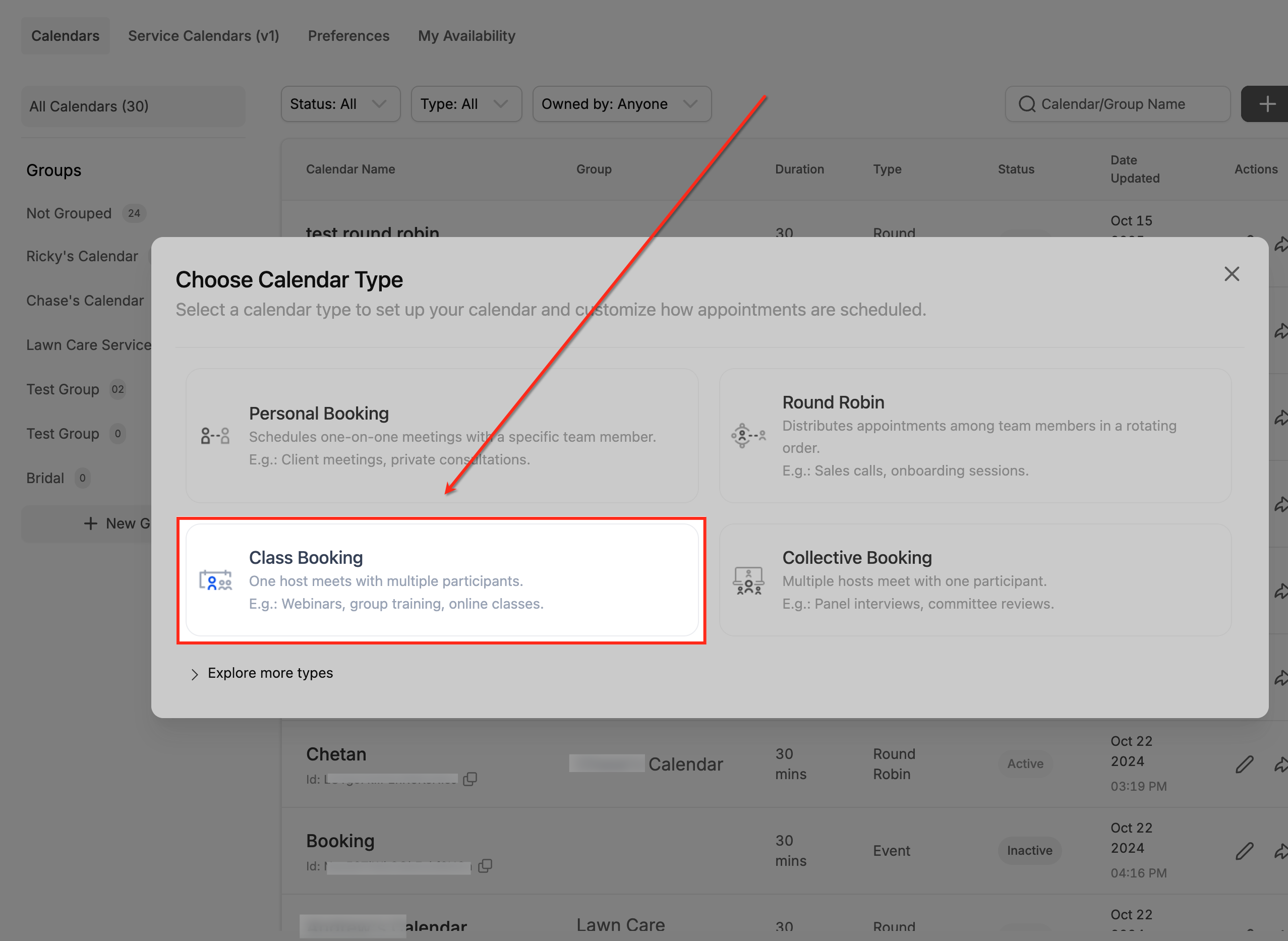
From the calendar type selection window, click Class Booking as shown in the highlighted red box. This option is for scenarios where one host meets multiple participants, such as group classes, webinars, or workshops.
Choosing this type ensures the calendar supports seat limits, group scheduling, and payment options.
Name Your Calendar
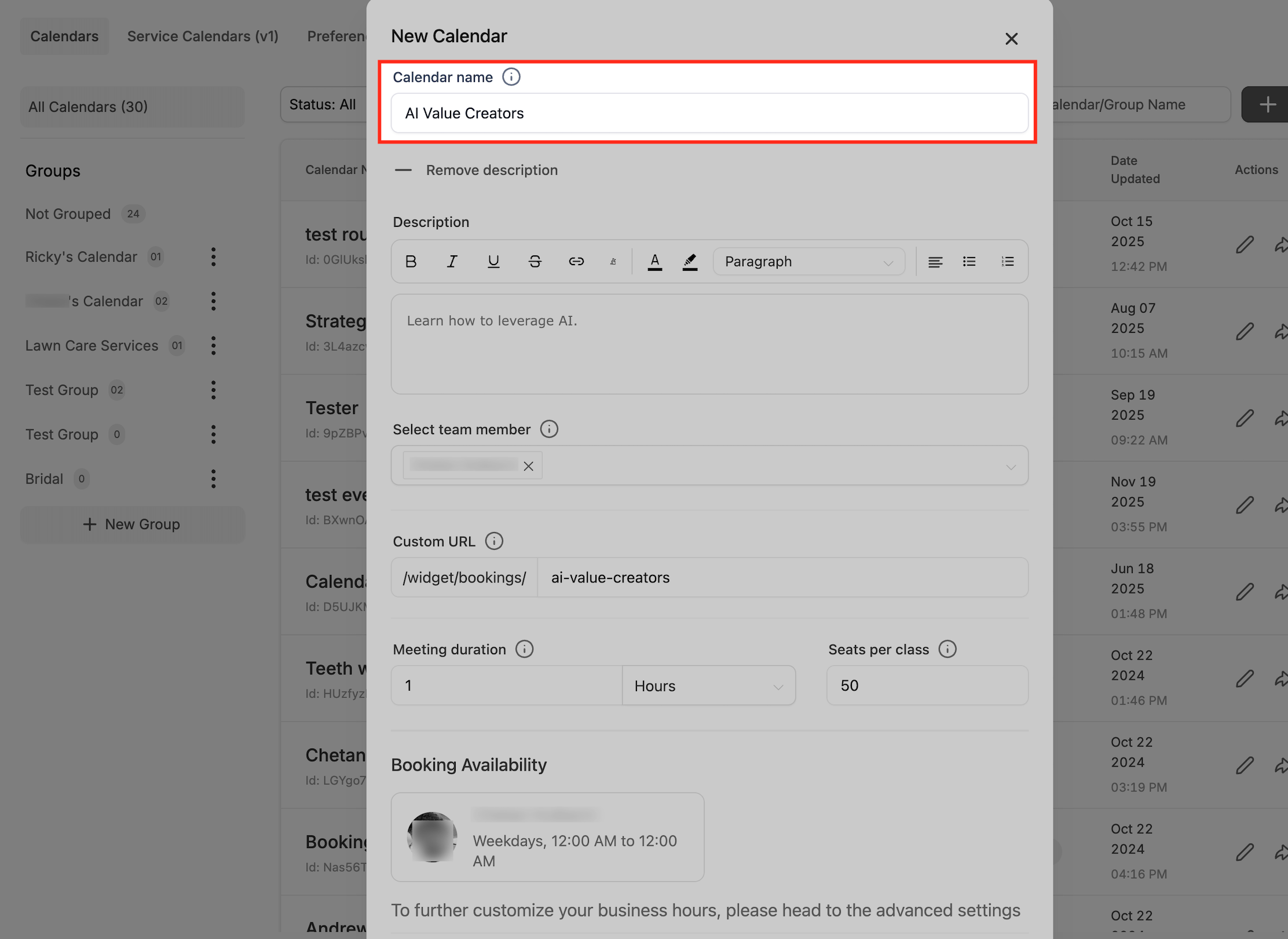
In the Calendar name field, enter a clear and descriptive name for your class calendar, as shown in the red box. The name should reflect the purpose of the class or event so it’s easy to identify when managing multiple calendars.
A well-labeled calendar helps both your team and attendees recognize the correct booking link.
Add a Calendar Description
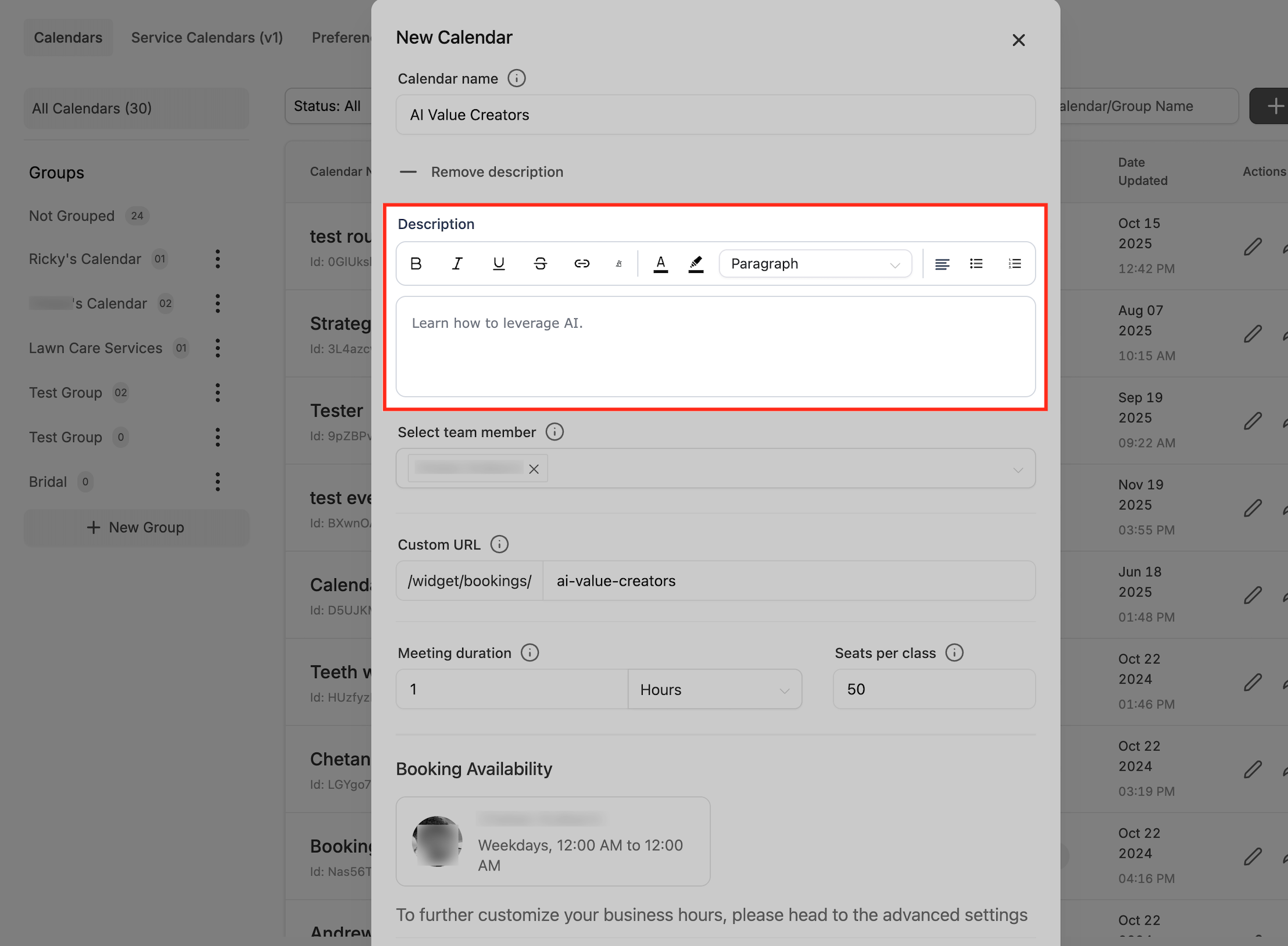
In the Description box, type a brief summary of your class or event. This description appears on your booking page and helps attendees understand what the session covers before booking.
Keep it concise and engaging to set clear expectations for participants.
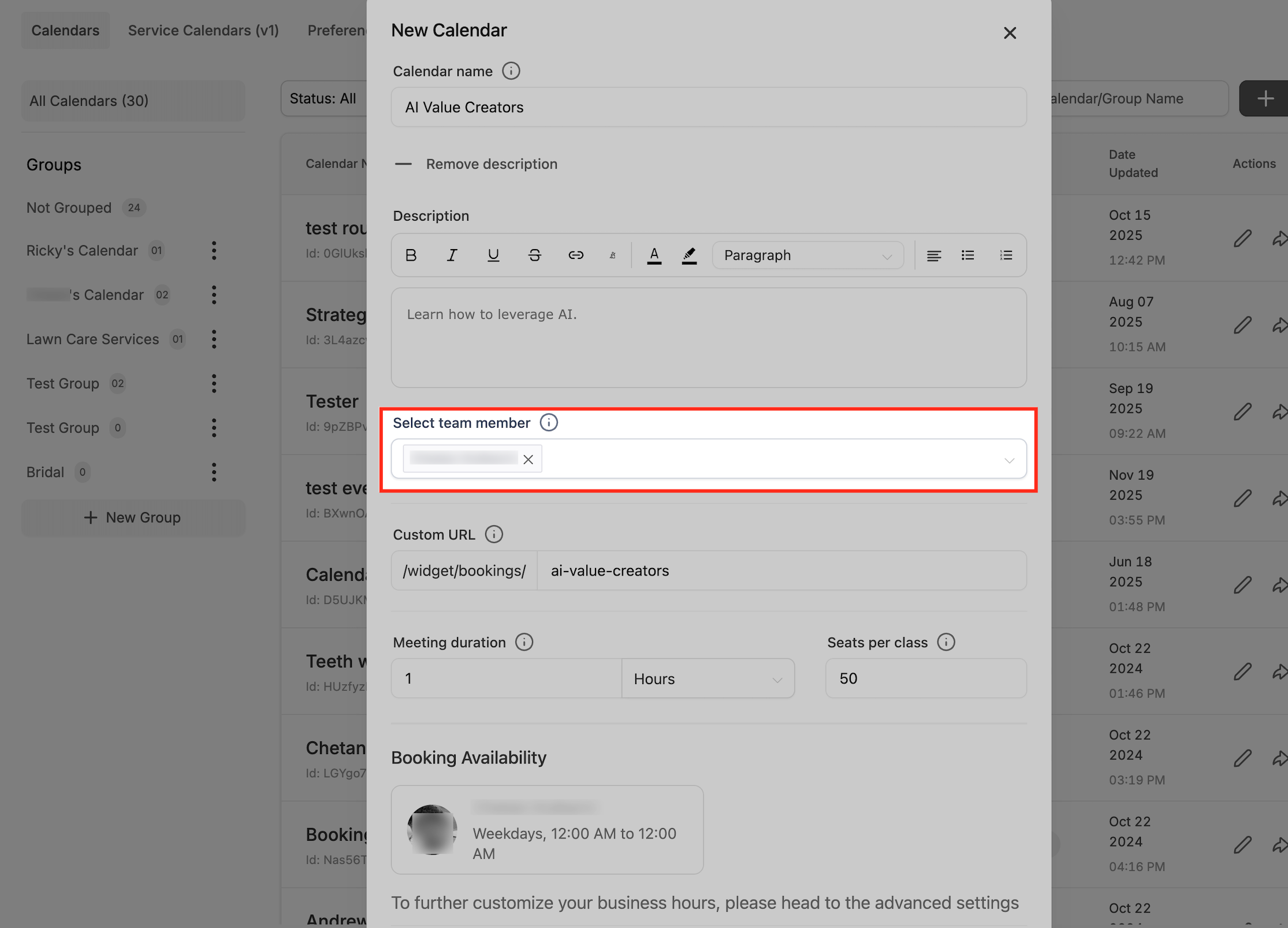
Assign a Team Member
In the Select team member field, choose the instructor or host responsible for conducting the class. This links the calendar to that team member’s schedule, ensuring all bookings are automatically synced with their availability.
Assigning a team member is crucial to prevent scheduling conflicts and keep host calendars up to date.
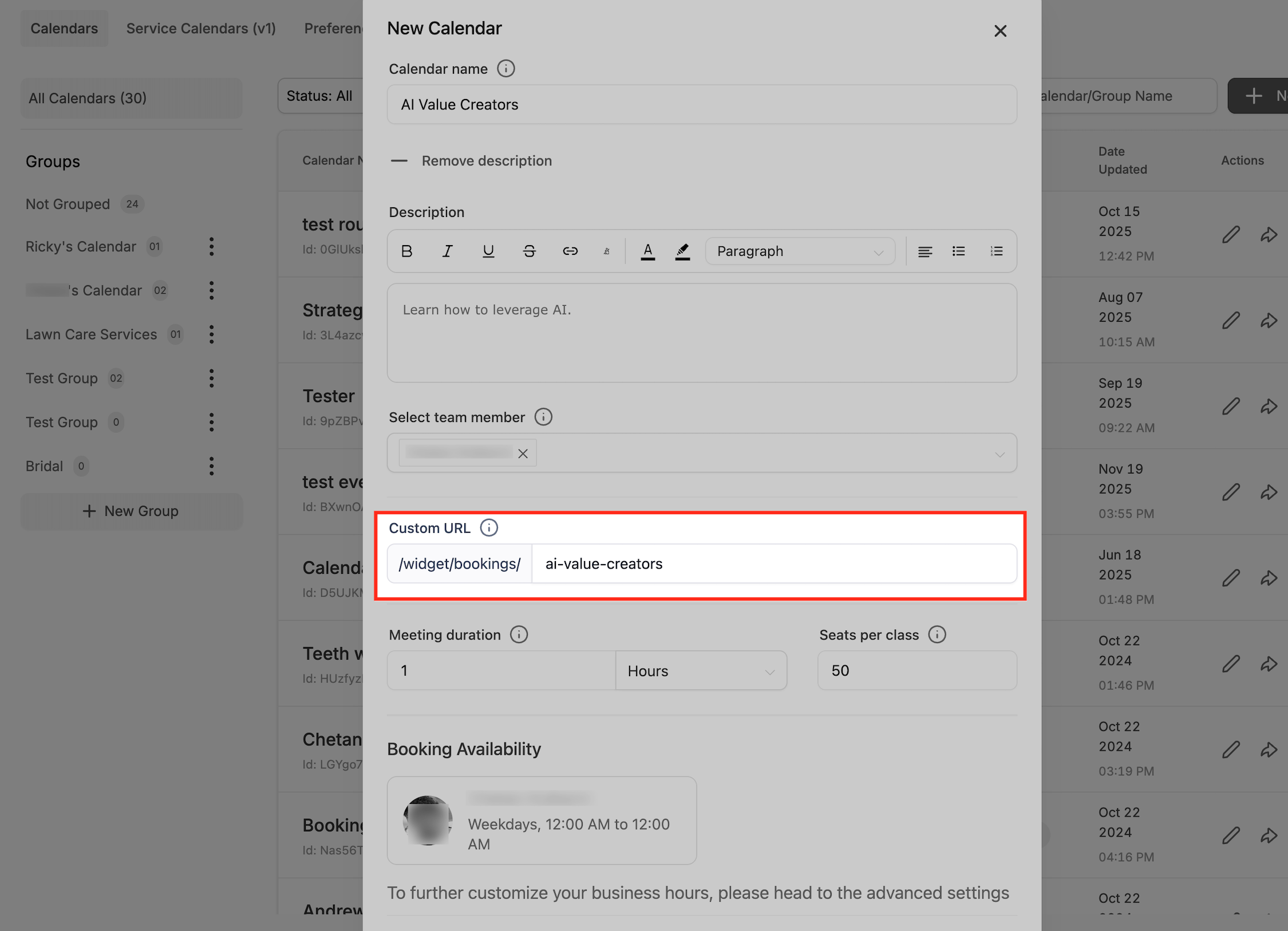
Set a Custom URL
In the Custom URL field, enter a unique URL slug for your class calendar, as highlighted in the red box. This creates a personalized link that attendees can easily access to book their sessions. A clear, branded URL improves professionalism and makes sharing your booking page simpler.
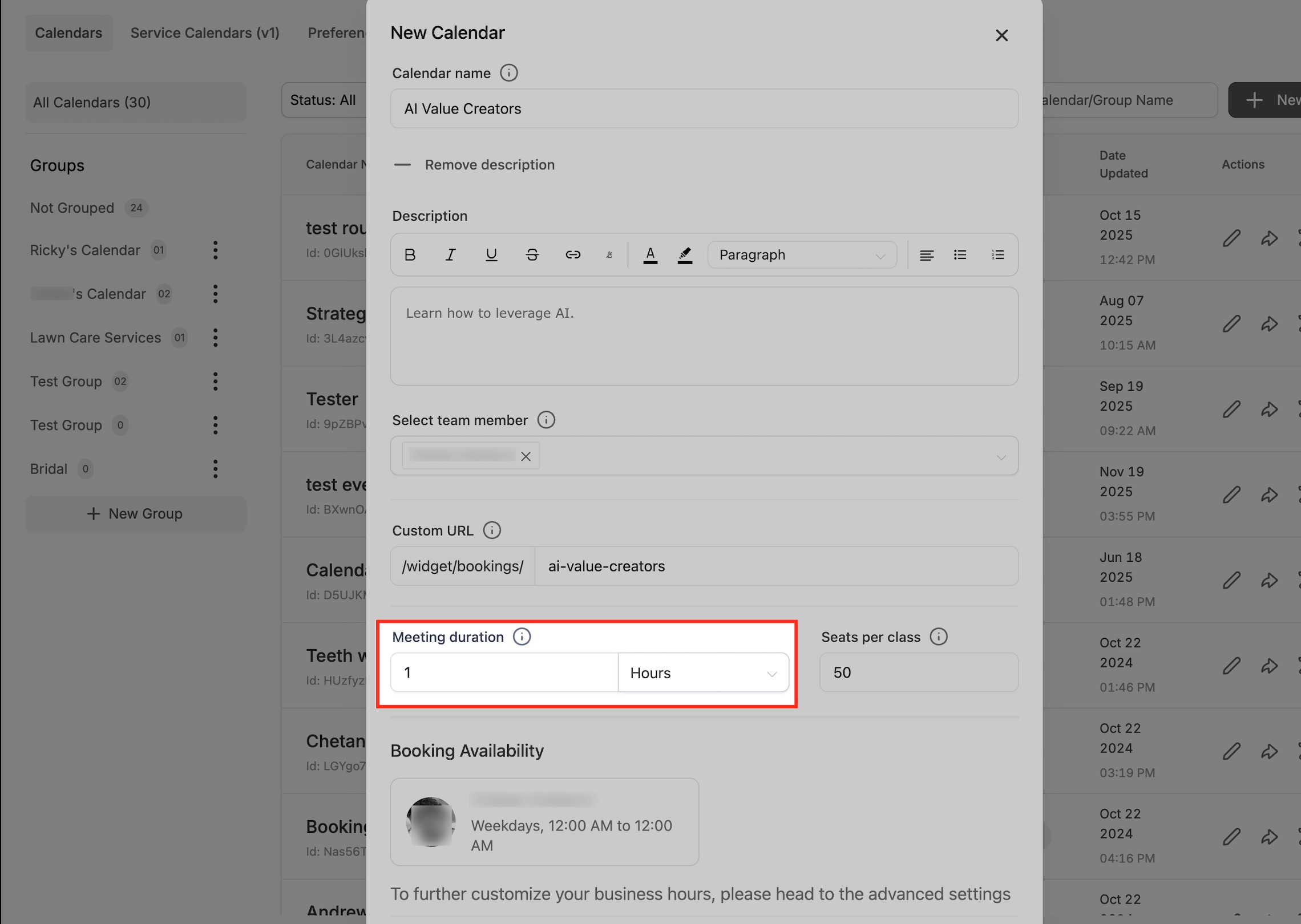
Set Meeting Duration
In the Meeting duration field, define how long each class will last — for example, 1 hour as shown. This ensures all bookings follow a consistent time frame and helps the system manage session intervals accurately. Setting the right duration is important to maintain your teaching schedule and prevent overlap between classes.
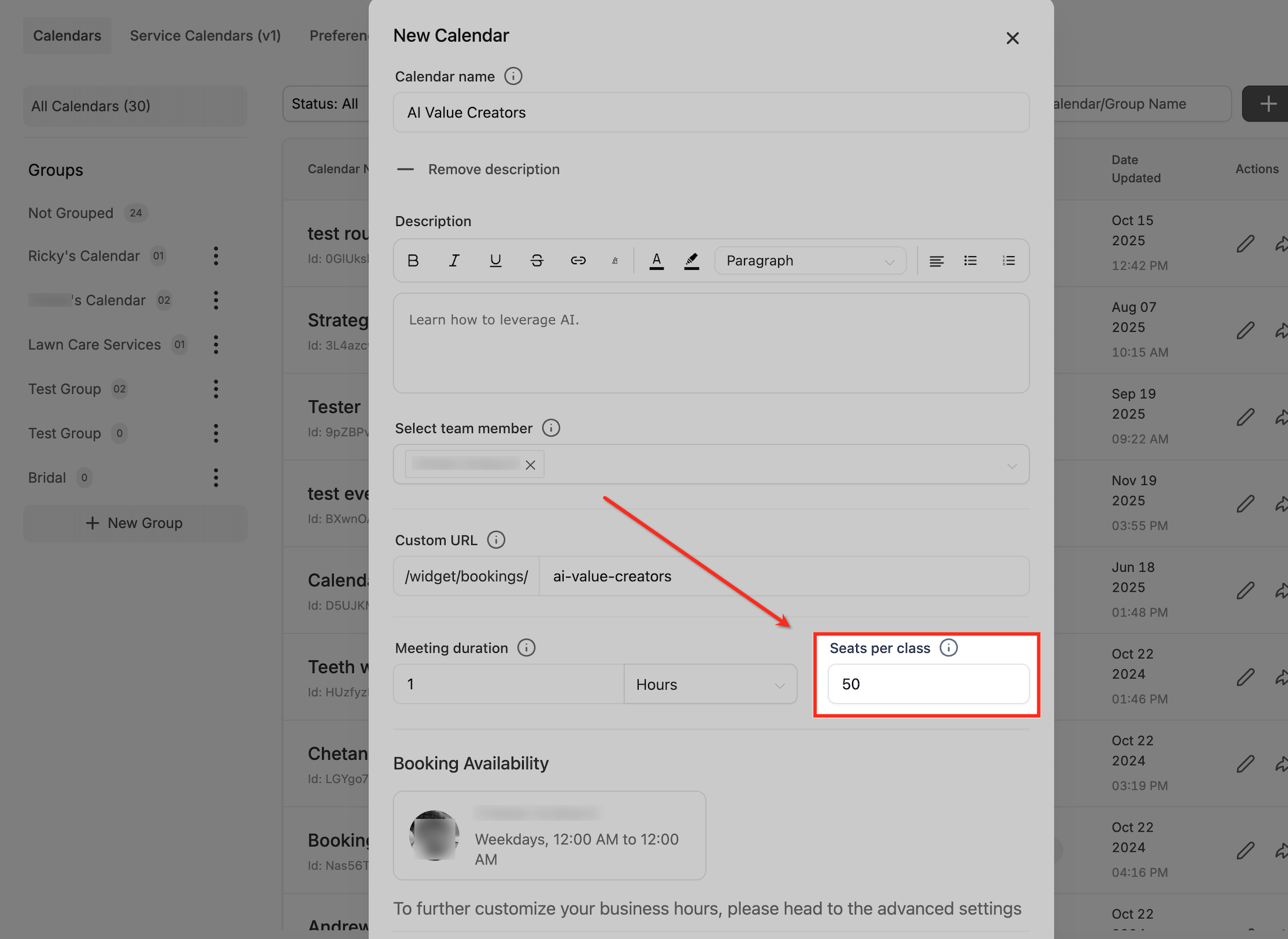
Set Seats per Class
In the Seats per class field, enter the maximum number of participants allowed for each session, as shown in the highlighted red box. This limit ensures that your class size stays manageable and that no additional bookings are accepted once all spots are filled.
Setting an accurate seat count helps maintain an organized registration process and prevents overbooking.
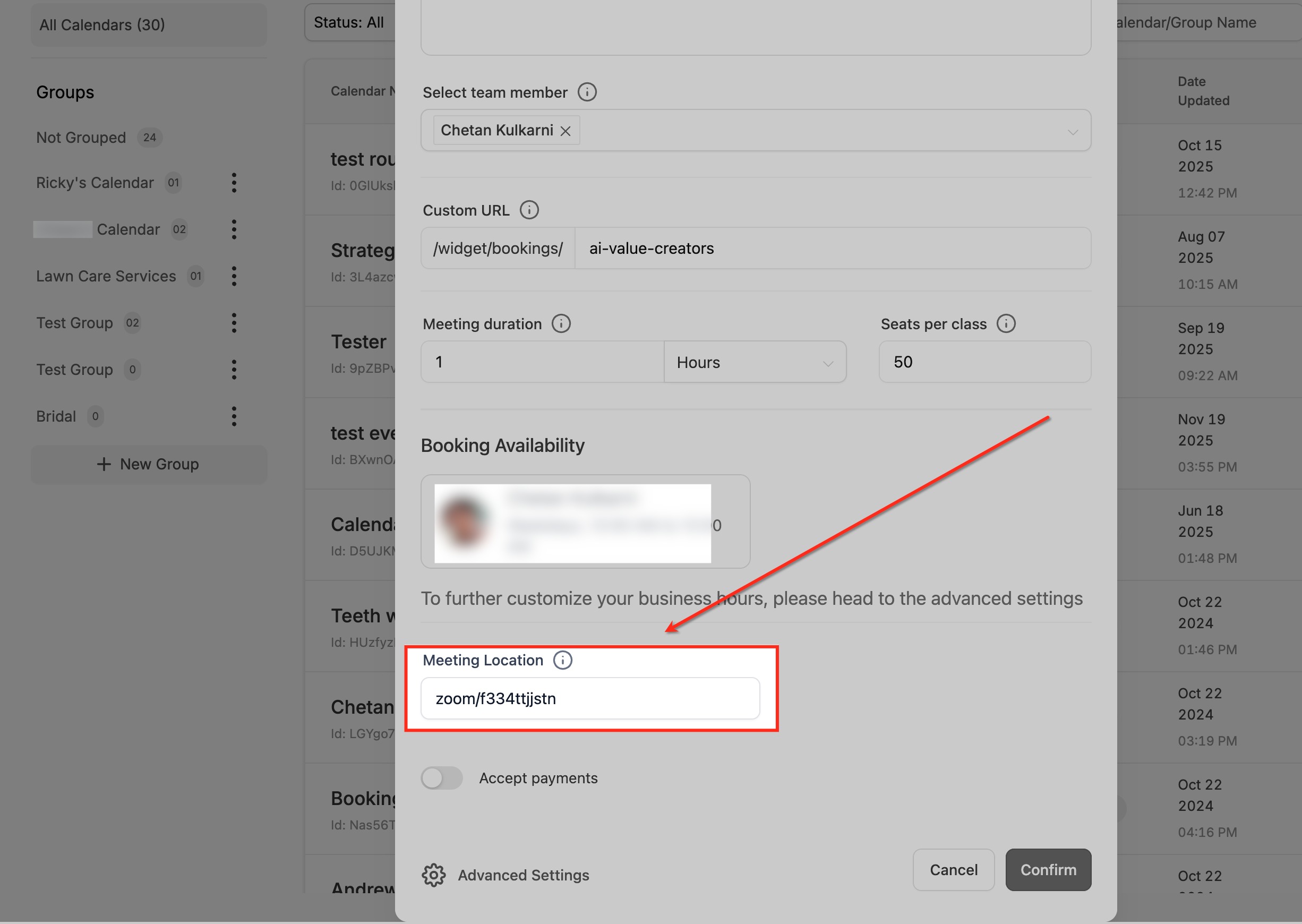
Add Meeting Location
In the Meeting Location field, enter the link or address where the class will take place, such as a Zoom or Google Meet URL. This ensures attendees receive the correct meeting access details automatically in their booking confirmation. Providing this information up front avoids confusion and helps streamline the attendee experience.
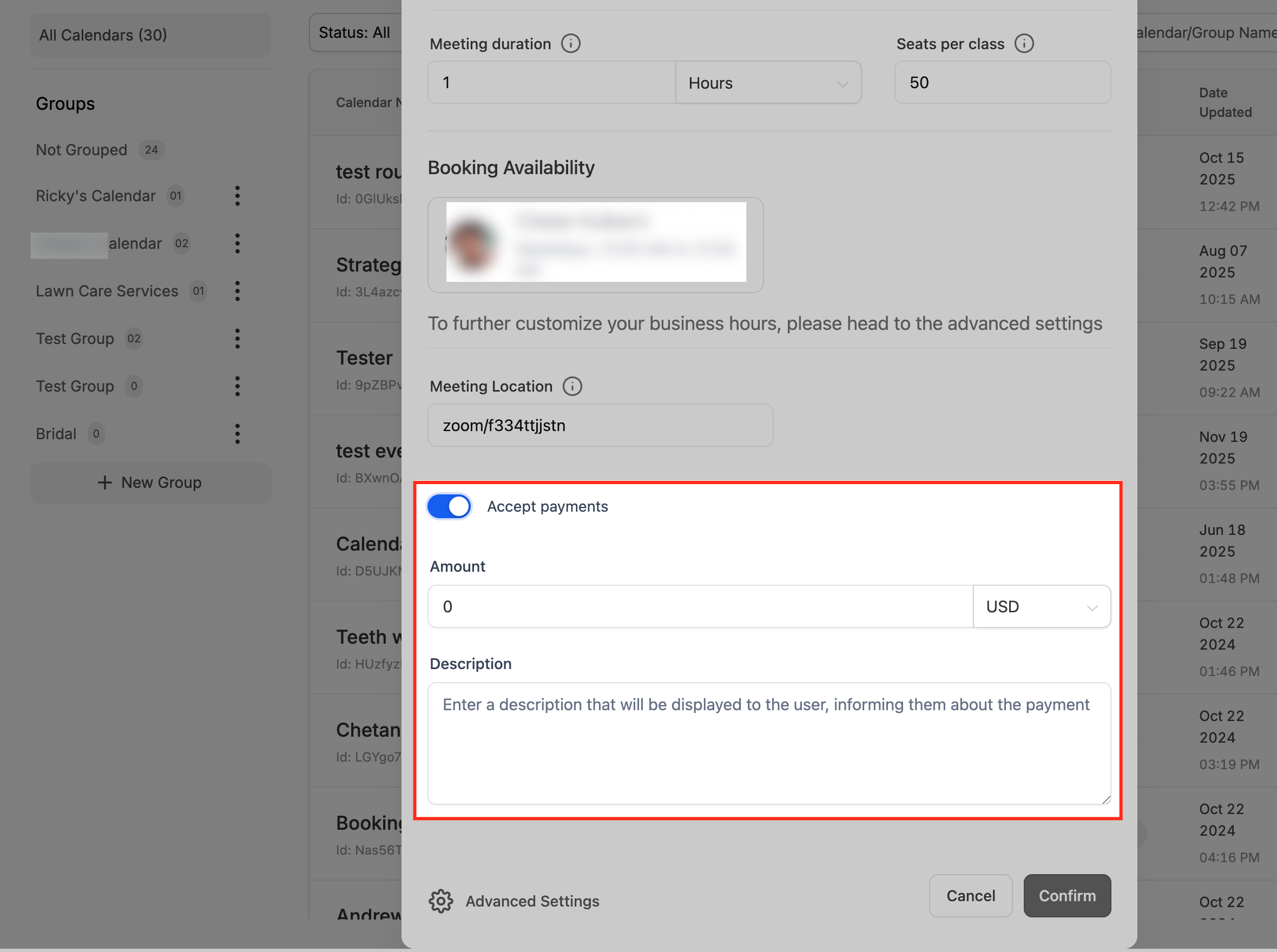
Enable Payment Collection
Toggle on Accept payments to activate payment collection for your class, then enter the Amount and Currency in the highlighted section.
Add a short Description explaining the purpose of the payment (e.g., class fee or registration charge). This ensures participants are informed about costs upfront and allows seamless payment processing through your connected Stripe account.
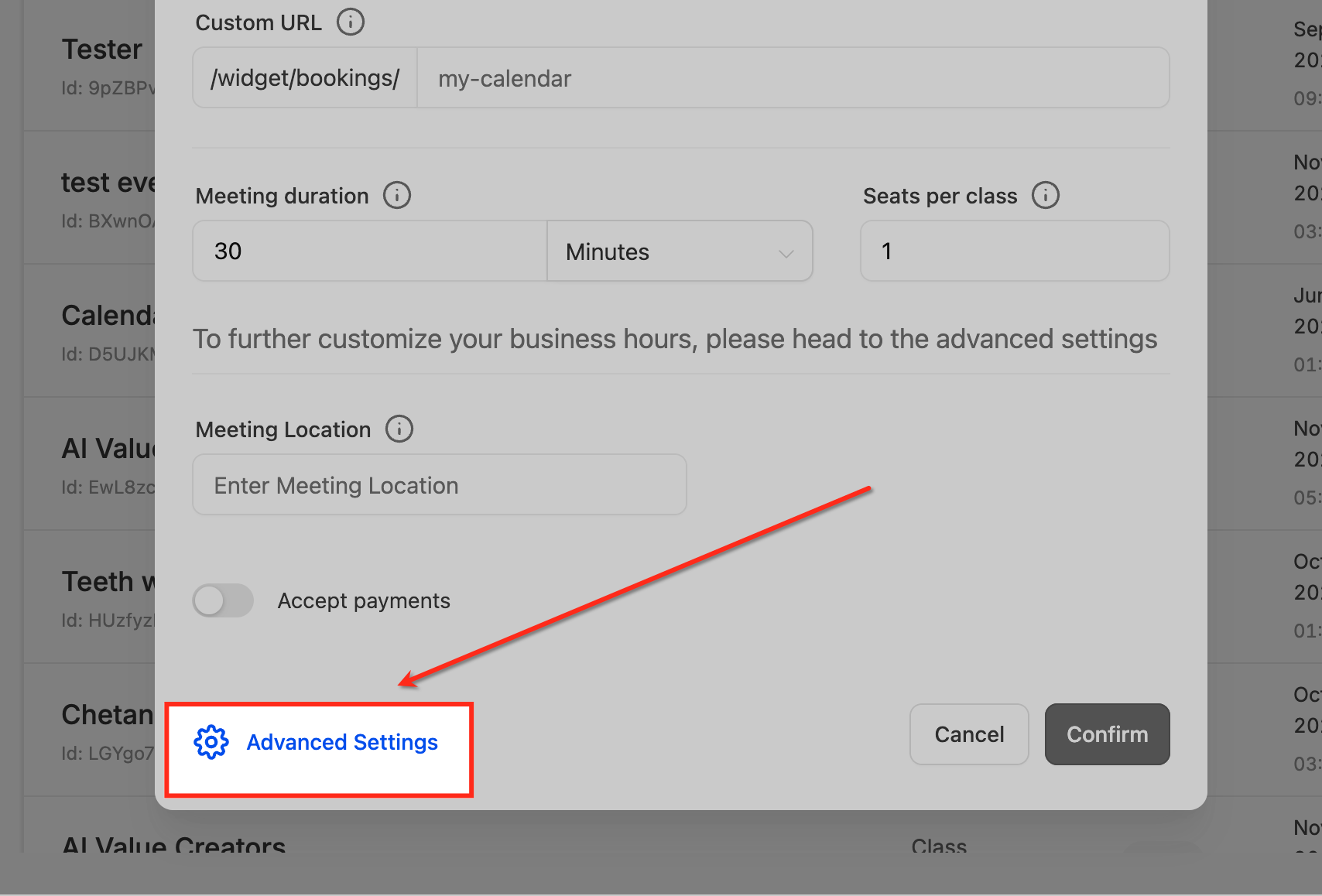
Access Advanced Settings
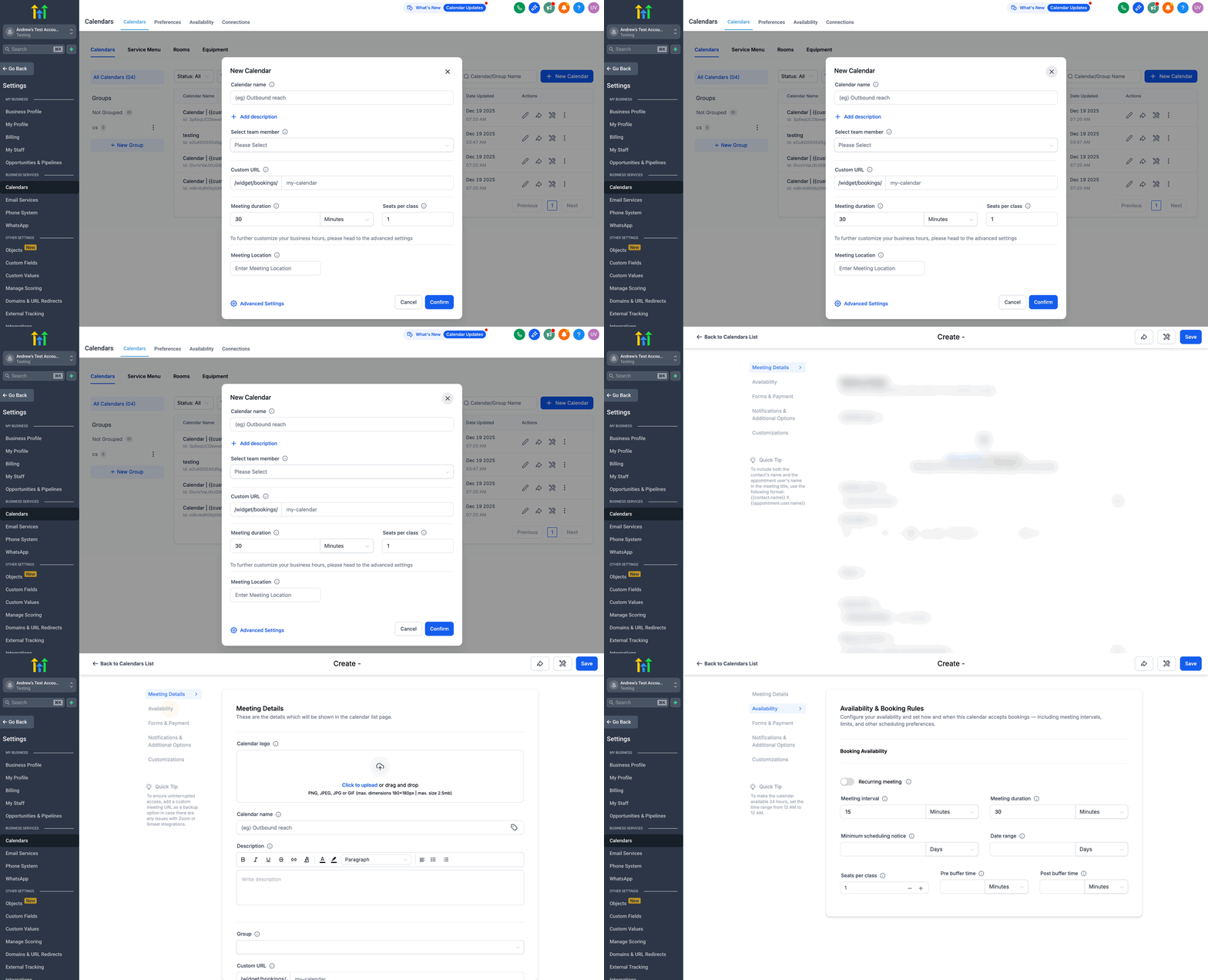
Click Advanced Settings at the bottom of the calendar setup window, as highlighted in the red box. This opens additional configuration options for your calendar, allowing you to fine-tune availability, notifications, and customization settings. Accessing this section ensures your class booking calendar aligns with your preferred schedule and branding requirements.
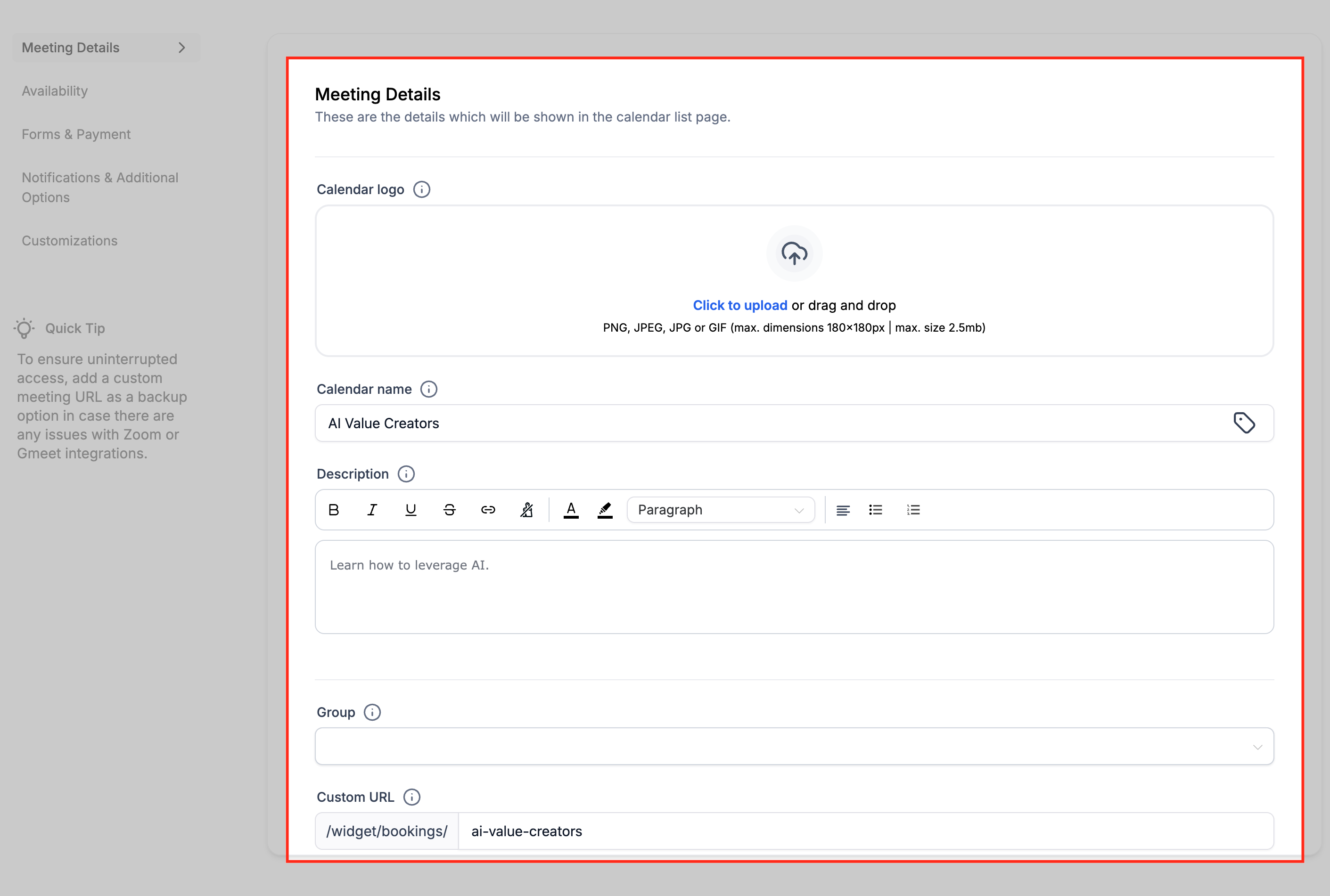
Meeting Details
The Meeting Details section lets you define the key information displayed to users on your class booking page. Each element here helps personalize and organize your calendar for a professional appearance.
- Calendar Logo: Upload an image (PNG, JPEG, or GIF) to brand your calendar with your logo. This visual helps clients instantly recognize your business.
- Calendar Name: Give your calendar a clear title to identify which class or service it represents.
- Description: Add a short, informative overview of what the class covers. This appears on the booking page and provides clarity to attendees.
- Group: (Optional) Assign your calendar to a group for better organization if you manage multiple calendars.
- Custom URL: Create a simple, branded link that can be shared with clients for direct access to your class booking page.
This section ensures your class calendar is clearly labeled, visually branded, and easy for attendees to understand.
Availability and Booking Rules
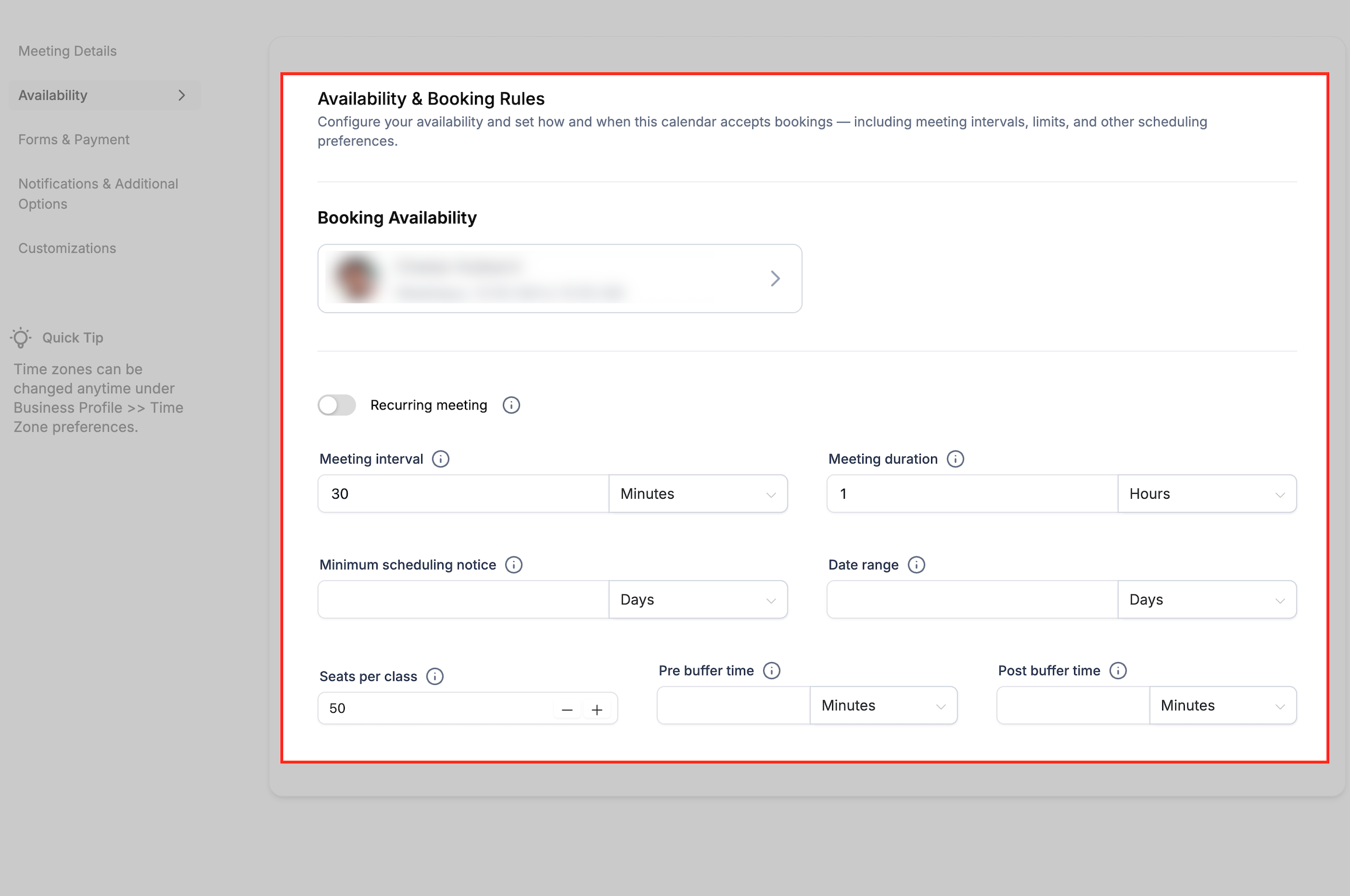
The Availability & Booking Rules section allows you to control when and how attendees can book your classes. Here’s what each field does:
- Booking Availability: Shows the assigned team member’s available hours for scheduling.
- Recurring Meeting: Toggle this on if the same class repeats regularly.
- Meeting Interval: Defines the gap between available booking slots (e.g., every 30 minutes).
- Meeting Duration: Specifies how long each class lasts (e.g., 1 hour).
- Minimum Scheduling Notice: Sets how far in advance attendees must book a class.
- Date Range: Limits how far into the future classes can be scheduled.
- Seats per Class: Determines the maximum number of participants per session.
The Class Booking Calendar supports recurring classes through the Recurring Availability setting in the Availability tab. Enable it to define repeating days and times (for example, every Tuesday and Thursday from 6:00–7:00 PM). Attendees will see all upcoming matching dates on the same booking link, and each date has its own seat capacity.
Add Multiple Sessions (Dates & Times) to One Class Calendar
Offer the same class across several dates by defining recurring availability and one-off sessions. Attendees will see all upcoming dates on a single booking link and can choose the date that fits their schedule.
Steps:
Go to Settings → Calendars → Edit your Class Booking calendar.
Open the Availability tab.
Toggle Recurring Availability and add the days/times you run this class (example: Tue 6:00–7:00 PM, Thu 6:00–7:00 PM).
Click + Add Date Override to add one-off sessions (e.g., Sat, Mar 7, 10–11:30 AM).
Click Save.
Open the Preview of the booking link to confirm multiple dates/times appear in the date picker.
How Seat Capacity and Overlapping Bookings Work
When a Class Booking calendar allows multiple participants per session, availability is controlled by the Seats per Class value.
Each confirmed booking reduces the available seat count by 1 for that time slot.
If an appointment overlaps multiple time slots, the system reduces the seat capacity by 1 in each affected slot. A slot is blocked only when its total seat capacity has been fully reached.
Overlapping bookings no longer fully block all affected slots prematurely. Instead, availability reflects the true remaining capacity for each slot.
This updated logic applies consistently across:
Public booking widgets
In-app appointment modal
Personal calendars
Round Robin calendars
Event calendars
- Pre/Post Buffer Time: Adds time before or after each class to prevent overlapping bookings.
This configuration ensures your booking calendar runs smoothly while aligning with your availability and class capacity.
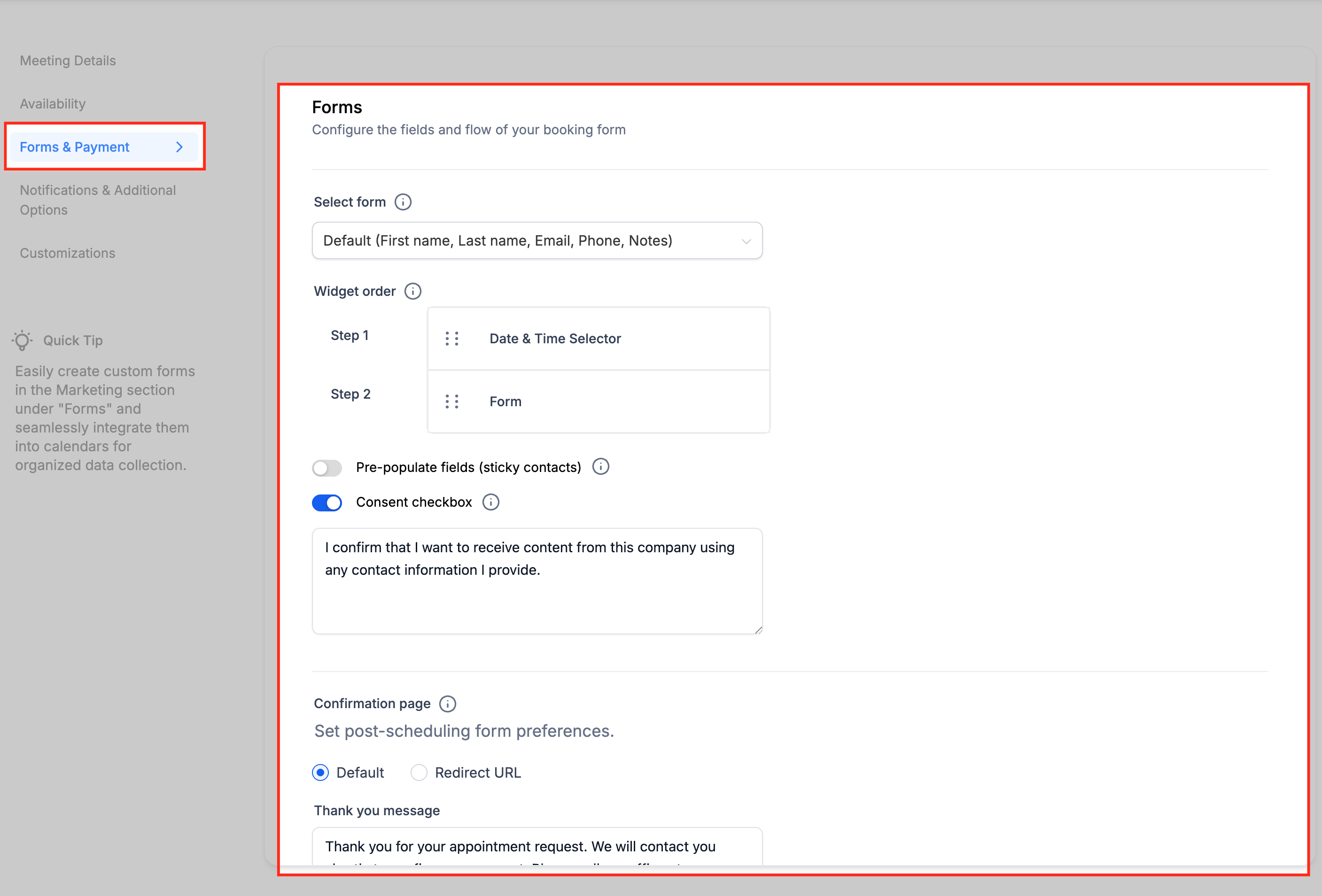
The Forms & Payment section allows you to customize how participants register and what information they provide.
- Select Form: Choose a default or custom form to collect details like name, email, and phone number.
- Widget Order: Control the booking flow by deciding whether users select a time first or fill out the form first.
- Pre-populate Fields: Enable sticky contacts so returning users’ information fills in automatically.
- Consent Checkbox: Add consent language for marketing compliance.
- Confirmation Page: Choose between a default thank-you message or a redirect URL for post-booking.
This section ensures all participant data is properly collected and that your booking process follows compliance and workflow preferences.
Notifications and Additional Options
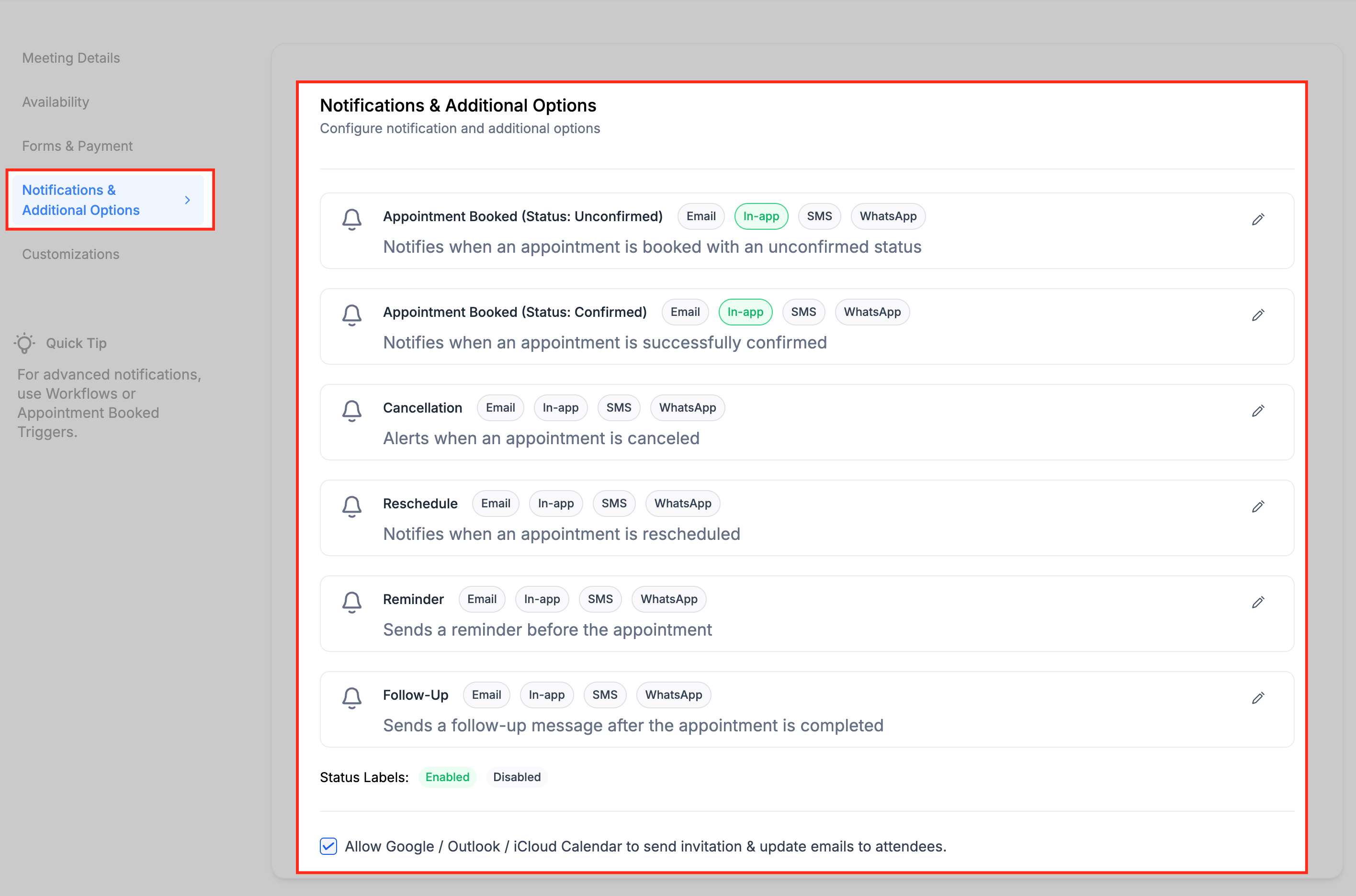
The Notifications & Additional Options section allows you to automate communication for class bookings.
- Appointment Notifications: Configure alerts for when bookings are created, confirmed, rescheduled, or canceled via email, SMS, WhatsApp, or in-app.
- Reminders and Follow-Ups: Send automatic reminders before classes and follow-ups afterward to improve attendance and engagement.
- Status Labels: Enable or disable visual status indicators for appointments.
- Calendar Sync: Allow syncing with Google, Outlook, or iCloud to send invitations directly to attendees.
These settings keep both hosts and attendees informed, reducing missed classes and enhancing overall scheduling efficiency.
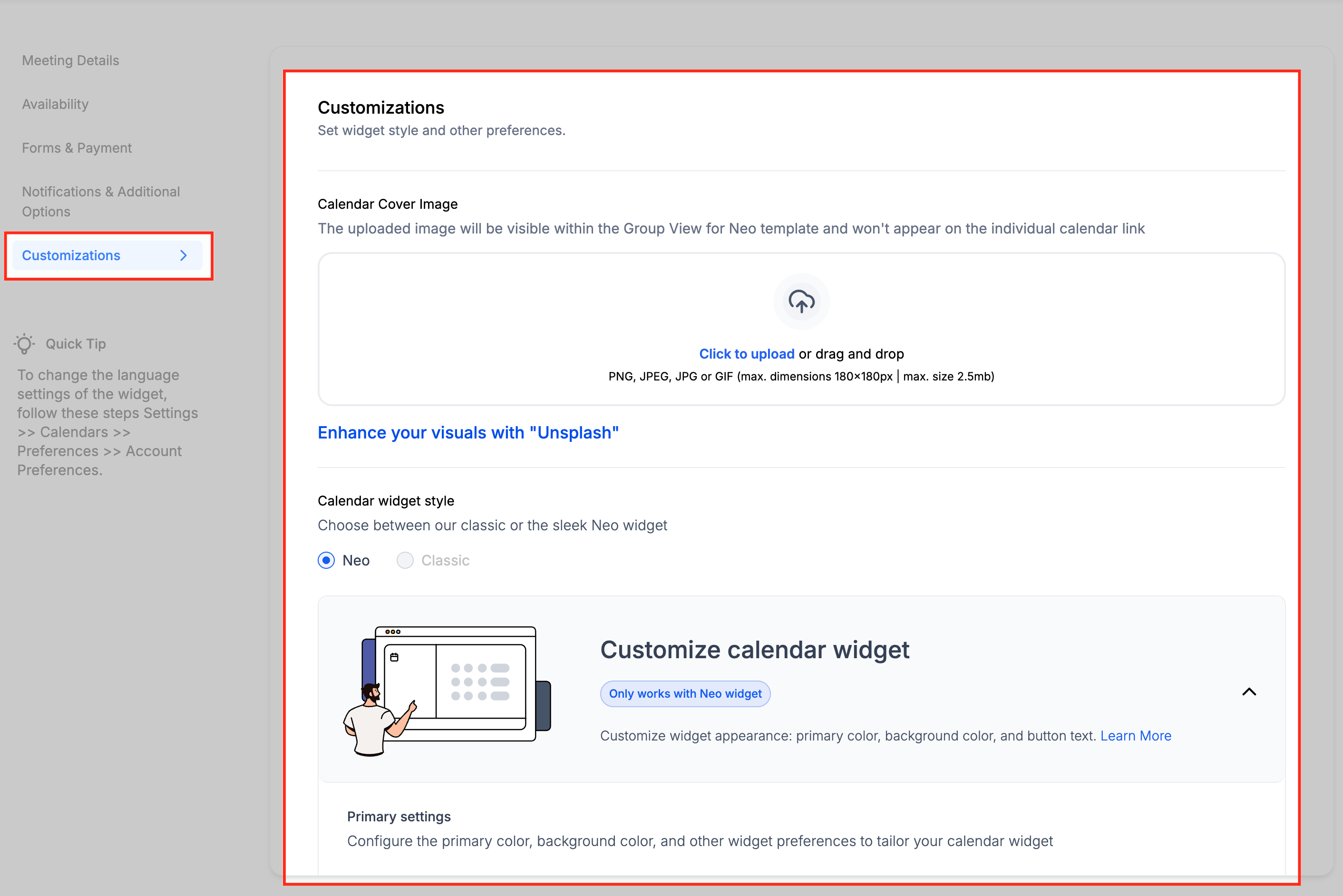
Customize Calendar Appearance
In the Customizations section, you can personalize how your calendar looks to attendees.
- Calendar Cover Image: Upload a banner or image to visually enhance your booking page.
- Calendar Widget Style: Choose between the modern Neo or classic layout for your booking widget.
- Primary Settings: Adjust the widget’s colors, background, and button styles to match your brand.
These visual customizations help maintain brand consistency and create a polished, professional booking experience for your attendees.
Frequently Asked Questions
Q: Can I host multiple instructors for one class?
No, each class calendar supports one host, but you can create separate calendars per instructor.
Q: Can attendees book multiple seats at once?
No, Add Guests option is not supported for class booking calendar.
Q: Can I accept payments in different currencies?
HighLevel uses Stripe’s settings to manage currencies. Ensure your Stripe account supports your desired currency.
Q: How do I track who has paid vs. unpaid attendees?
Payment data is available under each appointment record in the Appointments dashboard.
Q: Can attendees reschedule themselves?
Yes, if allowed in your Reschedule Policy. You can define how many hours before the class rescheduling is permitted.
Was this article helpful?
That’s Great!
Thank you for your feedback
Sorry! We couldn't be helpful
Thank you for your feedback
Feedback sent
We appreciate your effort and will try to fix the article