Live Chat Widgets now make it easier for website visitors to share context without typing long messages. Visitors can send files, images, PDFs, audio files, and voice notes directly from the widget, including attachment-only messages. Your team can review these messages in Conversations, and Conversation AI can respond to supported images and voice notes when enabled.
TABLE OF CONTENTS
- What are Voice Notes and Attachments in Live Chat Widgets?
- Key Benefits of Voice Notes and Attachments in Live Chat Widgets
- Supported Message Types, File Types, and Limits
- Uploading Files and Voice Notes From the Visitor Side
- How To Setup Voice Notes and Attachments in Live Chat Widgets
- Reviewing Attachments and Voice Notes in Conversations
- Using Conversation AI With Images and Voice Notes
- Troubleshooting Voice Notes and Attachments
- Frequently Asked Questions
- Related Articles
What are Voice Notes and Attachments in Live Chat Widgets?
Voice notes and attachments let website visitors send more than plain text through HighLevel’s Live Chat Widget. Visitors can upload supported files, send audio attachments, or record voice notes directly inside the widget. These messages appear in Conversations, where agents can review, preview, play, download, or respond based on the file type.
Key Benefits of Voice Notes and Attachments in Live Chat Widgets
- Faster visitor communication: Visitors can upload files, send audio, or record voice notes instead of typing long explanations.
- Better context for agents: Screenshots, PDFs, images, and voice notes help agents understand the issue before replying.
- Attachment-only messages: Visitors can send files or audio without being required to add text.
- Audio preview before sending: Visitors can review a recorded voice note before submitting it.
- Inline audio playback: Audio messages render as playable audio cards with controls for play, pause, seeking, mute, restart, and playback speed.
- Improved AI workflows: Conversation AI can process supported images and voice notes when the correct AI response settings are enabled.
- Cleaner widget controls: Sub-account users can choose whether the attachment and microphone icons appear in the Live Chat Widget.
Supported Message Types, File Types, and Limits
Supported file rules help protect the visitor experience and prevent unsupported or oversized files from being sent through the widget. Use the formats below to make sure visitors can share files successfully and agents can open them in Conversations.
Supported visitor actions
Visitors can:
- Record and send voice notes from the Live Chat Widget.
- Upload supported audio files.
- Upload supported image and document files.
- Send files, audio, or voice notes without adding text.
- Preview audio before sending.
- Track upload progress while files are being attached.
Supported image and document file types
.jpg.jpeg.png.heic.pdf
JPG and PNG files can show inline previews, while HEIC and PDF files may appear as downloadable filenames instead of inline previews.
Supported audio behavior
Voice notes and audio attachments display as playable audio cards in the widget and Conversations. The inline player includes:
- Play/Pause
- Waveform
- Seek controls
- Mute/Unmute
- 1×, 1.5×, and 2× playback speed
- Restart audio
Conversation AI Audio Response supports voice notes and audio file inputs. Existing Conversation AI audio documentation lists supported uploaded audio formats such as OGG, MP3, MP4 audio-only, AAC, M4A, and MPEG.
File limits
- Max files per message: Up to 5 files.
- Per-file size limit: Upto 25 MB.
- Unsupported file types, oversized files, and duplicate file selections may be blocked automatically.
Uploading Files and Voice Notes From the Visitor Side
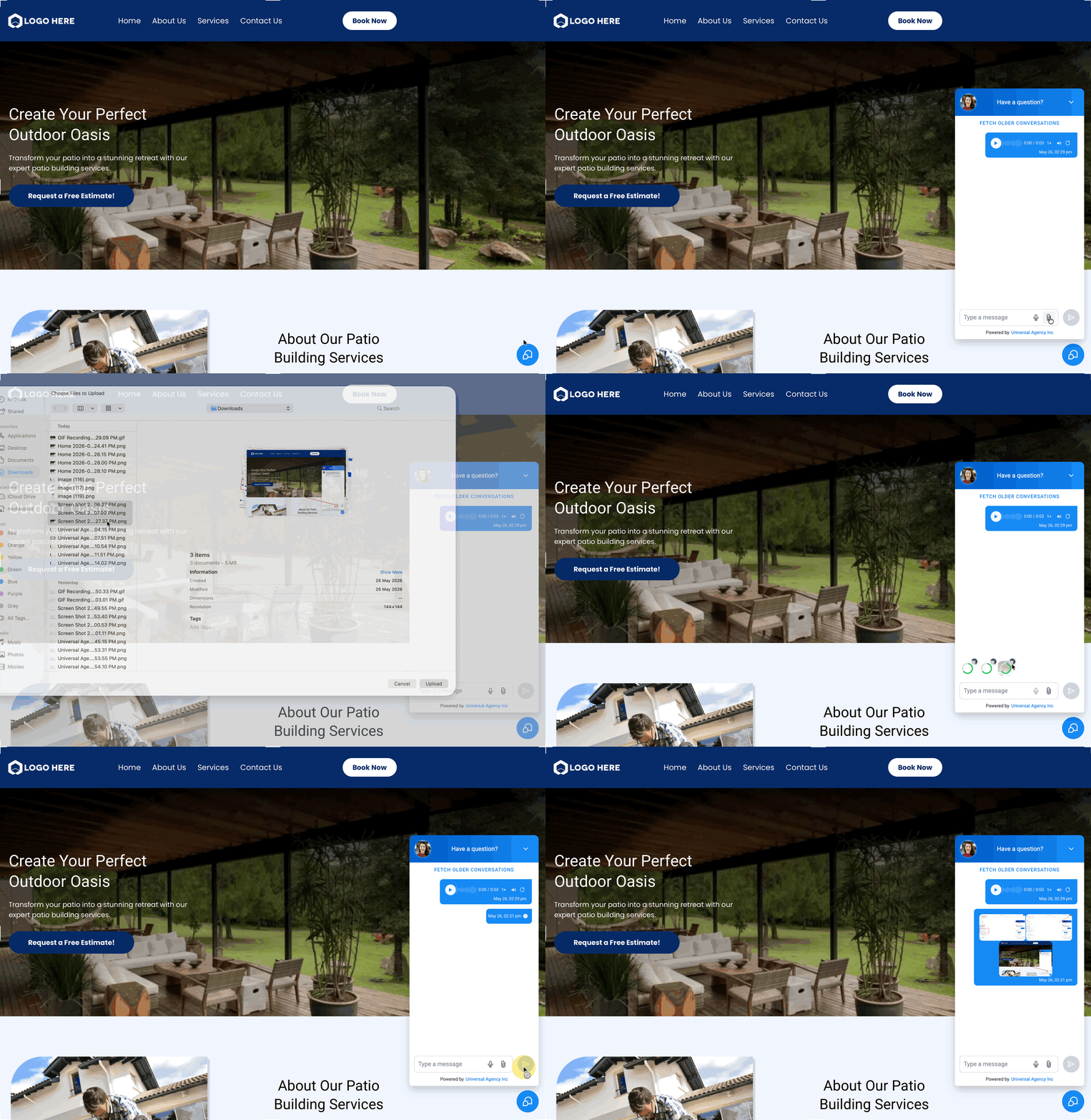
The visitor-side upload flow is designed to be simple on desktop and mobile. Visitors can use the attachment icon to upload files, drag files into the widget on desktop, or use the microphone icon to record a voice note.
Uploading files from website
- Open the Live Chat Widget on the website.
- Click the attachment icon or drag supported files into the chat composer.
- Select the file or files to attach.
- Wait for the upload progress indicator to complete.
- Send the message.
Visitors can send attachment-only messages, so a typed message is no longer required when sending supported files or audio.
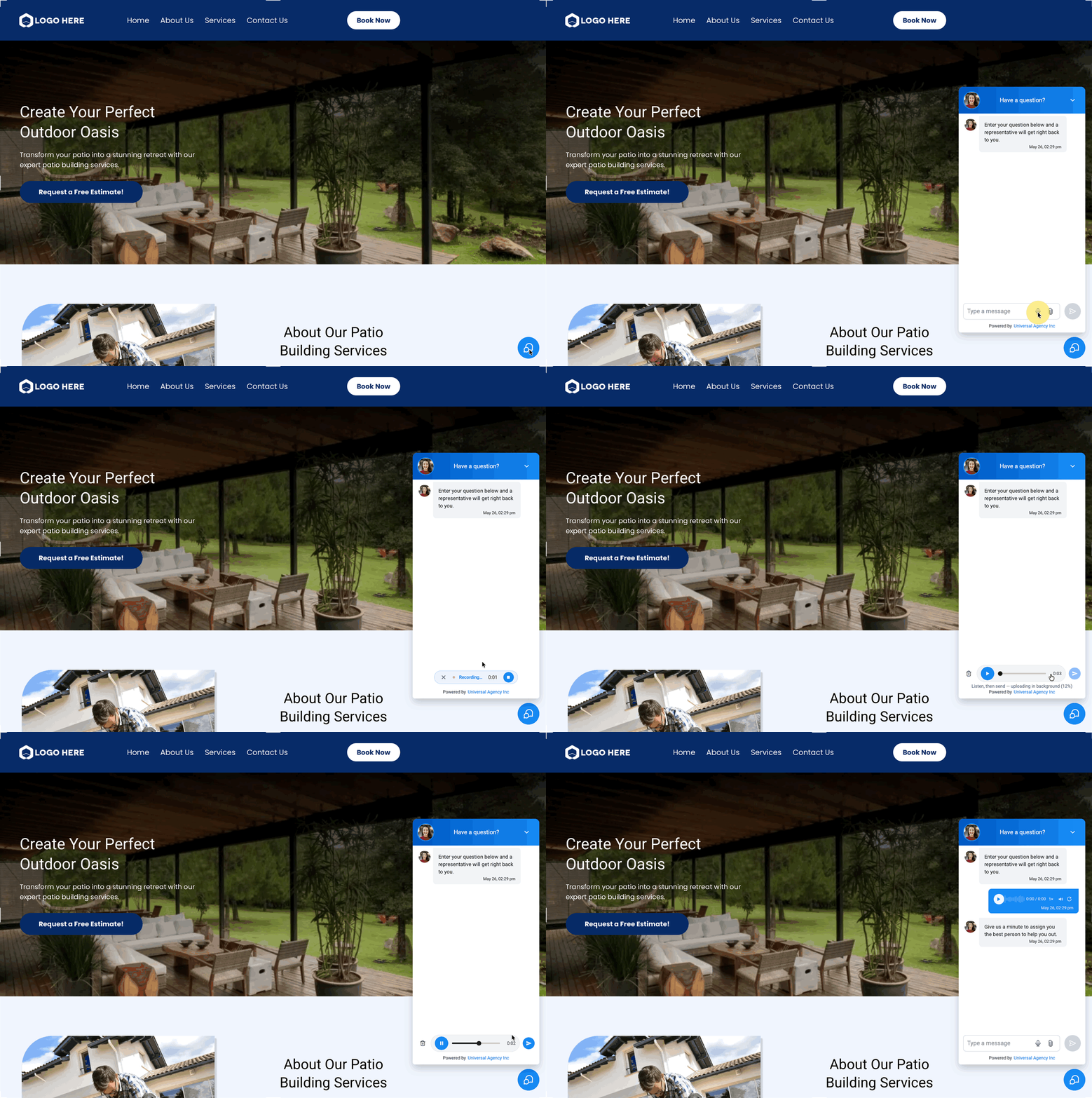
Recording and sending a voice note
- Open the Live Chat Widget. Click or tap the microphone icon.
- Allow microphone access when the browser prompts for permission.
- Record the voice note.
- Preview the audio before sending.
- Send the voice note.
If microphone permission is denied, the widget shows an actionable toast message so visitors know how to fix the issue.
How To Setup Voice Notes and Attachments in Live Chat Widgets
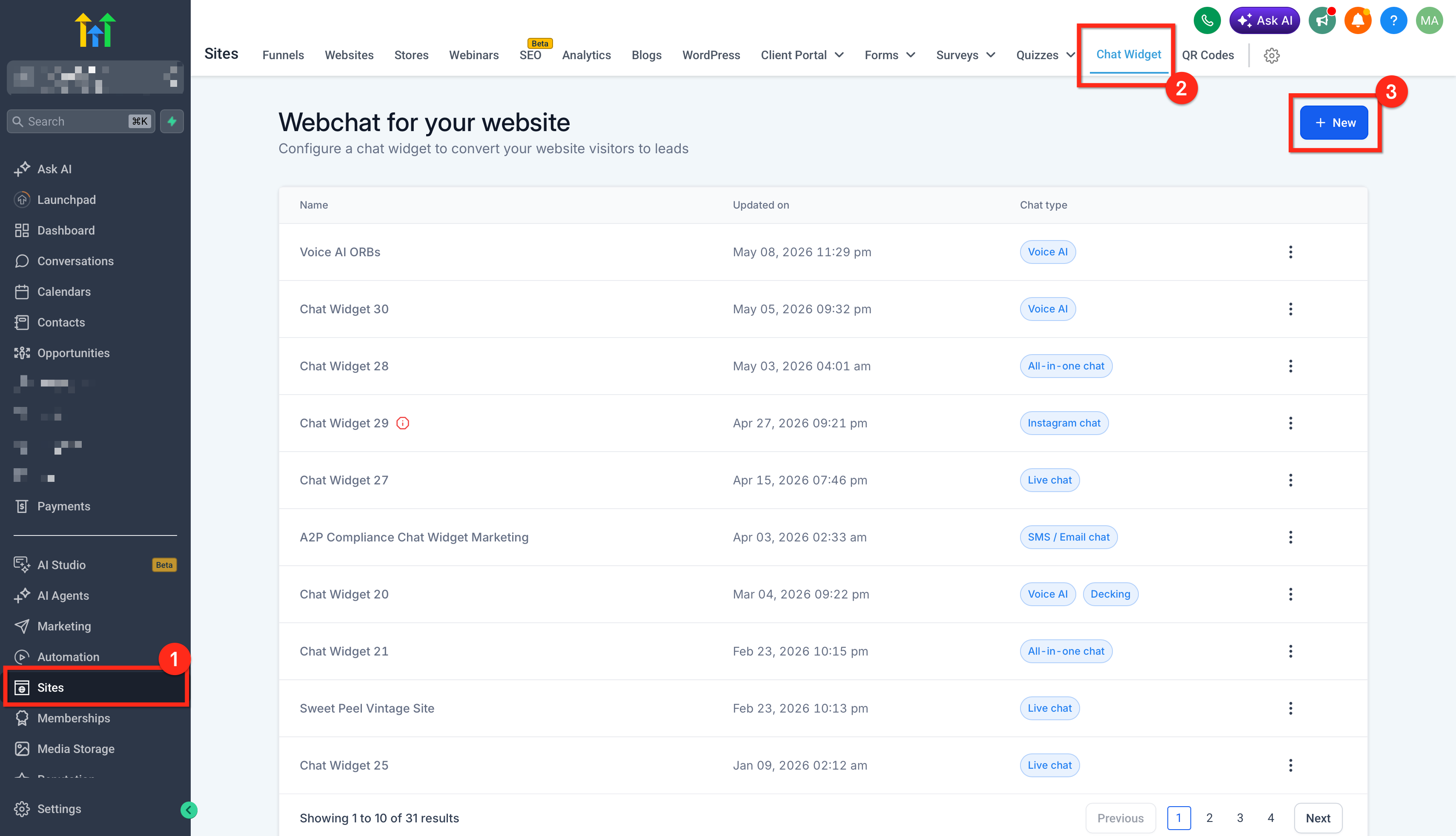
Proper setup ensures visitors can send the right message types and your team can review them in Conversations. Since Live Chat must be installed and embedded on your website before messages can route into Conversations, start by confirming the widget is active, configured correctly, and available to visitors.
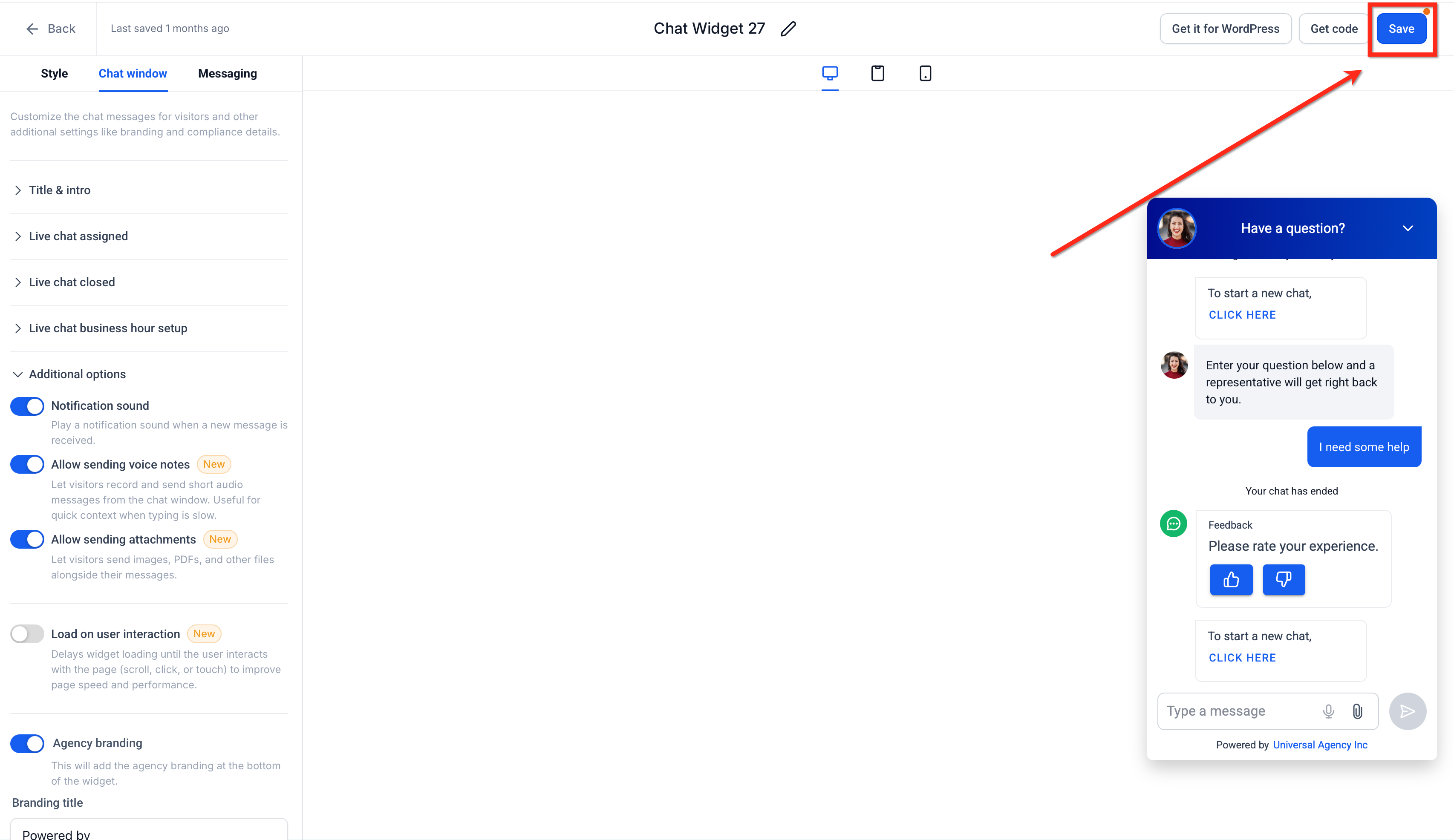
- Go to Sites → Chat Widget. Create or open a Live Chat Widget.
- Go to Chat Window → Additional Options.
Confirm Allow sending voice notes is enabled if visitors should send voice notes.
Confirm Allow sending attachments is enabled if visitors should upload files.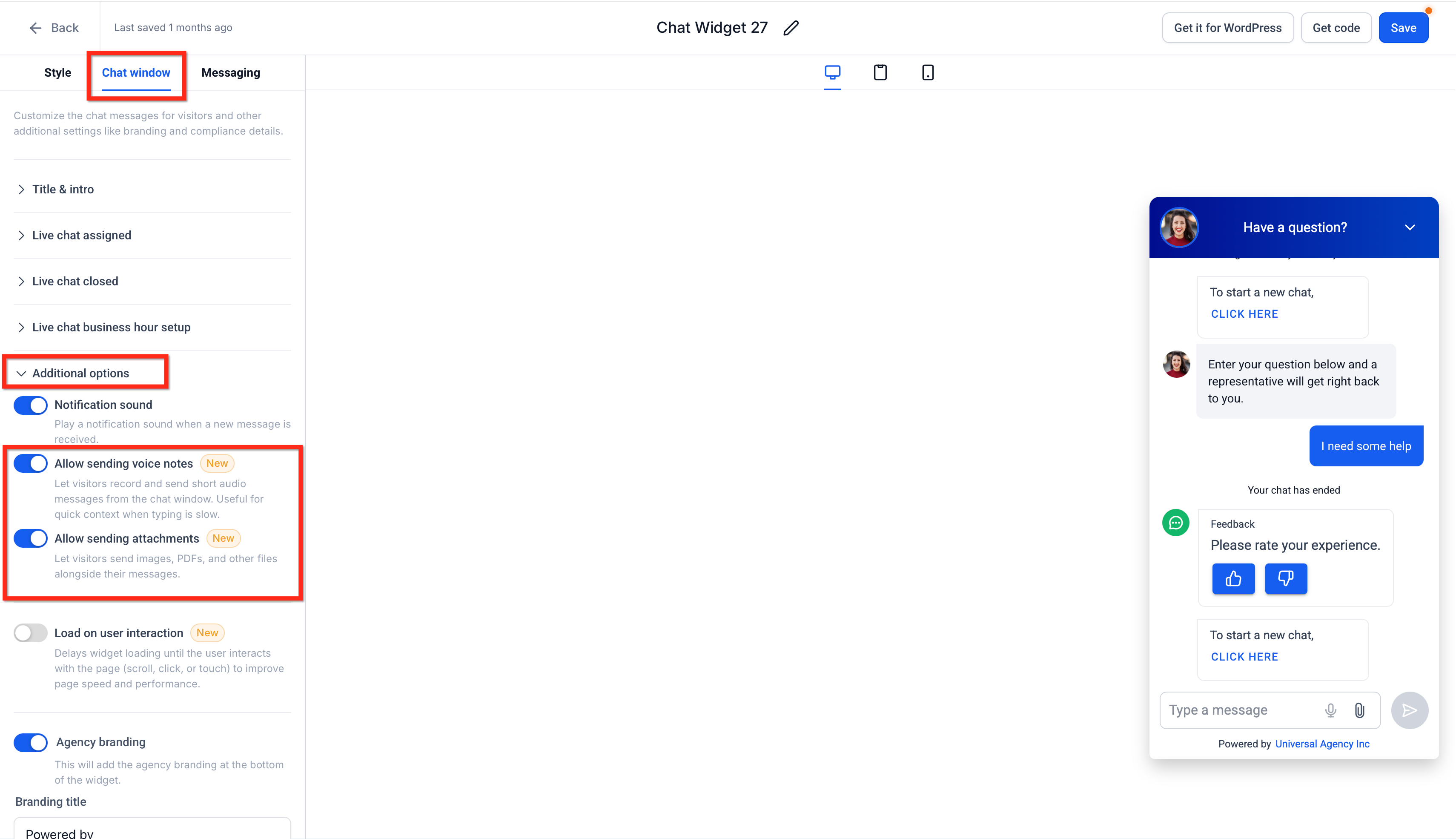
- Save the widget.
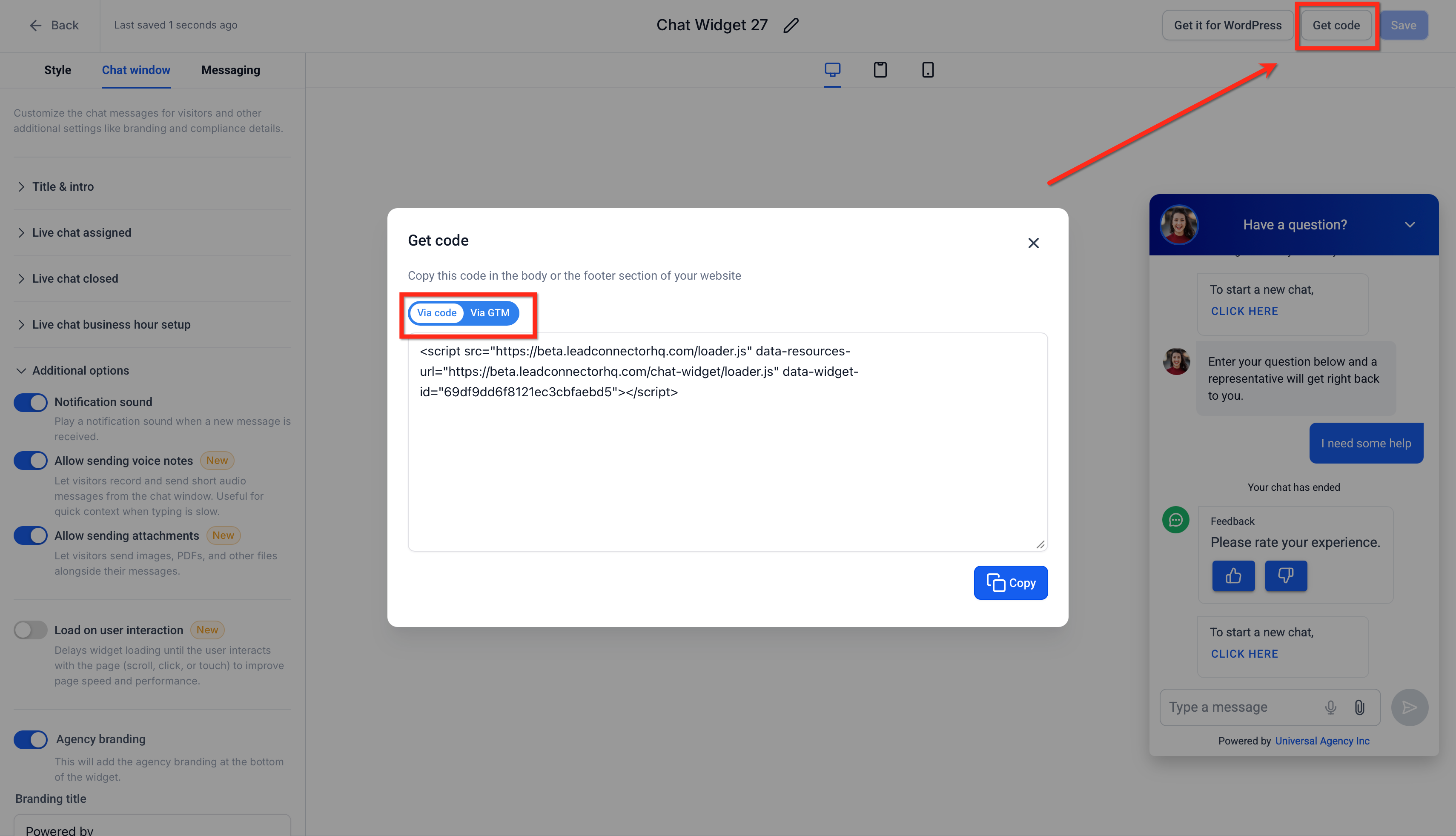
- Embed the widget on your website by copying the Chat Widget embed code and adding it to your site, or by enabling the widget through the website or funnel settings if the page is built in HighLevel.
- Open the website as a visitor and test the widget.
- Send a file, an attachment-only message, and a voice note.
- Confirm each message appears correctly in Conversations.
Reviewing Attachments and Voice Notes in Conversations
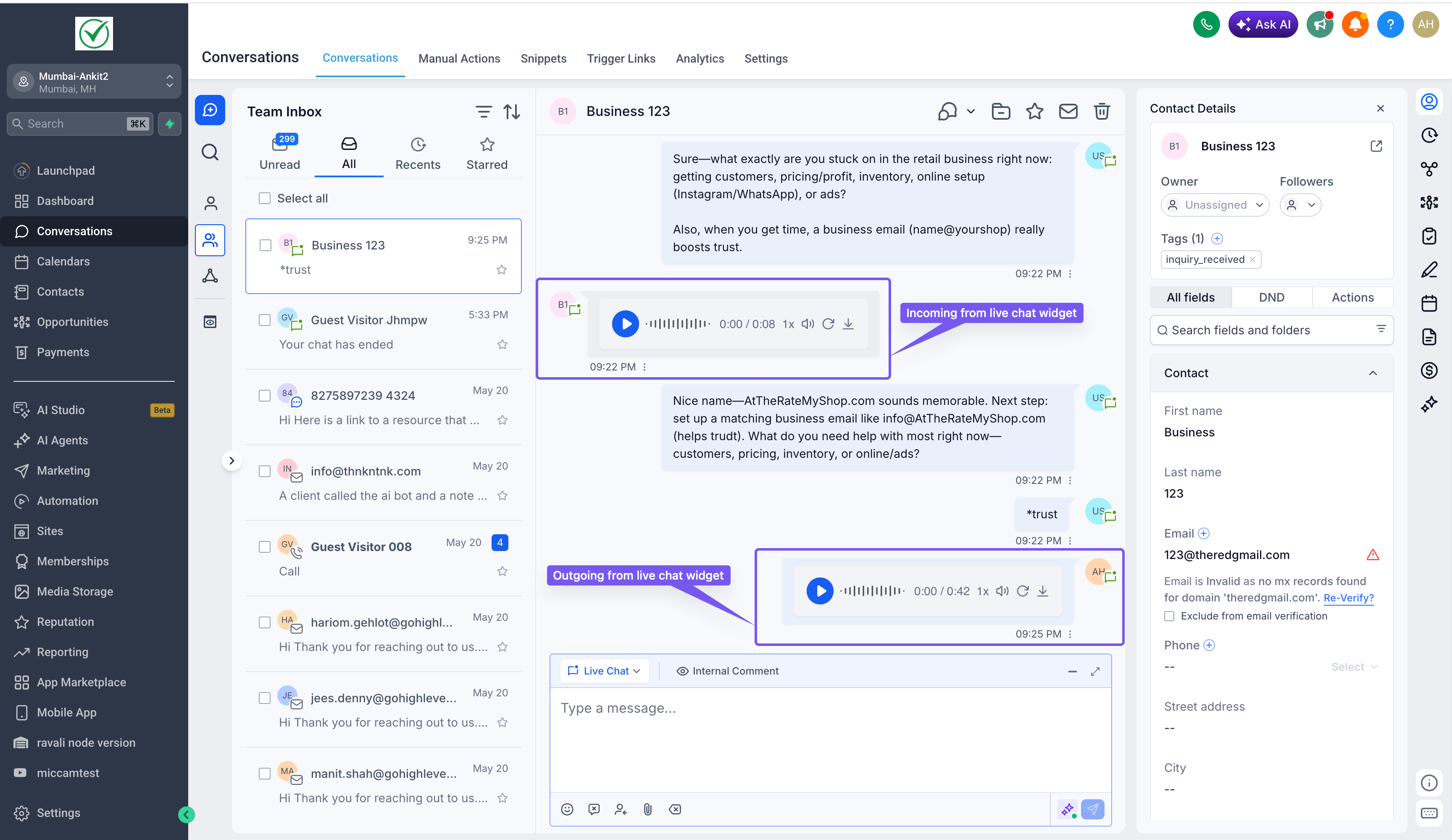
Conversations gives agents a centralized place to review visitor messages, files, and voice notes. Since Live Chat messages route into Conversations, agents can manage visitor context without switching tools.
Agents can review inbound files and voice notes from the conversation thread:
- JPG and PNG files may show inline previews.
- HEIC and PDF files may appear as downloadable filenames.
- Audio messages render as playable audio cards instead of raw links.
- Agents can preview, play, download, or respond based on the file type.
- Files may be saved to the Media Library or added to the contact’s Documents tab when available from the message options.
Using Conversation AI With Images and Voice Notes
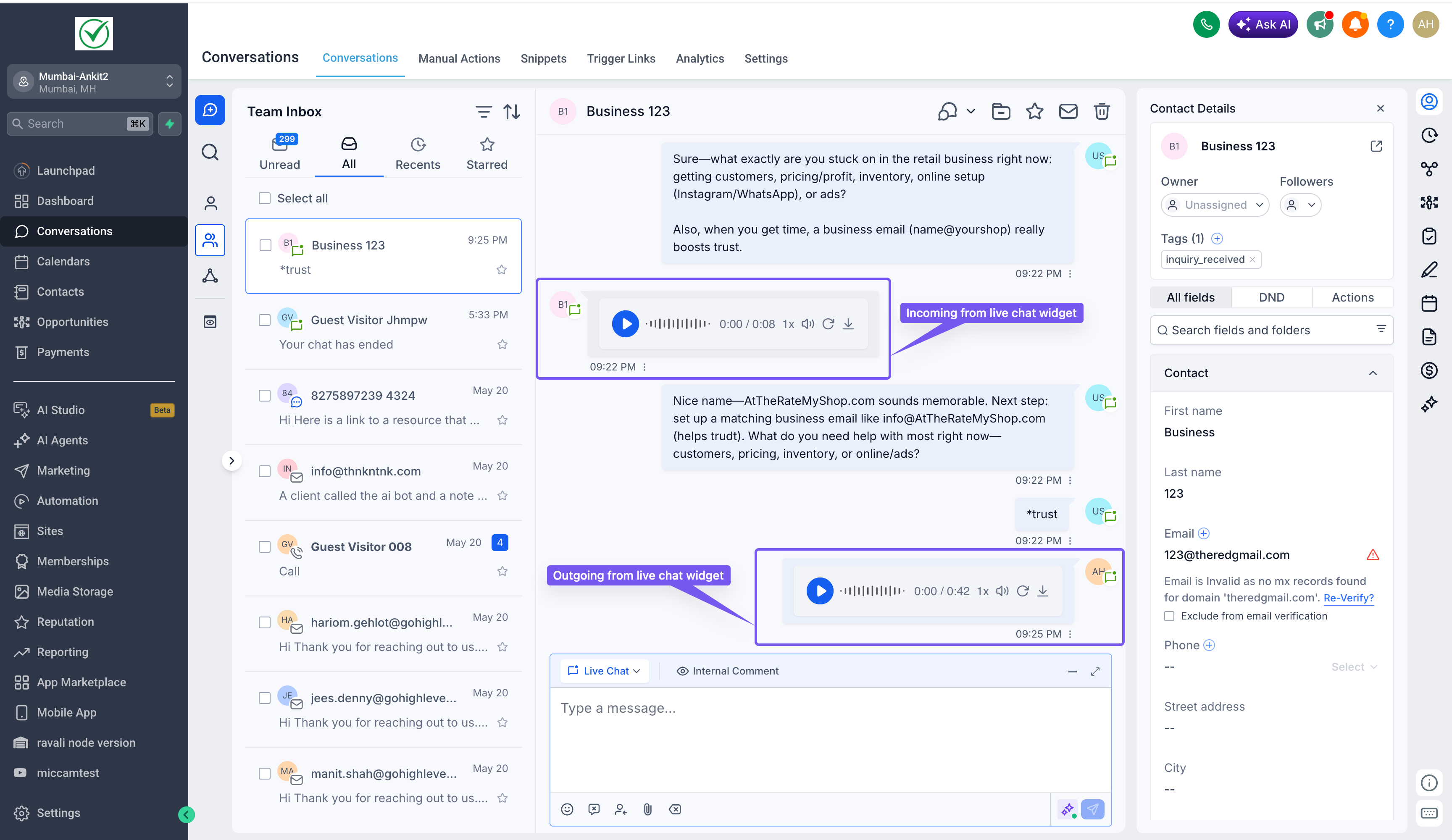
Conversation AI can respond to richer visitor messages when image and voice note response settings are enabled for the AI Agent. Based on your workflow, you can allow the bot to respond to images, voice notes, or both. This helps the bot use visual or audio context from the visitor’s message instead of relying only on typed text.
To enable Conversation AI responses for images, voice notes, or both:
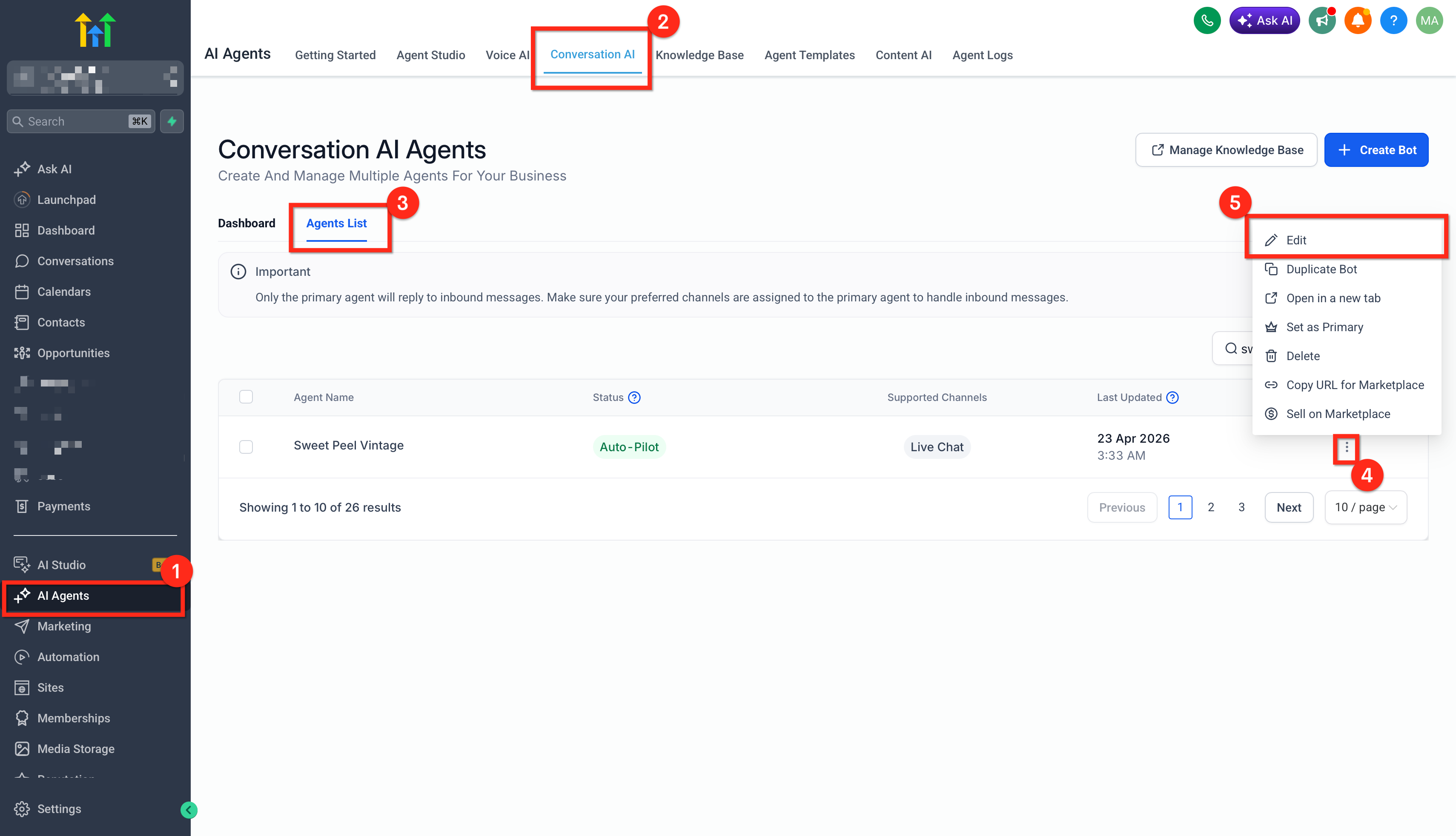
- Go to AI Agents → Conversation AI → Agent List.
- Click the three dots next to the bot you want to configure. Select Edit.
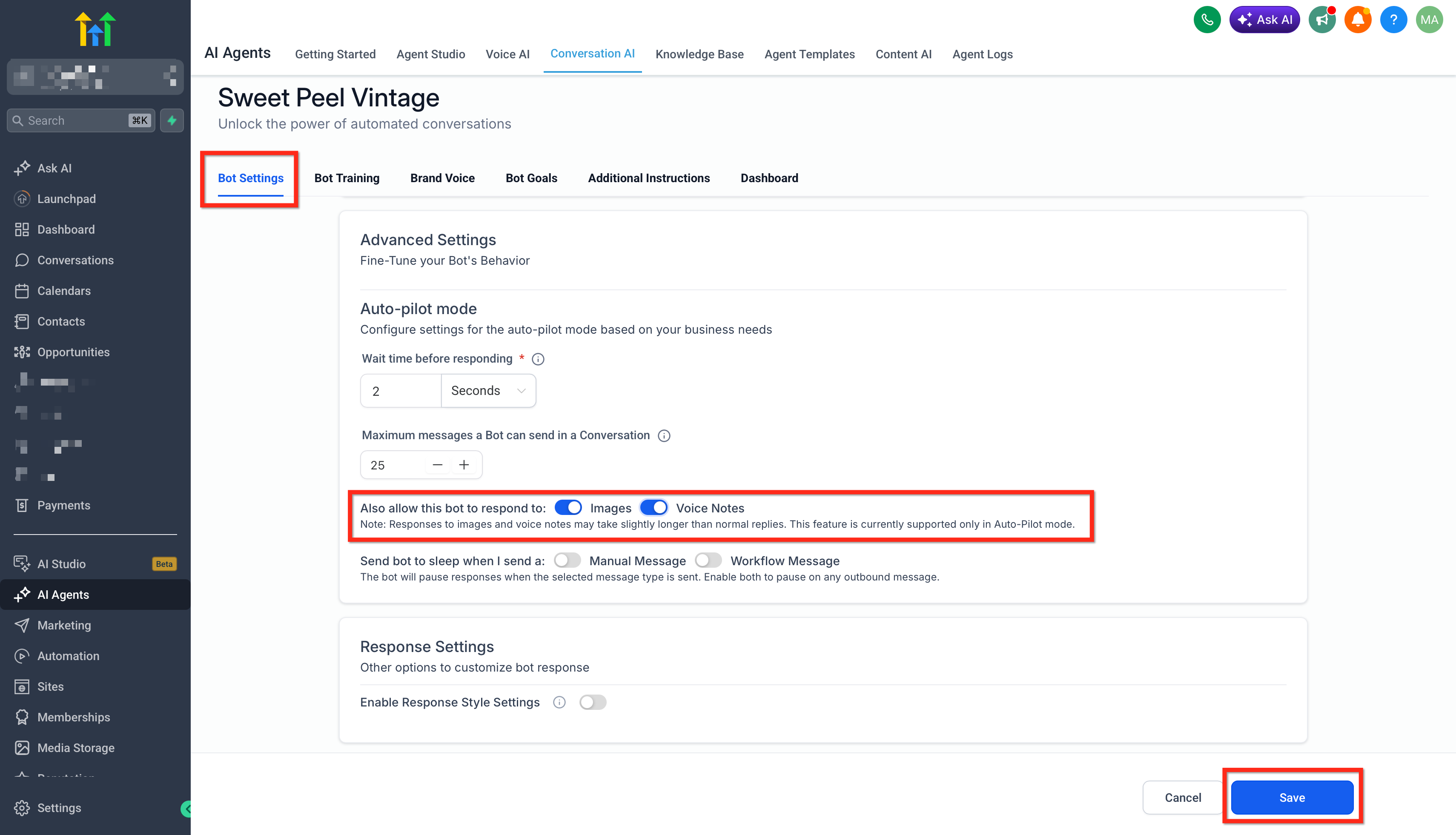
- Enable one or both options under Bot Settings → Also allow this bot to respond to:
- Images
- Voice Notes
- Save your changes.
When Images is enabled, Conversation AI can analyze supported customer-shared images and reply with context-aware messages. Supported image types currently include JPG, JPEG, and PNG. HEIC files may be uploaded as Live Chat attachments, but HEIC support for AI image response may be limited.
When Voice Notes is enabled, Conversation AI can process supported audio by transcribing the voice note, passing the transcript to the bot, and generating a context-aware reply. If Conversation AI voice note handling is enabled, the bot can process and reply to voice notes automatically. If it is disabled, the configured fallback messaging is shown.
Note: PDFs are not supported for Conversation AI image response.
Troubleshooting Voice Notes and Attachments
Troubleshooting upload and recording issues helps visitors complete the conversation without abandoning the chat. Most issues are caused by unsupported file types, large files, duplicate attachments, browser permissions, or slow network connections.
- File is too large: Compress the file or choose a smaller version.
- File type is not supported: Convert the file to a supported format before uploading.
- Duplicate file warning appears: Remove the duplicate and attach a different file.
- Upload is slow: Wait for the progress indicator to complete or try again on a stronger connection.
- Drag-and-drop does not work: Drag the file from the computer’s file explorer or use the attachment icon instead.
- Microphone permission is denied: Allow microphone access in the browser settings and try recording again.
- AI does not respond to an image or voice note: Confirm the correct AI Agent setting is enabled for Images or Voice Notes.
Frequently Asked Questions
Q: Can visitors send attachments without typing a message?
Yes. Visitors can send attachment-only messages from the Live Chat Widget.
Q: Can visitors record voice notes inside the Live Chat Widget?
Yes. When Allow sending voice notes is enabled, visitors can record, preview, and send voice notes directly from the widget.
Q: Can I turn off file uploads but keep voice notes enabled?
Yes. The attachment and voice note options are controlled separately, so you can enable or disable each one based on the experience you want visitors to have.
Q: Can visitors send PDFs?
Yes. PDFs are supported as Live Chat attachments, but they may appear as downloadable filenames instead of inline previews.
Q: Can Conversation AI read PDFs sent through Live Chat?
No. Conversation AI image response is for supported image formats. PDFs are not currently supported for AI image response.
Q: Can Conversation AI respond to voice notes?
Yes, when voice note response is enabled for the bot. HighLevel transcribes the audio and passes the transcript to the bot so it can respond.
Q: Will the bot reply with an audio message?
No. Conversation AI typically replies using standard channel messages, usually text, for compatibility.
Q: Why do HEIC files not preview inline?
HEIC files may be uploaded as Live Chat attachments, but they may not preview inline depending on browser support. Download the file and open it locally if preview is unavailable.
Related Articles
Was this article helpful?
That’s Great!
Thank you for your feedback
Sorry! We couldn't be helpful
Thank you for your feedback
Feedback sent
We appreciate your effort and will try to fix the article