Document sharing between HighLevel CRM and the Client Portal gives businesses and contacts a centralized way to exchange files. CRM users can upload documents to a contact record and share them with the contact through the Client Portal, while contacts can upload supported files from the portal for CRM users to access. This article explains how to share, upload, preview, download, and manage access to these files.
TABLE OF CONTENTS
- What Is Document Sharing Between CRM and the Client Portal?
- Key Benefits of Sharing Documents through the Client Portal
- Prerequisites for Sharing Documents through the Client Portal
- How to Share a Document from CRM
- Share a New Document
- Share an Existing Document
- How Contacts Upload Documents from the Client Portal
- Automate Follow-Up after a Client Upload
- Preview and Download Documents
- Revoke Client Portal Access to a Document
- Delete or Remove Documents
- Delete a Document from CRM
- Client-Uploaded Documents
- Frequently Asked Questions
- Related Articles
What Is Document Sharing Between CRM and the Client Portal?
Files managed through the Documents area of a contact record are associated with that contact. Sharing a file to the Client Portal makes it available to the contact without requiring the file to be sent separately as an email attachment.
Important: Contact-record Documents are different from HighLevel Documents & Contracts. Documents & Contracts is a separate feature used for items such as proposals, contracts, estimates, signatures, and related document workflows.
Key Benefits of Sharing Documents through the Client Portal
Sharing documents through the Client Portal keeps client-facing files connected to the corresponding contact record while providing contacts with a central location for accessing and submitting files. This can simplify file exchange and make it easier for CRM users to distinguish documents they shared from files received from the contact.
Centralized File Exchange: Keep shared and received client files associated with the contact record instead of relying on separate email attachments.
Two-Way File Sharing: Share documents with contacts and allow contacts to upload supported files back through the Client Portal.
Clear File Visibility: Identify files shared with the contact and locate files received through the Client Portal.
Automatic Client Notifications: Supported Client Portal file sharing creates a notification so contacts can see when a new file has been shared.
Automation Opportunities: Use Client Portal uploads as a workflow trigger when follow-up or internal processing should begin after a contact submits a file.
Prerequisites for Sharing Documents through the Client Portal
Client Portal access allows contacts to view files shared with them and upload their own supported documents. Confirming access before sharing helps ensure the contact can open the portal and interact with the files associated with their account.
Before sharing documents:
Make sure the contact has access to the Client Portal.
Confirm you are working with the correct contact record in HighLevel.
Have the file you want to share available for upload if it is not already stored on the contact record.
If the Client Portal has not been configured yet, complete the applicable Client Portal setup before sharing files with contacts.
How to Share a Document from CRM
Files can be shared from the Documents area of an individual contact record. You can make a new upload available to the Client Portal or share an existing contact document using the available Client Portal sharing controls.
Share a New Document
Sharing during upload lets you add the file to the contact record and make it available to the contact in one workflow.
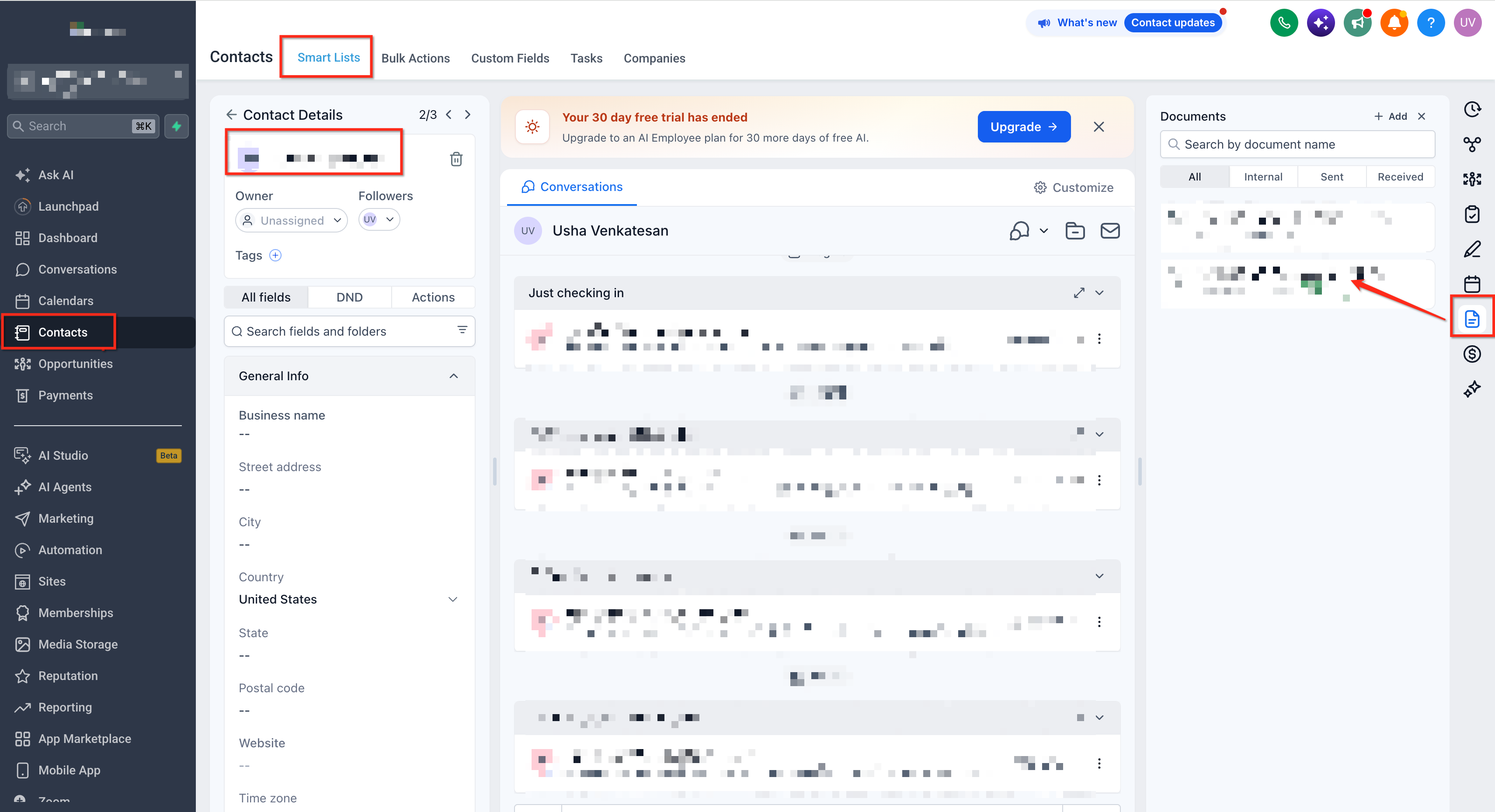
Go to Contacts in your HighLevel sub-account.
Open the contact you want to share the document with.
Open the contact's Documents area.
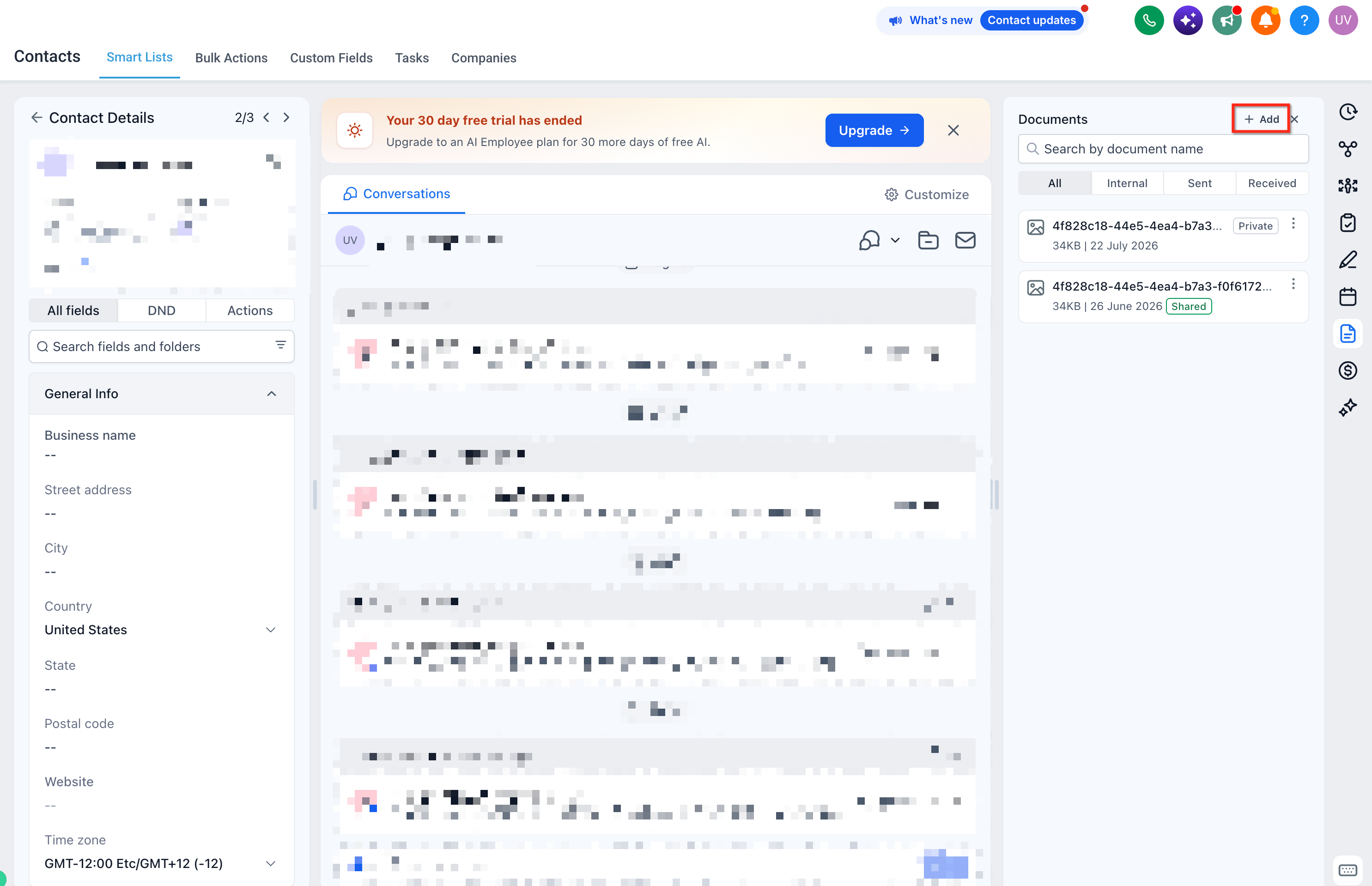
Click + Add or the available option to add a document.
Select and upload the file.
Enable the available Client Portal sharing option for the document.
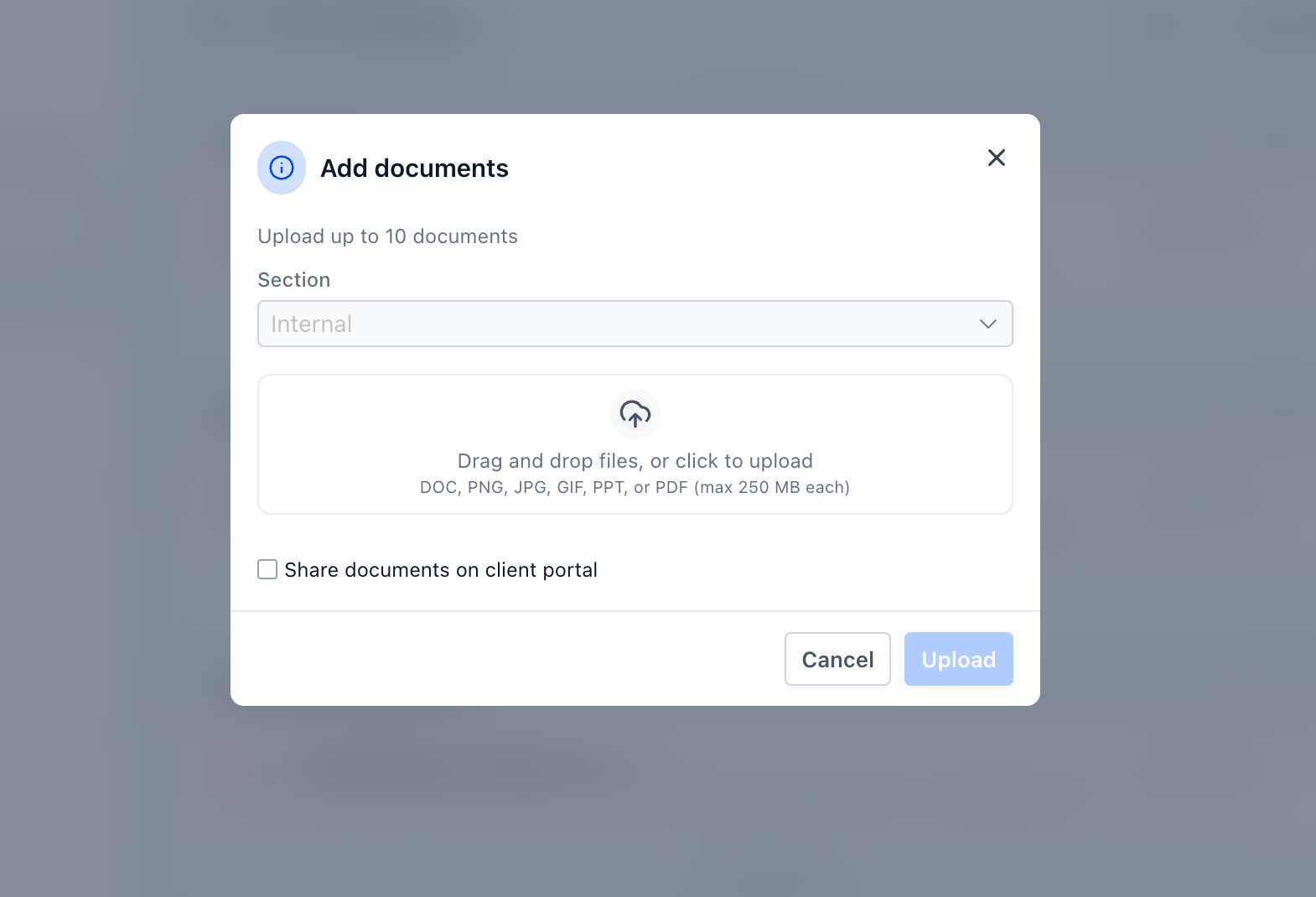
Complete the upload.
After the file is shared, verify that the applicable Shared status or Client Portal sharing indicator appears for the document.
Share an Existing Document
Existing files on a contact record can also be made available to the contact without uploading them again.
From the contact record, open Documents.
Locate the existing document you want to share.
Open the file's three-dot action menu.
Select Share to Client Portal.
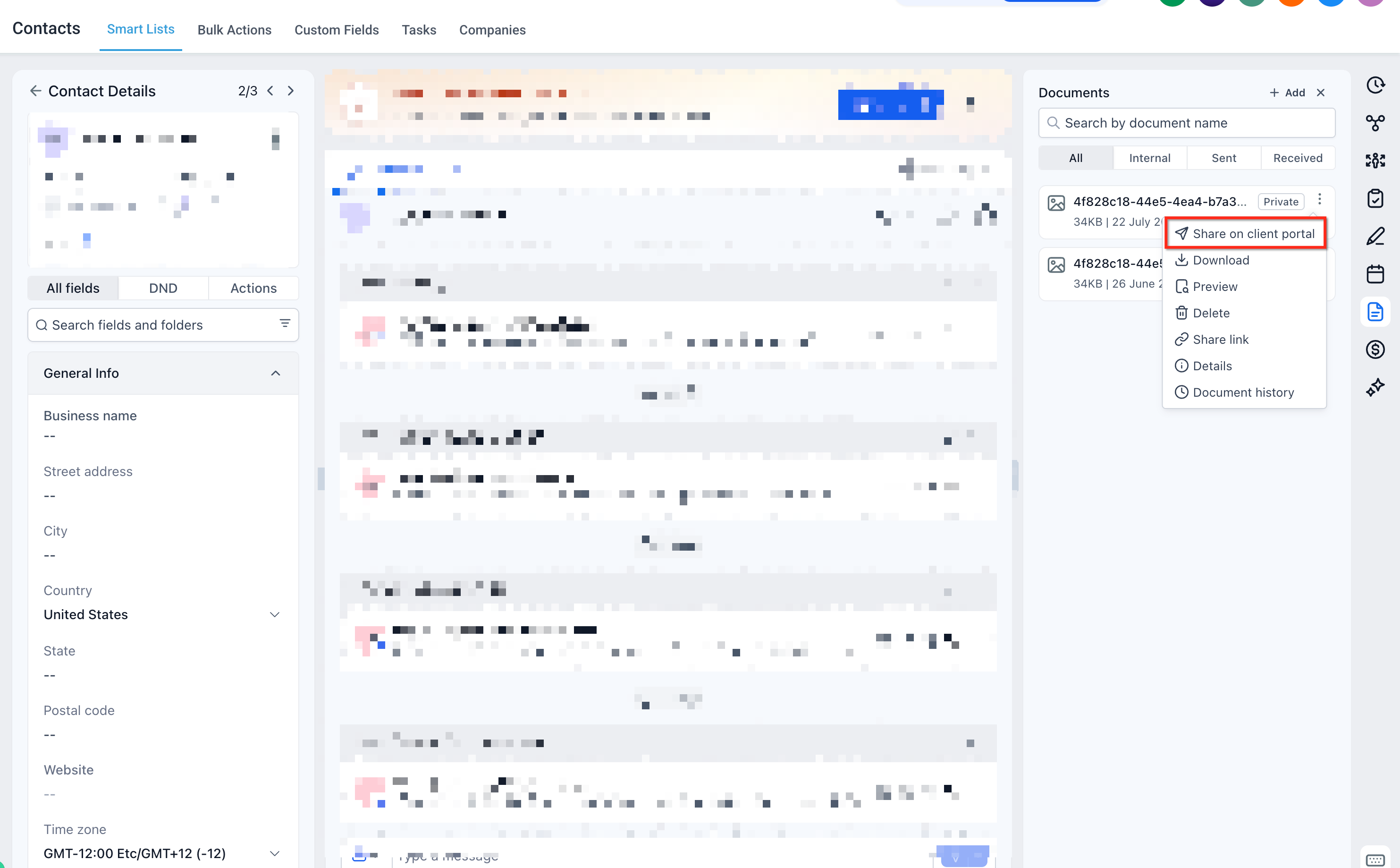
Confirm the sharing action when prompted.
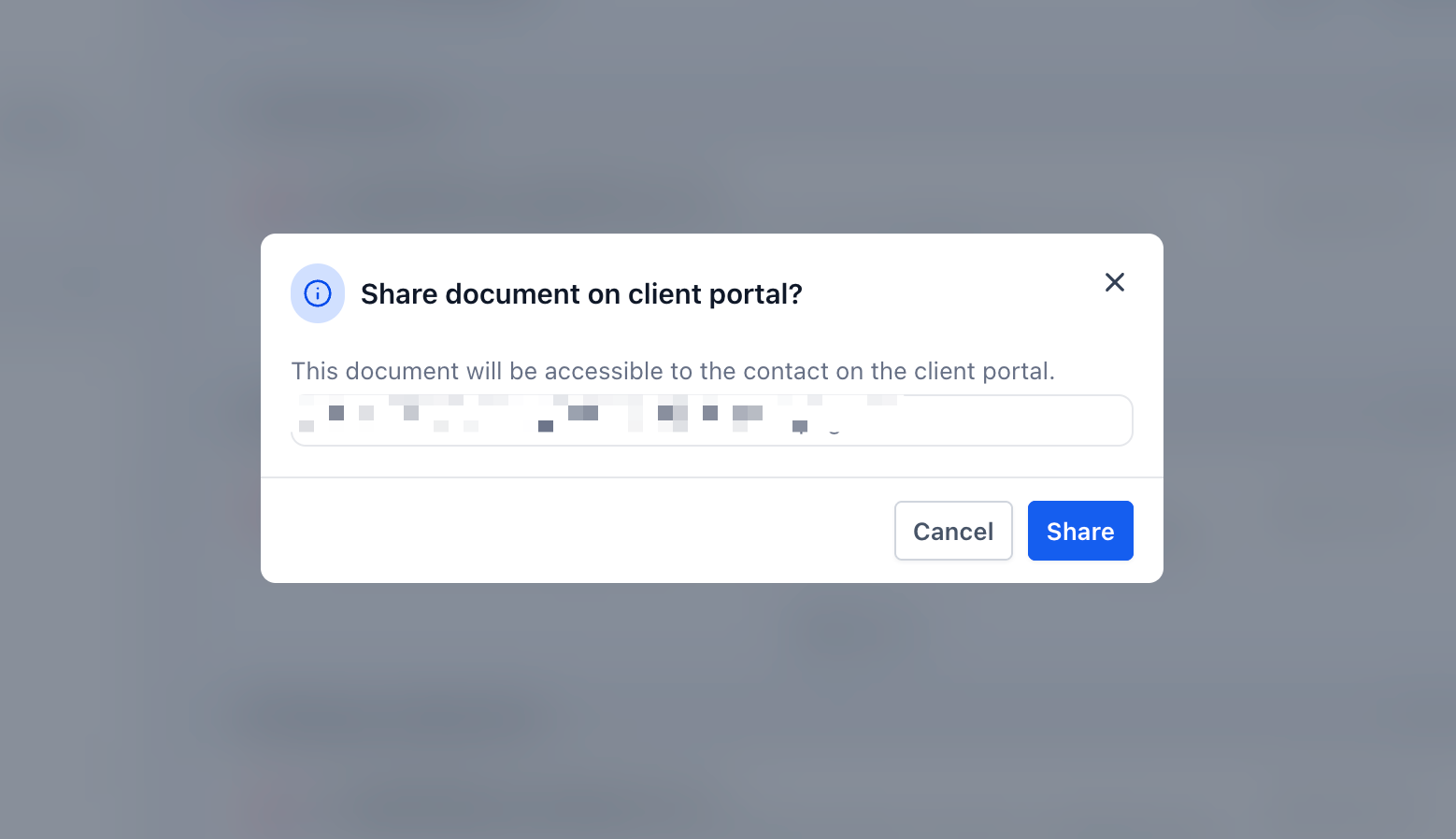
Verify that the document shows the applicable shared status.
Notification: When a supported file is shared through the Client Portal sharing flow, HighLevel creates a Client Portal notification for the contact. Depending on the contact's notification settings and supported device/app configuration, additional push notification behavior may also be available.
For details, see Client Portal - File Share Notifications for Contacts.
How Contacts Upload Documents from the Client Portal
Client Portal uploads provide a two-way file exchange between contacts and CRM users. Files submitted by the contact are associated with their contact record, allowing team members to retrieve client-submitted documents without requiring a separate email or external upload process.
From the Client Portal:
Sign in to the Client Portal.
Open the available Documents/Shared Files area.
Select Upload Document or the available file-upload option.
Choose the supported file or files to upload.
Complete the upload.
After a successful upload, CRM users can locate the file from the contact record under:
Documents → Received → Client Portal
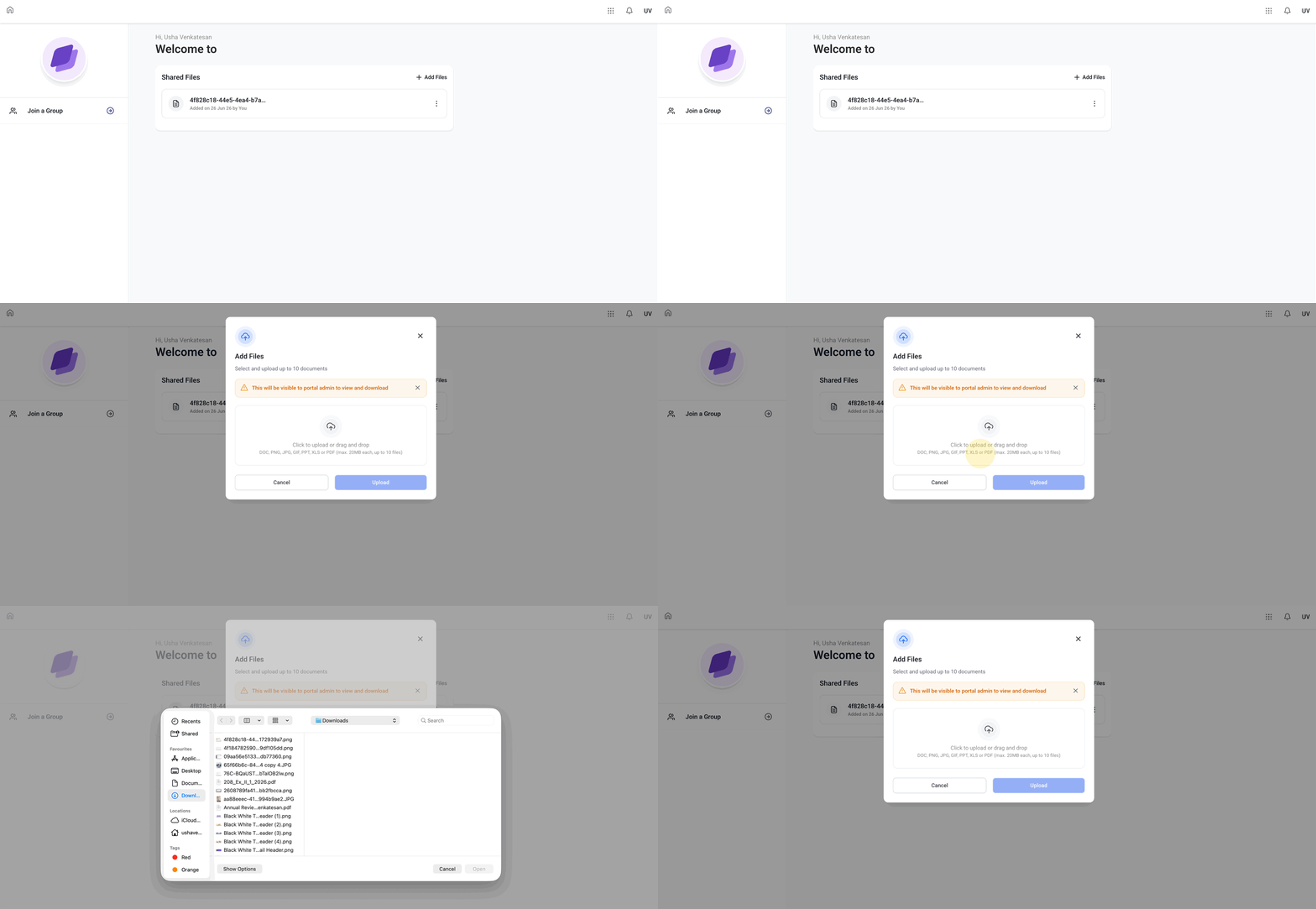
Client Portal supports applicable document and image file formats. For the current supported formats and detailed upload requirements, see Upload Documents Through the Client Portal.
Automate Follow-Up after a Client Upload
Client-uploaded files can also be used to start automated processes. The Client Portal File Uploaded workflow trigger allows a workflow to begin when a contact successfully uploads a file through the supported Client Portal upload flow.
This can be useful when you want to:
Notify an internal team that a requested document was received.
Begin a review or processing workflow.
Send follow-up communication after a client submits a file.
Update internal processes based on a completed upload.
For setup instructions, see How to Use the Client Portal File Uploaded Workflow Trigger.
Preview and Download Documents
Previewing a document lets CRM users or contacts review supported files without unnecessarily moving between systems, while downloading provides access to the original file when local access is needed. Available behavior can depend on the file type and the user's access to that document.
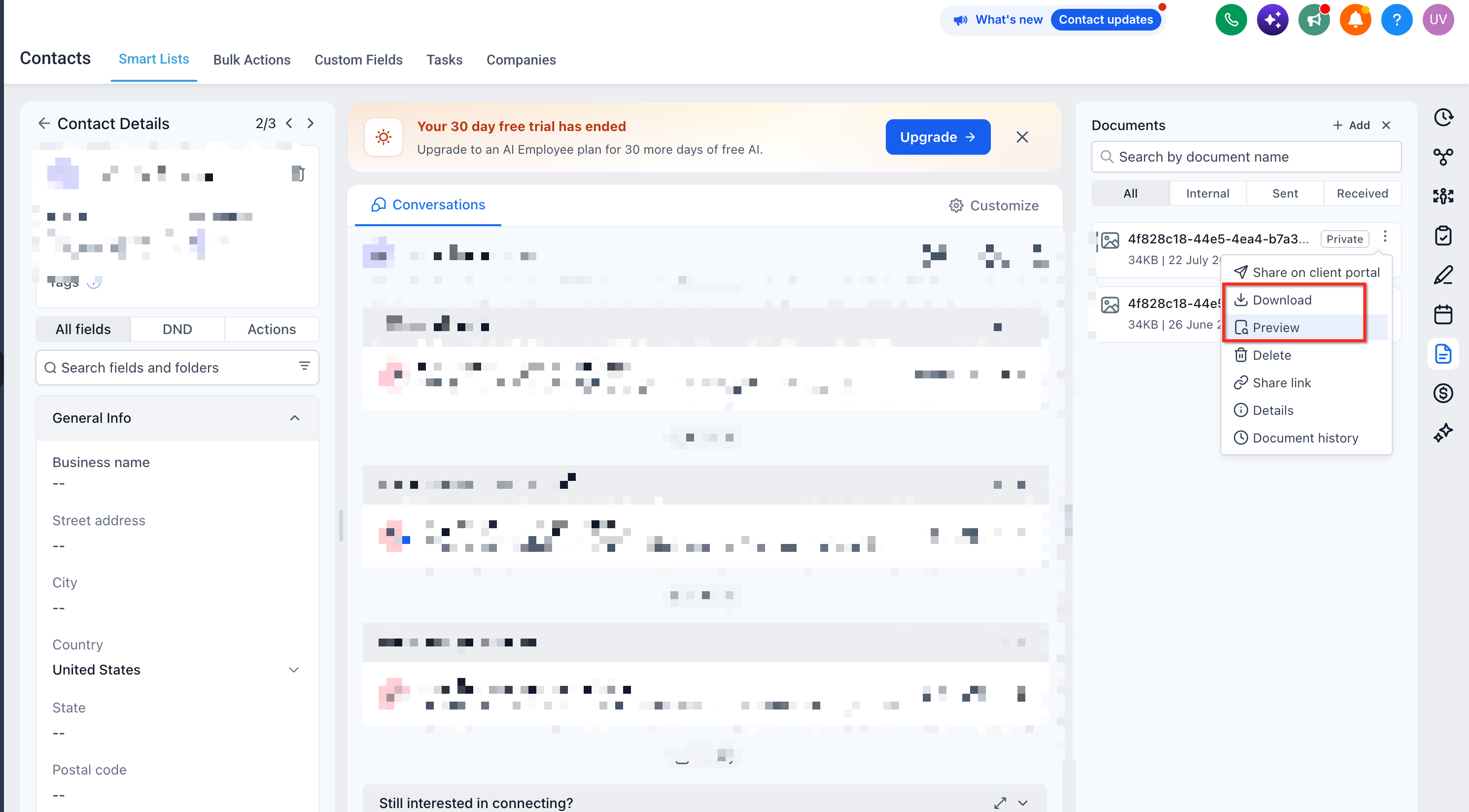
From the appropriate Documents or Shared Files area:
Locate the document you want to review.
Select the file or available Preview action to view supported content.
Use the available Download option when you need a local copy of the file.
If a file cannot be previewed in the browser, use the available download option and open it with an application that supports that file type.
Revoke Client Portal Access to a Document
Revoking Client Portal access and deleting a document serve different purposes. Revoking access is appropriate when the file should remain associated with the contact in CRM but should no longer be available to that contact through the Client Portal.
For a document that is currently shared:
Open the contact record.
Go to Documents.
Locate the shared file.
Open the document's sharing or action controls.
Use the available Client Portal sharing control to remove the file's shared access.
Confirm that the file no longer displays as shared to the Client Portal.
Important: Removing Client Portal access should not be confused with deleting the document itself. Use deletion only when the file should be removed from the contact's Documents area.
Delete Documents
Deleting a document removes the file rather than simply changing whether the contact can access it through the Client Portal. Review whether you need to revoke sharing or remove the underlying file before choosing a deletion action.
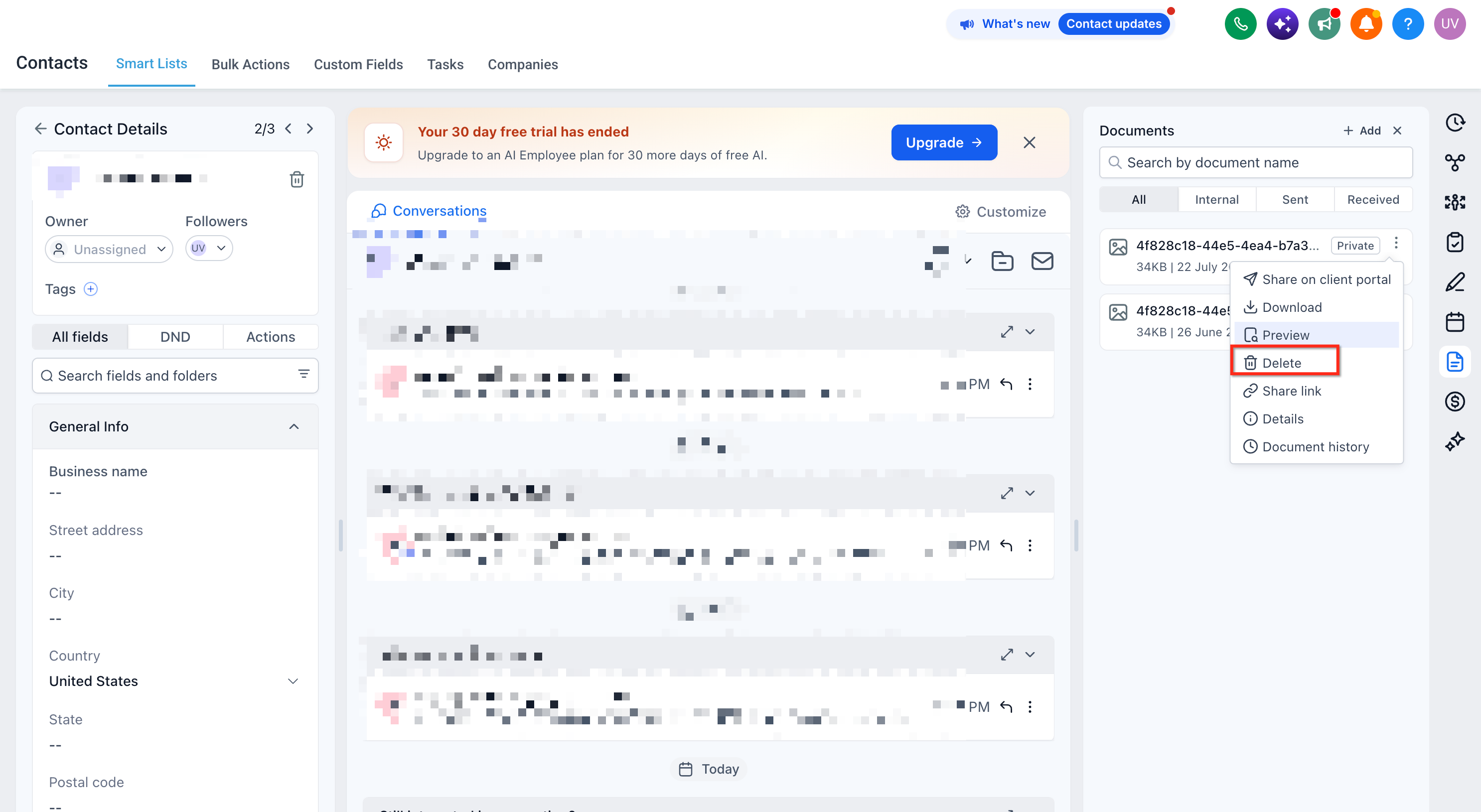
Open the contact record and go to Documents.
Locate the file you want to remove.
Open the document's action menu.
Select the available Delete option.
Confirm the action when prompted.
Avoid treating deletion as a substitute for revoking Client Portal access when the file should remain available internally.
Client-Uploaded Documents
Depending on the Client Portal permissions and experience available to the contact, contacts may be able to manage or remove files they previously uploaded.
Because file-management permissions can vary, do not assume every Client Portal user can delete every uploaded document. Review the current Client Portal configuration and permissions when troubleshooting client-side file management.
Frequently Asked Questions
Q: Does a contact get notified when I share a document?
Yes. HighLevel's supported Client Portal file-sharing flow creates a Client Portal notification when a file is shared with the contact. Additional supported push notifications can depend on notification preferences and device/app configuration.
Q: Where do documents uploaded by a contact appear in CRM?
Client Portal uploads are associated with the contact and can be found from the contact record under Documents → Received → Client Portal.
Q: Can I stop sharing a document without deleting it from CRM?
Use the available Client Portal sharing controls to remove the document's shared access when the file should remain on the contact record. Deleting the document is a separate action.
Q: Can a Client Portal file upload trigger a workflow?
Yes. The Client Portal File Uploaded workflow trigger can start a workflow after a supported file is successfully uploaded through the Client Portal.
Q: Can contacts delete documents they uploaded?
The ability to manage or remove client-uploaded documents can depend on the Client Portal permissions and experience available to the contact. Review the applicable portal configuration rather than assuming deletion is available to every user.
Q: Is sharing a contact document the same as sending a Document or Contract?
No. Files stored in a contact's Documents area are contact-record files. Documents & Contracts is a separate HighLevel feature used for proposals, contracts, estimates, signatures, payments, and related document workflows.
Q: Can I share a document through a secure external link instead of the Client Portal?
HighLevel also provides Enhanced Document Privacy & Access Controls for supported accounts where the feature is available. These controls can provide additional external link-sharing options and are separate from sharing a file directly through the Client Portal.
Related Articles
Was this article helpful?
That’s Great!
Thank you for your feedback
Sorry! We couldn't be helpful
Thank you for your feedback
Feedback sent
We appreciate your effort and will try to fix the article